


Les gens de Zion
Dans les vaisseaux, les tricots pendent aux épaules. Au Temple, les tissus suivent les danseurs. Dans la Matrice, le manteau garde sa ligne. Chaque endroit demande autre chose au corps.
Idée de costume. Choisissez où votre personnage passe ses journées. Tricot rapiécé à bord, fibres et couches souples à Zion, manteau net et lunettes étroites dans la Matrice.
L’essai intégral et le guide détaillé sont en anglais. Lire l’essai · Voir les références visuelles

The Reel Peoples · No. 10 of 16
The People of Zion
Notes on the Last City, and the Clothes It Wears to Dream
Perpétue Kettlewell, written at the fires, 2285
Photo: shankar s., CC BY 2.0

Every people in this series dresses for the world it lives in. The people of Zion are the only ones who keep two wardrobes: one for the world they live in, and one for the world they dream in. The first is full of holes. The second is made of black leather and never wrinkles.
We know them from the three reels of The Matrix (1999), The Matrix Reloaded (2003), and The Matrix Revolutions (2003), made by Lana and Lilly Wachowski. The world of the reels has been conquered by machines, which keep the human race asleep in pods and harvest its bodies for energy while its minds live in a shared dream, a copy of the old world called the Matrix. The people who’ve been woken and unplugged are brought down to Zion, the last free human city, built in caverns deep in the earth, near its core, where it’s still warm.
Zion holds two kinds of citizen, and you can usually tell them apart. A few were born free, in the caves, and carry themselves like it. Most were grown in the pods and pulled out as adults, blinking, with muscles that had never been used. Every one of the second kind remembers believing the dream, and that memory shapes everything they wear.
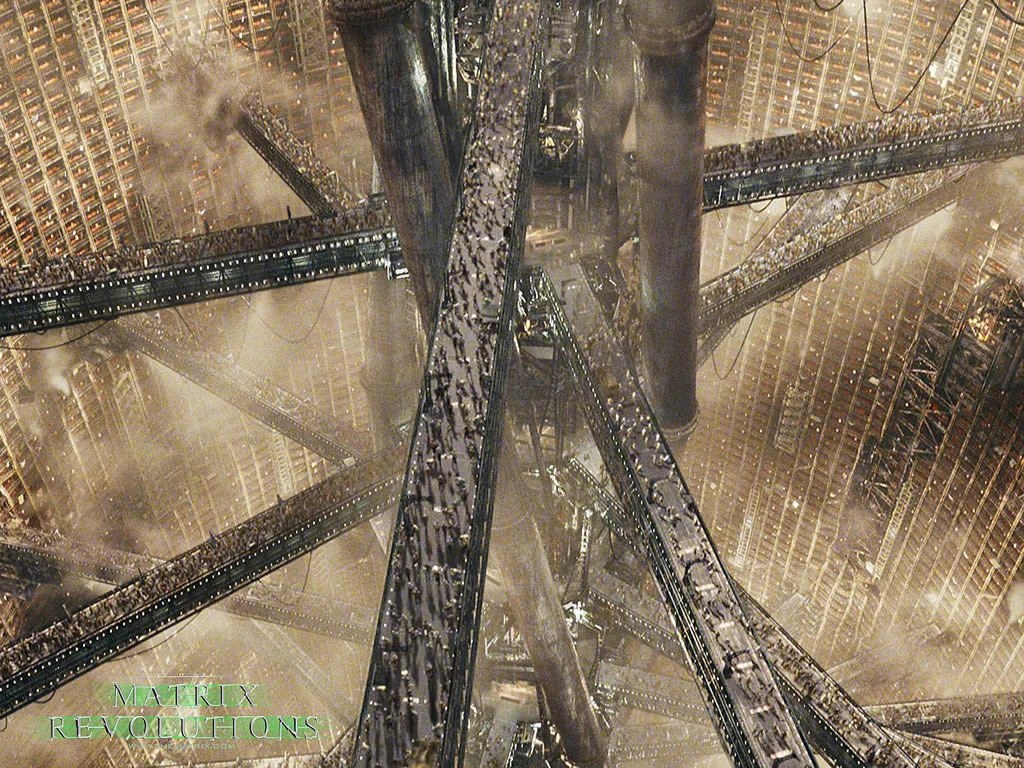
The wardrobe of the real
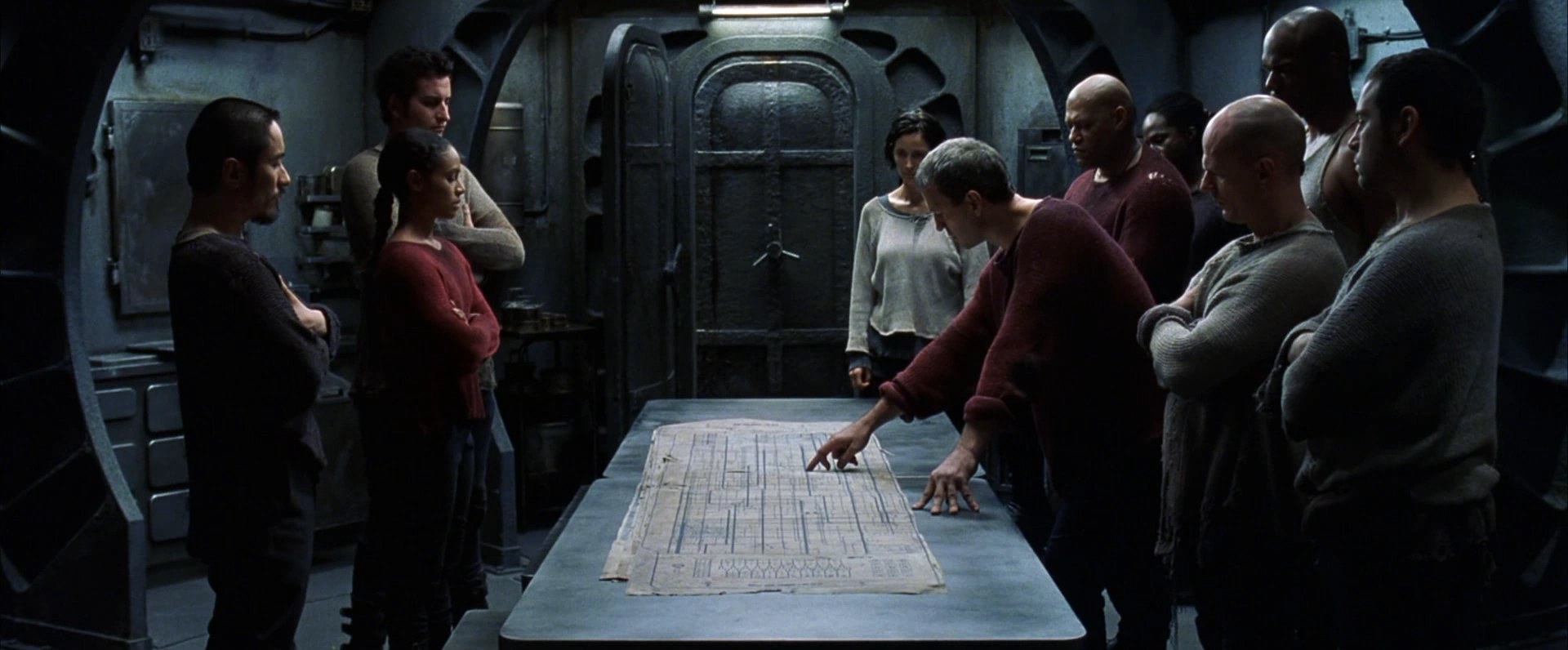
Start with the ships, because their crews are the clearest evidence I have. The hovercraft that slip out of Zion to rescue sleepers are crewed by people in knitted sweaters so old and so often mended that they’re more hole than wool. Their trousers are patched, their boots are worn through, and their food is a grey paste of single-celled protein that the youngest crewman compares, wistfully, to an old-world breakfast cereal called Tasty Wheat.
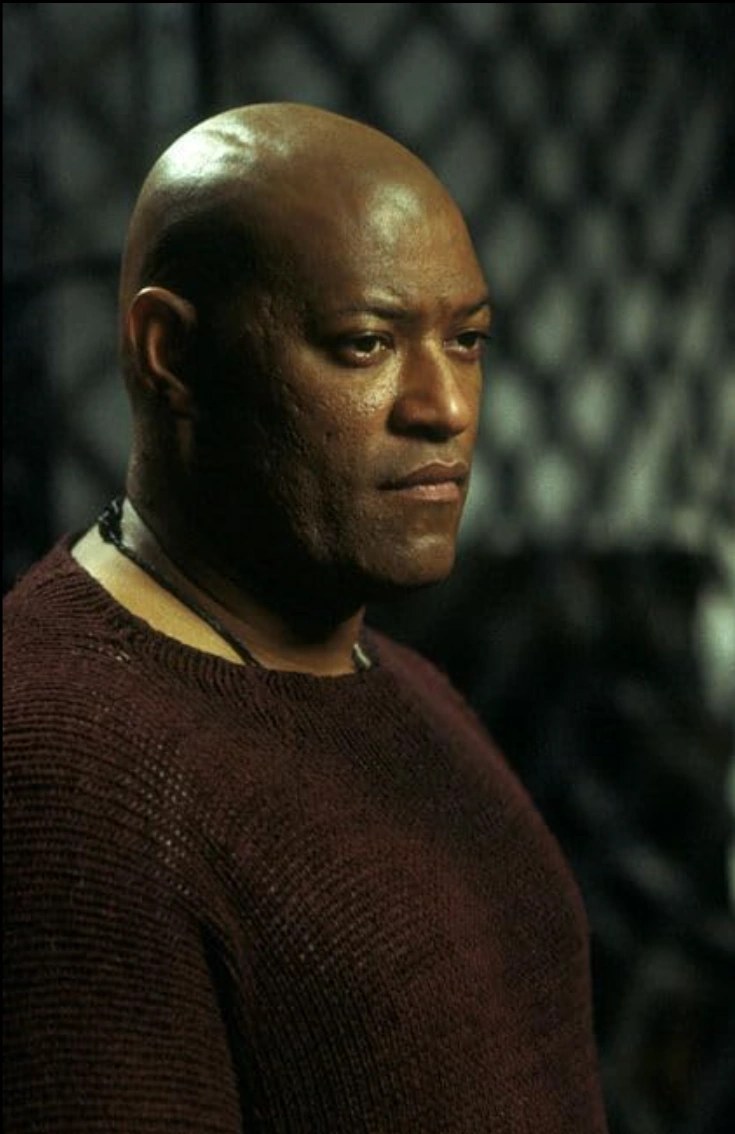
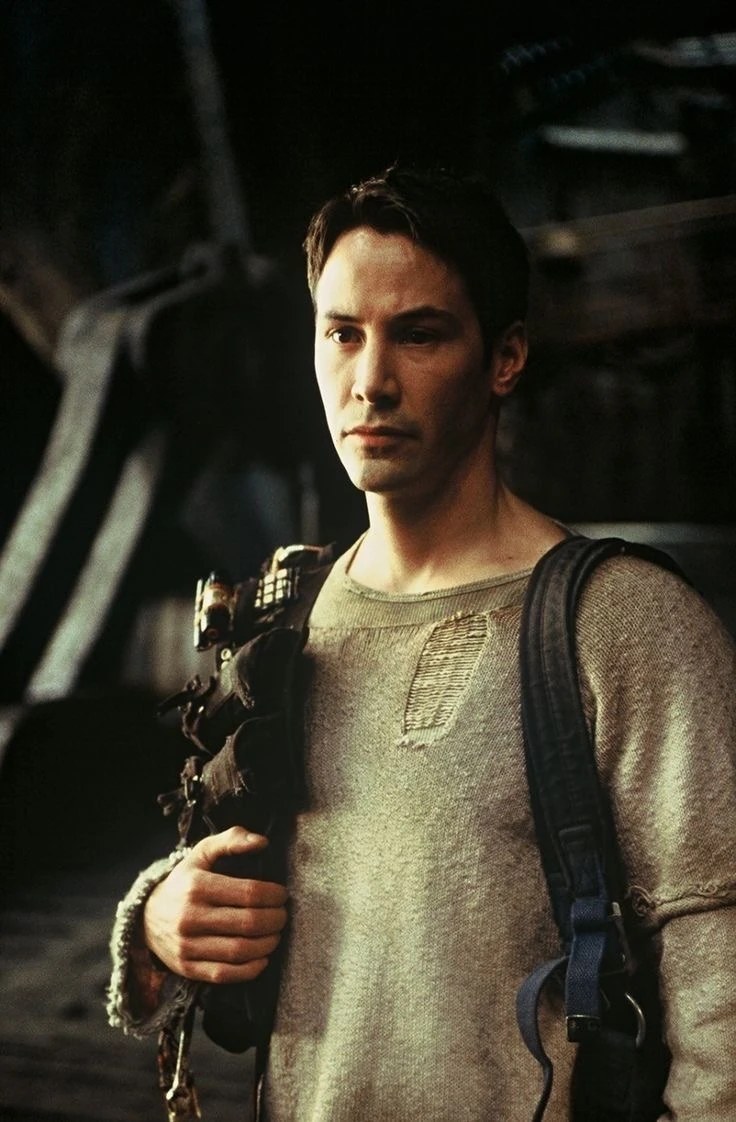
In the city itself the look is softer and earthier: long, layered garments in rust, sand, and clay, wrapped and draped rather than tailored. The reels’ costume designer, Kym Barrett, imagined the citizens growing everything hydroponically in the warmth of the caves, flax and hemp among it, so their clothes had to come from vegetable fibres woven by the few people who made everything. She went back to ancient garments for the cut, and even to the wrappings of mummies. Barrett called Zion a very “civilized” place, though it looks a good deal like a muddy cave. I’d agree with both halves.
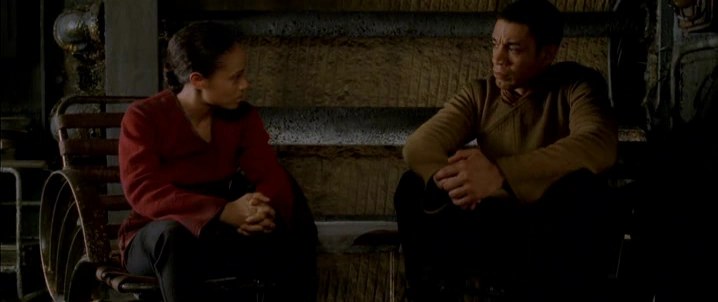


The ships and the city share one rule: nothing is new, and nothing is thrown away. Holes are darned, then darned again. A collar is cut from a sleeve. The officers wear the same cloth in heavier layers. The only polished things in Zion are the machines.
The wardrobe of the dream
And then they go back into the dream. When a crew member plugs in, through a socket at the back of the skull, they don’t appear in the Matrix in their holes. They appear in long black coats, tight black leather, and small dark glasses, looking like the most fashionable people in a city that doesn’t exist. Morpheus, the captain who wakes the reels’ hero, has a name for this: the residual self-image. It’s the mental projection of your digital self, he explains, the way you see yourself when nobody is making you wear a sweater full of holes.
That phrase is the best definition of a costume I’ve found in the old world’s archives. A costume is a residual self-image you can touch. The people of Zion are the only people in this series who change clothes to change worlds, and their dream-clothes say exactly what they think power looks like: dark, sleek, unmarked by labour, and impossible to read.
The reels’ scholars have read the two wardrobes in more than one way. Cáel Keegan, in Lana and Lilly Wachowski (2018), the first book on the makers to centre their transgender lives, reads the first reel as a story about sensing that the body you’ve been handed isn’t the one you are, and finds in Morpheus’s offer to Neo a feeling for which, Keegan writes, “language barely exists.” Lilly Wachowski confirmed in 2020 that this reading was the one they’d meant. Lisa Nakamura, in Digitizing Race (2008), looked at the same reels for what they do with race at the interface, and noticed how often they let Blackness stand for the cool, in a way the reels never let whiteness do. Both readings land on the clothes. The self you choose to project, and who gets to look effortless doing it, are the questions every costumer at our fires is already answering.
The old world’s philosophers had been worrying about copies for a while. Jean Baudrillard, in Simulacra and Simulation (1981), argued that the old world had become a world of copies without originals, signs that pointed only to other signs. The first reel pays him a famous tribute: its hero keeps his illicit software in a hollowed-out copy of Baudrillard’s book, and Morpheus greets him in the ruins of the real world with a phrase borrowed from it, “the desert of the real.” Baudrillard himself said the reels misunderstood him. Influence often goes that way.
The names
Listen to what they call themselves. The woken don’t keep the names they were given in the dream. The hero was Thomas Anderson in the Matrix; in Zion he’s Neo, and only the machines’ agents still call him Mister Anderson, which is how you know they’re the enemy. His companions are Trinity, Morpheus, Niobe, Switch, Mouse. Their ships are the Nebuchadnezzar, the Logos, the Osiris, the Mjolnir: the names of old kings, old gods, and old words, taken from every mythology the dream remembered.
New names for a new birth is an initiation custom as old as any I know, and the people of Zion have been born twice, once into a pod and once into the cold. The names they choose are grand on purpose. A people that lives in a cave, eats grey paste, and wears sweaters full of holes has decided to name itself after gods. I admire that, and I suspect a siege is hard to survive any other way.
The Temple
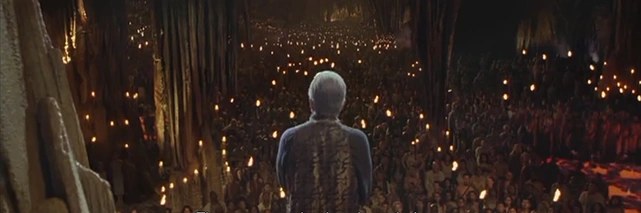
The great rite of Zion takes place in the second reel. The machines are digging towards the city, and the whole population gathers in an enormous cave called the Temple to hear the news. Morpheus tells them the truth, that the machines are coming, and that they’ll survive anyway. Then the drums start, and the people of Zion dance: thousands of them, barefoot on the stone, in the heat and the firelight and the sweat, for a long time. The costume department dressed some nine hundred extras for that week of filming, every one of them in the cave wardrobe.
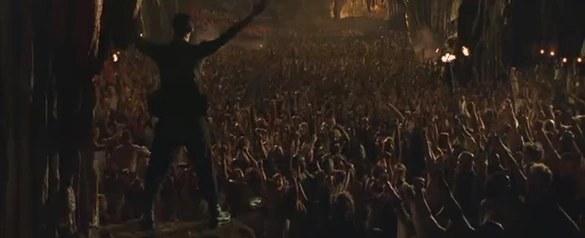
The old world’s critics were embarrassed by this scene and argued about it for years. As an anthropologist I can’t share the embarrassment, because I’ve seen it before. Émile Durkheim, in The Elementary Forms of Religious Life (1912), described the gatherings of the people he studied as moments of collective effervescence: occasions when a crowd, dancing and singing together, generates a feeling so strong that each person experiences it as something outside and greater than themselves, and calls it sacred. Victor Turner, in The Ritual Process (1969), named the feeling communitas: the moment when the ranks and roles of daily life dissolve and people meet one another simply as people.
The Temple exists for exactly that. Zion is a city under siege, full of soldiers, officers, councillors, and ranks. For one night all of it falls away, and a people made of former sleepers reminds itself that it’s awake, together, and alive. The reels cut the dance against the hero and his lover alone in a room nearby, which makes the same point twice: in the real world, the body is the point.
At the fires we keep a law: the stranger drinks first. In Zion, the stranger is unplugged first, fed the grey paste second, and only then told where they are.
The machines in the basement
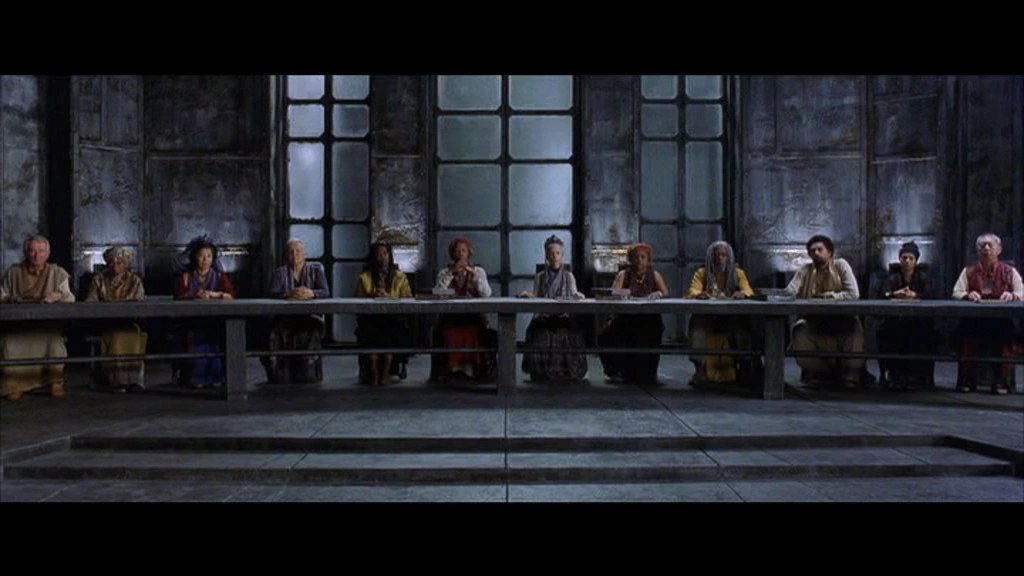
The best scene in Zion, to my mind, is a quiet one. Late at night, Councillor Hamann takes the hero down to the engineering level and stops in front of a machine. It has something to do with recycling the city’s water, he says, and he has absolutely no idea how it works. Zion, the city founded in opposition to the machines, can’t live without them. The reels give that admission to an old man in a hemp robe.
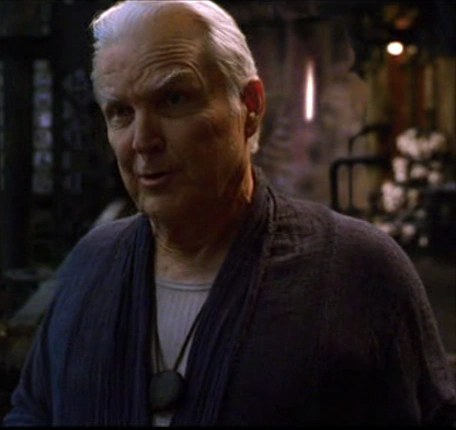


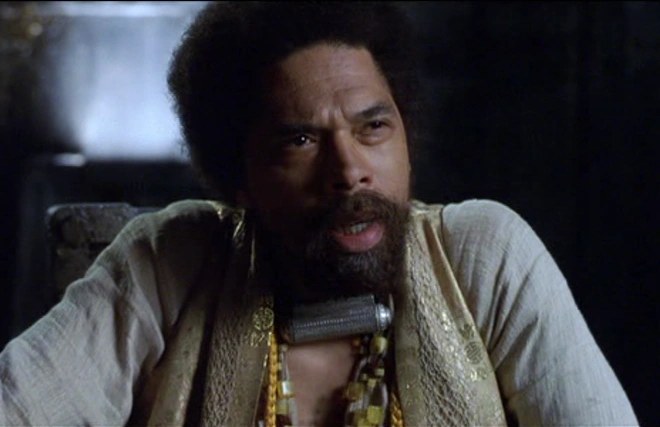
The hero answers the way a young man would. They control these machines, he says; they could shut them down. Hamann agrees that this is control, and starts counting what would go with them: the lights, the heat, the air. He can say what he depends on long before he can say how any of it works. Reuben Martens, writing on energy in the reels for ISLE (2021), separates the two kinds of choice in that exchange: the right to switch a machine off, and the need to keep it running if you mean to live. Donna Bowman, in The Journal of Religion and Popular Culture (2003), reached the same place by a religious road: a people who believe they’ve escaped can still fail to see what binds them. Martens goes on to guess where Zion’s power comes from. That guess is his, and I’ll leave it in his notes. What the reels do show me is the people who keep the city running. When the Nebuchadnezzar comes home, a voice at Zion Control tells Gate Three to stand down its arms and open her up, and somebody at the gate does it. In the council chamber of the second reel, Councillor West, played by the old world’s philosopher Cornel West, puts the matter in one line: comprehension isn’t a requisite of cooperation. That’s the reels’ quiet thesis. The people of Zion don’t defeat the machines. In the end, the hero negotiates a peace with them, and a people that defined itself against its enemy has to learn to live beside it.
Participant observation
Zion is the people in this series I’d most like to see at the October fires, because the festival is built on the same idea: a gathering of people who’ve left one world, put on clothes made by hand, and come together in the dark to dance. Come as a citizen of Zion, and bring both wardrobes if you can.
Start with a half-worn sweater, the more darned the better, with enough under it for October and the best hole left on show. Then build the dream on top: the long black coat, the narrow glasses, the shoulders squared as if gravity were optional. Wear your holes by day and your residual self-image at night, or come as a pair, one of you dressed as the other sees themselves in the dream, and see which one people believe.
We’ll keep the kettle on.
The Reel Peoples
Sixteen peoples from the old reels and two from our own shore, written up at the fires by Perpétue Kettlewell, with a costume guide for each.
- No. 1The War Boys of the Citadel
- No. 2The Smokers of the Deez
- No. 3The Citizens of the Capitol
- No. 4The Bartertowners
- No. 5The Vuvalini of Many Mothers
- No. 6The Waiting Ones
- No. 7The Holnists
- No. 8The Londoners of the Traction City
- No. 9The Galadhrim
- No. 10The People of Zion
- No. 11The Droogs
- No. 12The Ape Society
- No. 13The Judges of Mega-City One
- No. 14The Morlocks
- No. 15The Aviators of Airhaven
- No. 16The Tail Section