

Les War Boys de la Citadelle
Nux veut d’abord mourir sous les yeux d’Immortan Joe. À la fin, il cherche le regard de Capable. Cette fois, la personne qui le voit compte plus que la foule.
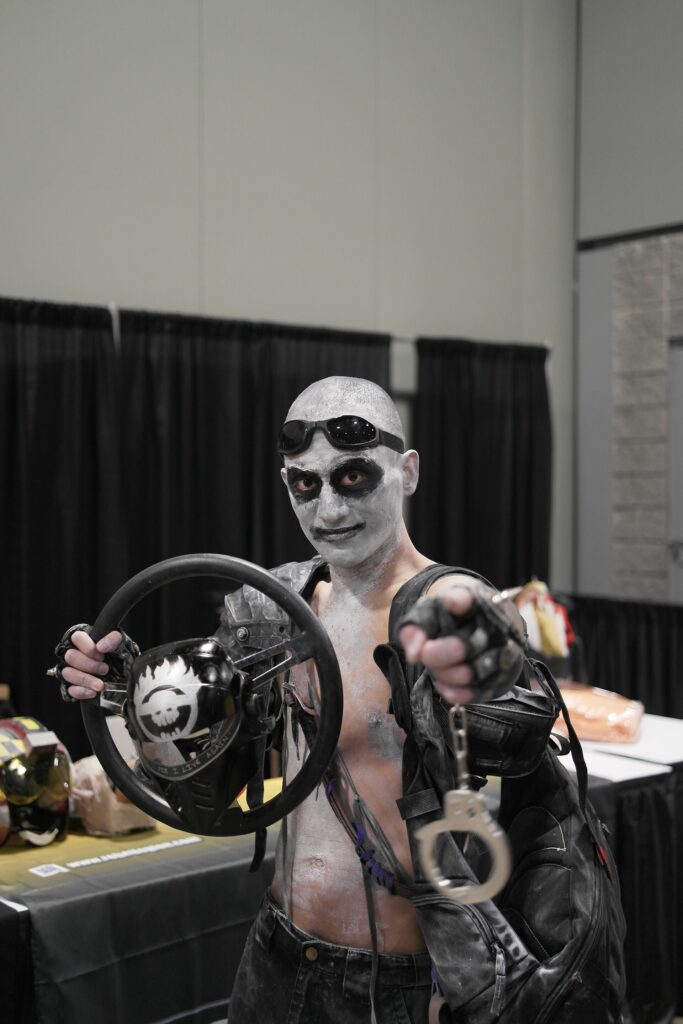
Idée de costume. Le maquillage blanc et les yeux noircis donnent la silhouette. Pour rendre le personnage personnel, donnez-lui un volant léger et ajoutez-y un souvenir qui lui appartient.
L’essai intégral et le guide détaillé sont en anglais. Lire l’essai · Voir les références visuelles
The Reel Peoples · No. 1 of 16
The War Boys of the Citadel
Notes on the Cult of the Octad
Perpétue Kettlewell, written at the fires, 2285
Most peoples worship what they can’t make. The War Boys of the Citadel worshipped what they couldn’t make anymore. That’s nearly the whole of their theology, and nearly the whole of their tragedy.
We know them from two reels, Mad Max: Fury Road (2015) and Furiosa: A Mad Max Saga (2024), both made by George Miller. They live in a mountain of three towers over an underground sea, in a land where nothing grows and everything burns. They’re a magic-ridden people. Their high god is an engine, their heaven is a highway, their sacrament is paint, and their holiest act is to die where someone can see it.
The Octad
The god has eight chambers in two banks of four, leaning away from each other across a narrow valley. The old engineers called it a V8. The War Boys say it the way other peoples say amen: shouted, in unison, three times. I call it the Octad, because a god deserves a proper noun.
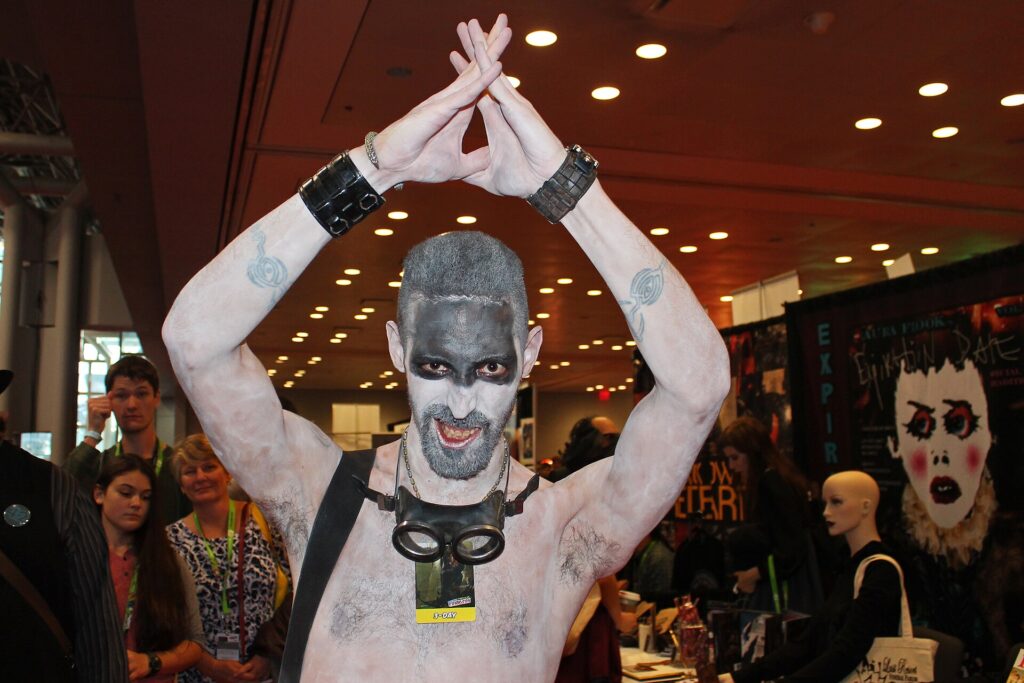
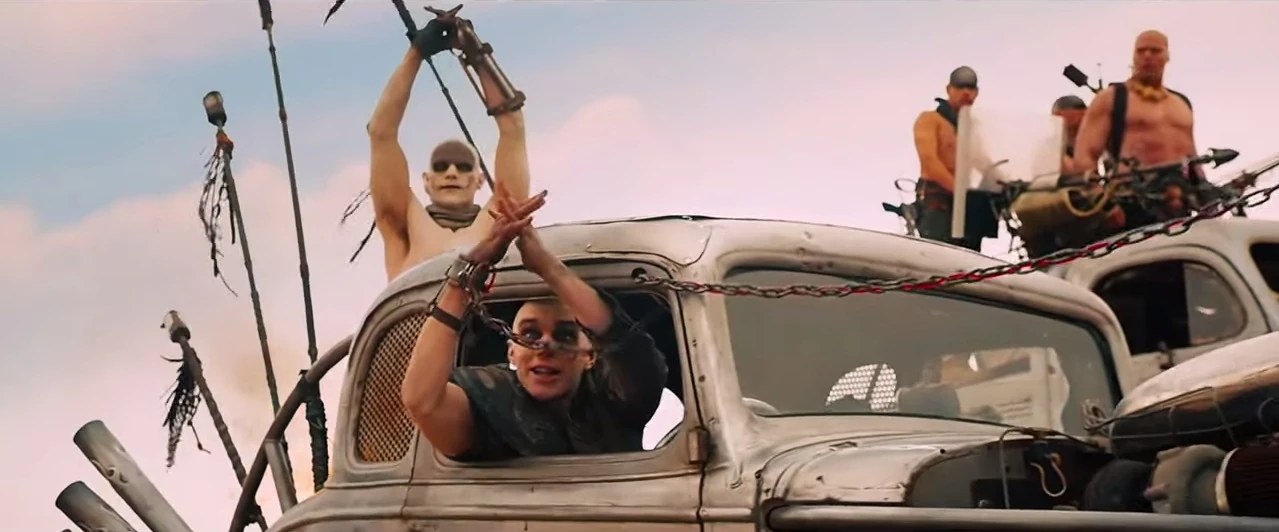
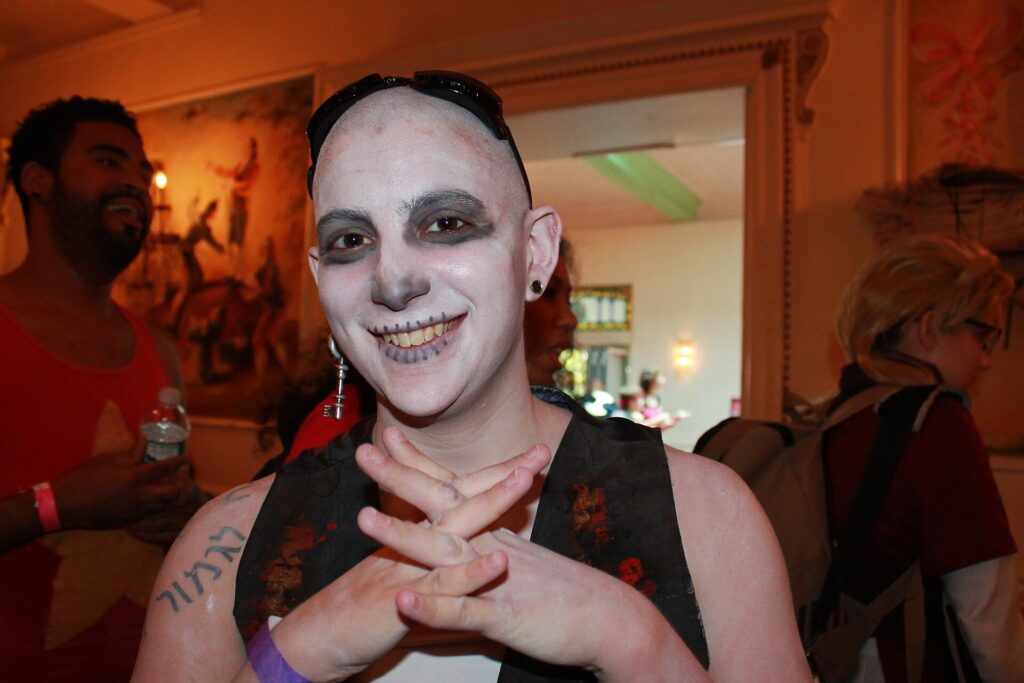
Its sign is its temple. A War Boy interlaces four fingers of each hand, eight in all, and raises them into a V. He makes the sign when he’s pleased, when he’s afraid, when he’s leaving, and when he’s about to die, which in a War Boy’s short life are frequently the same occasion. The whole liturgy fits in one breath:
The god is honoured by deeds, not prayers. A War Boy is what he does with a wheel in his hands.
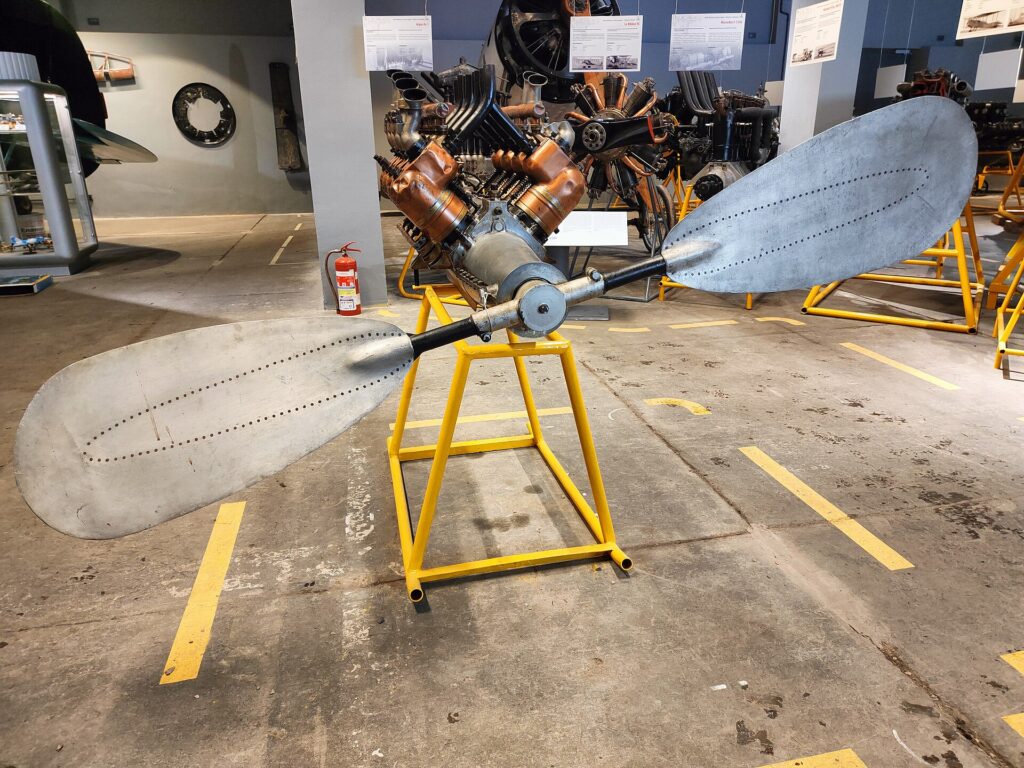
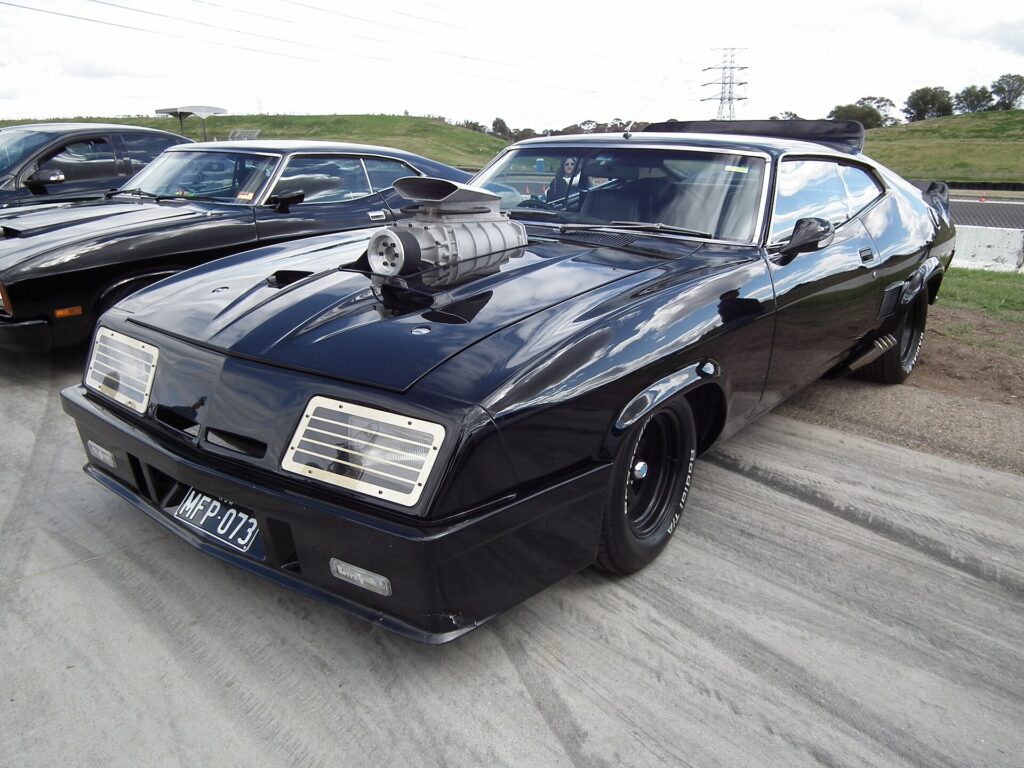
Like many gods, the Octad began with a woman’s name. Its inventor patented the first V8 in 1902 and called it the Antoinette, after the daughter of one of his financial backers. He first installed it in racing speedboats and early aeroplanes. The god was born to fly, which a people who leap from moving vehicles would’ve found entirely reasonable.
Look at what a boy needs before he can leave the Citadel at all. Nux rides out with another man’s blood running into him through a tube, and the man strapped to the front of his car has HI OCTANE inked on his back, the same grade you’d ask for at a pump. I took that for a joke the first time. The car, the fuel, and the donor all have to keep moving together, and the boy who tells us he’s eager to die spends most of that first ride keeping his blood supply alive.
The steering-wheel altar
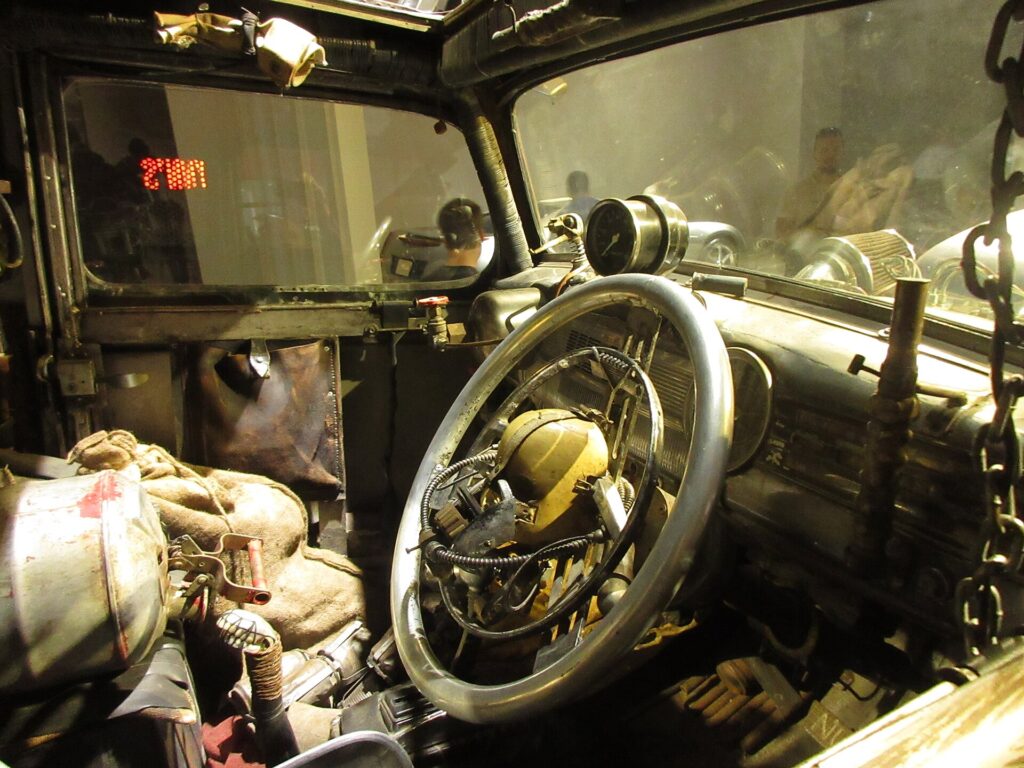
Before the convoy rides, the boys take their steering wheels down from a wall of them. Nux refuses to let his lancer take his. A wheel fits a vehicle, but this particular wheel seems to fit a person. You can see the difference in its ornaments, and in what it costs Nux to imagine somebody else driving with it.
Some boys fix the dial of an old telephone to the hub: a talking-machine with no wires and no one on the line, mounted on a wheel with no car. I used to read the altar as a shrine waiting for the old world to come back with its cargo. The longer I look, the more it resembles a workshop where the tools have names, kept by boys who are allowed very little else of their own.



Machines and scarcity
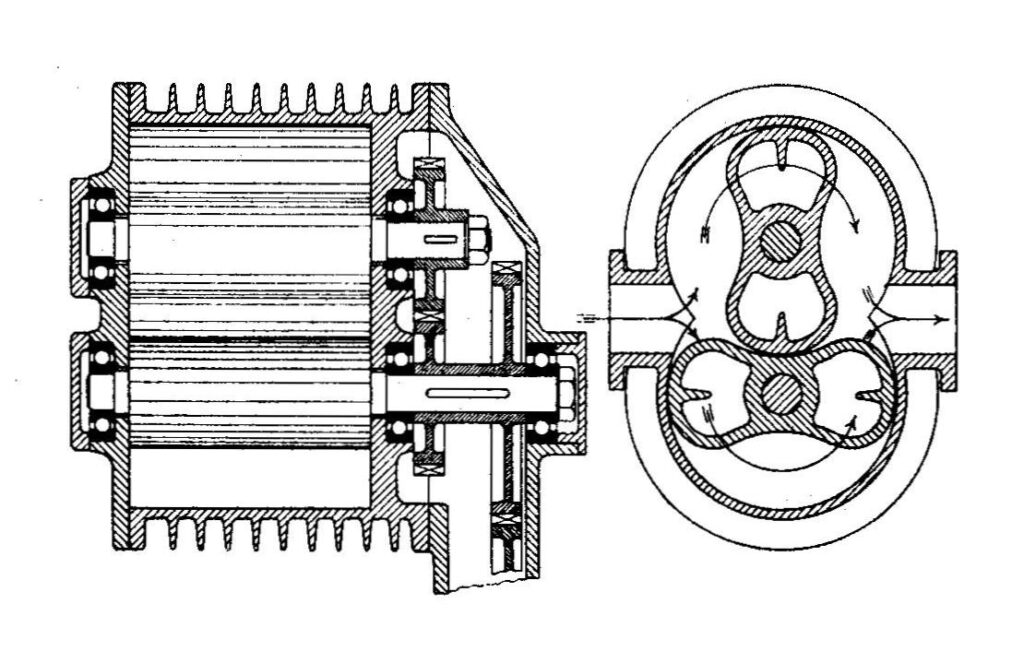
A war vehicle isn’t fully holy until it wears a blower on its crown, a box that forces more air into the god than it could draw on its own. Its ancestry suits the cult perfectly. The design was patented in 1860 as an air pump for blast furnaces, and hot rodders later scavenged war-surplus blowers for their engines: a lung taken from a furnace and salvaged from a war, a century before the first War Boy.

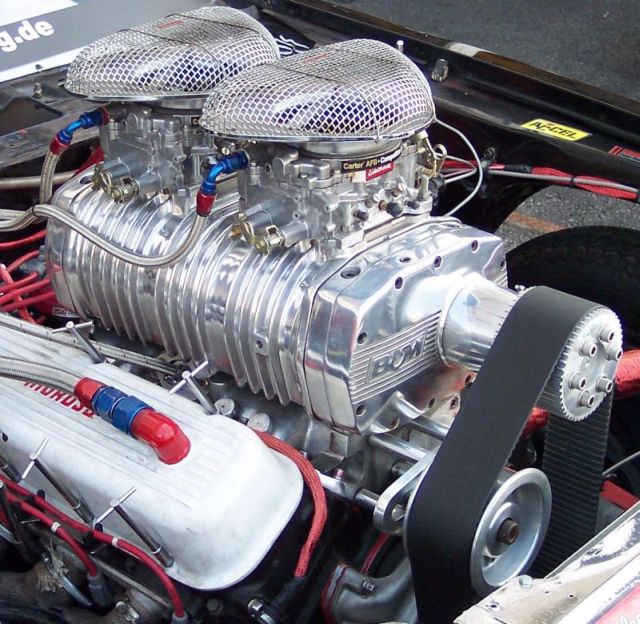

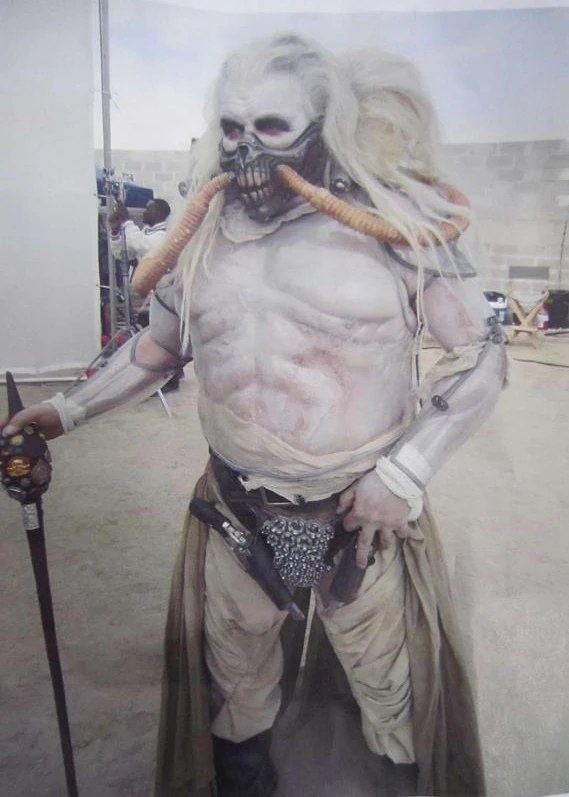
The father explains the reverence. Immortan Joe wears a skeleton-smile mask over a breathing apparatus and a suit of clear armour painted with medals. The god-king breathes by machine, and his boys’ lungs are failing. The holiest engine is the one that breathes by force, as he does, and his own carriage, the Gigahorse, carries two: twin 502 Chevs with 8/71 superchargers.
Michael Pesses, a geographer writing in cultural geographies (2019), argued that the reel won’t let you pull its people and its machines apart: drivers, engines, fuel, and the ground under them make one working body, and the reel is harder on the old world’s romance of the private car than its explosions let you notice. I tested him on the scene where Joe dresses. The reel shows us the Citadel’s brand on the back of a neck, and then a war pup blowing powder onto the tumours across the old man’s back. Attendants buckle him into the clear armour with its medals, and he puts on the mask that breathes for him. I’d made two entries for that day, one for the Rig and one for the man who sends it out. They belong on the same page. Everybody in the Citadel needs other bodies and other machines to keep going. What Joe has, and his half-lives don’t, is the power to decide whose body does the keeping.
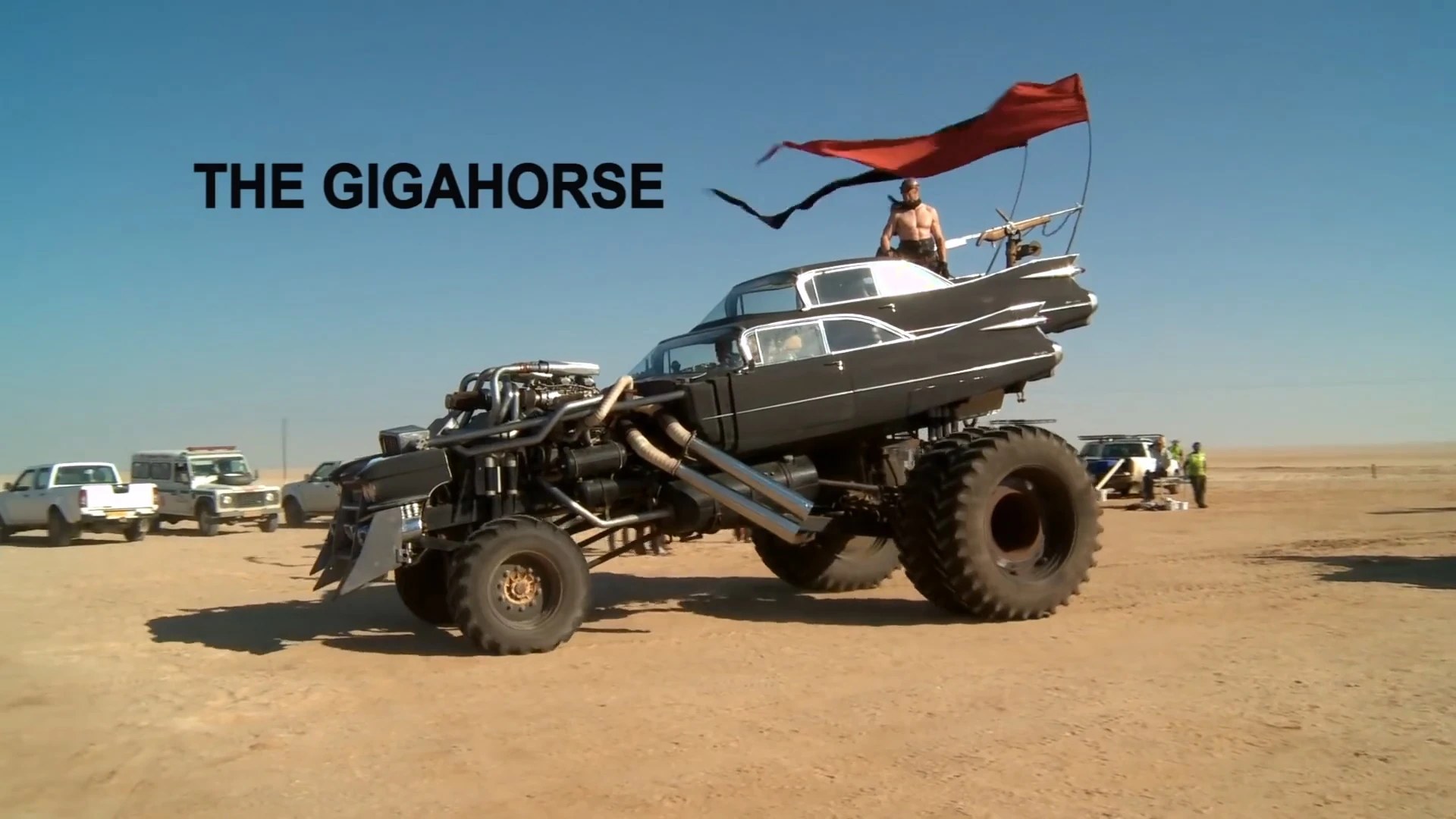
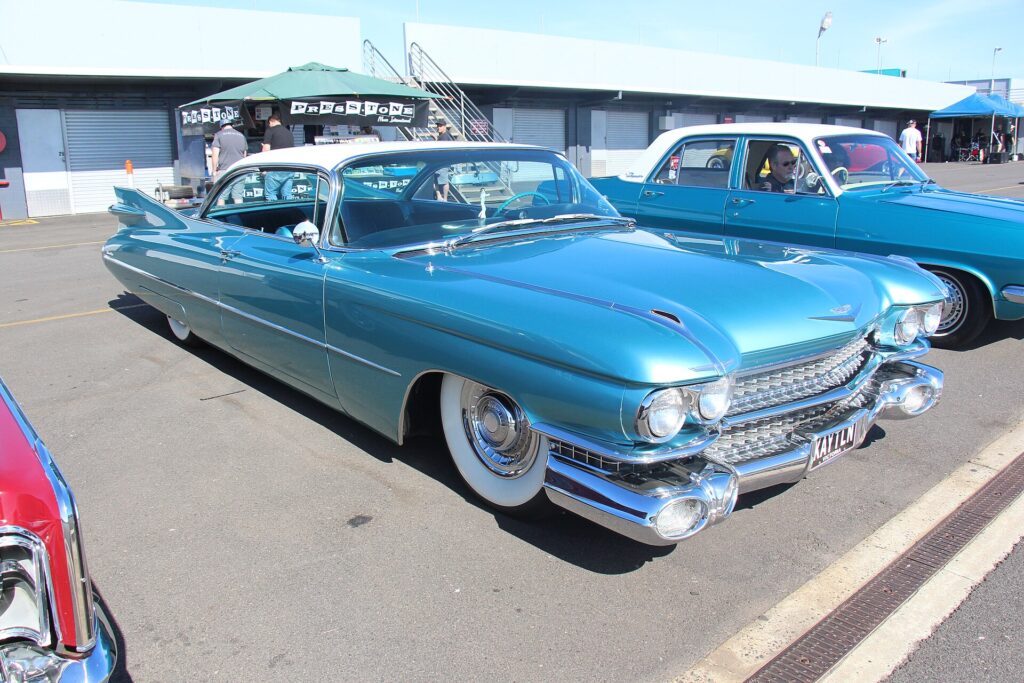
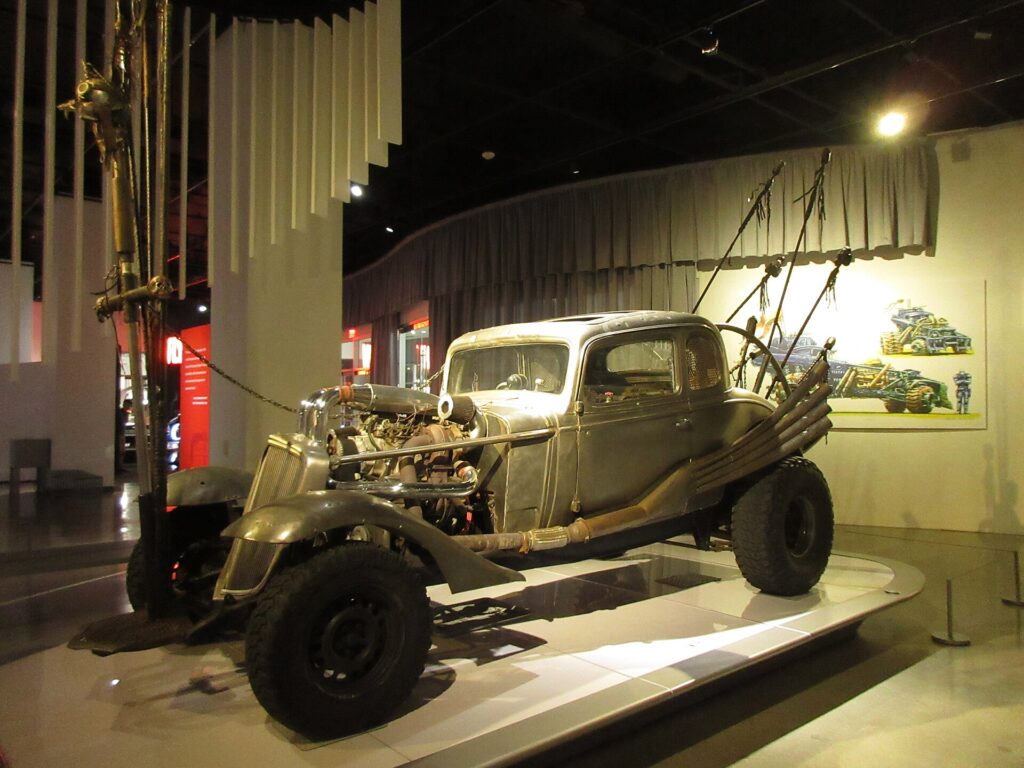
The Gigahorse is the creed in steel. It’s two 1959 Cadillac Coupe de Villes, one stacked on the other. Its designers reasoned that in a world where nobody had one of anything, Joe would naturally have a pair. The 1959 Cadillac wore the tallest tailfins ever fitted to a production car, and the old world had a phrase for cars like it: “wretched excess.” The man who rules the Wretched rides the old world’s wretched excess, doubled. Nobody on the reels remarks on it, and nobody needs to.

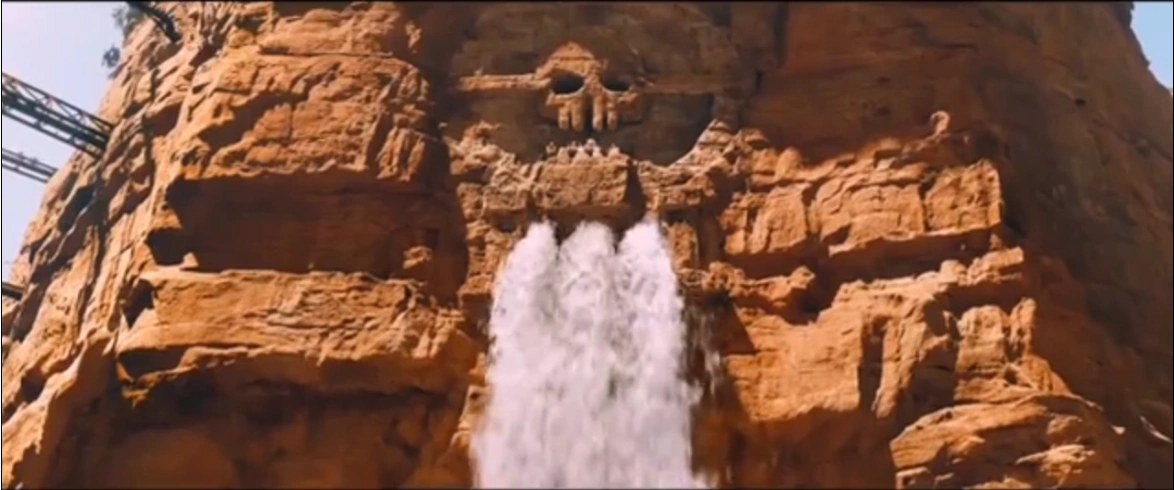
The god is a drinker, and the War Boys named its drink for the thirst: guzzoline. Burning it in a desert is sacrifice, and they burn it the way other peoples burn incense. Water gets a different rite. From the clifftop, Joe opens the pipes onto the crowd below, shuts them again, and preaches: “Do not, my friends, become addicted to water.”

At the fires we keep a law: the stranger drinks first. In the Citadel, the stranger is drunk from.
The half-life body
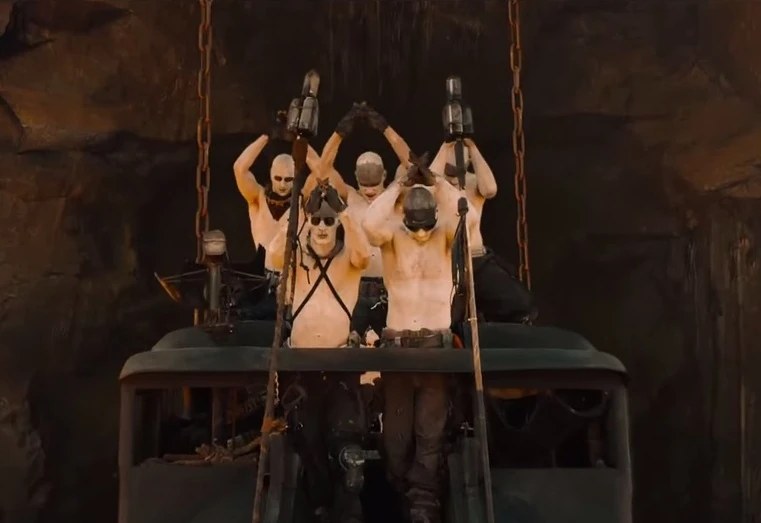
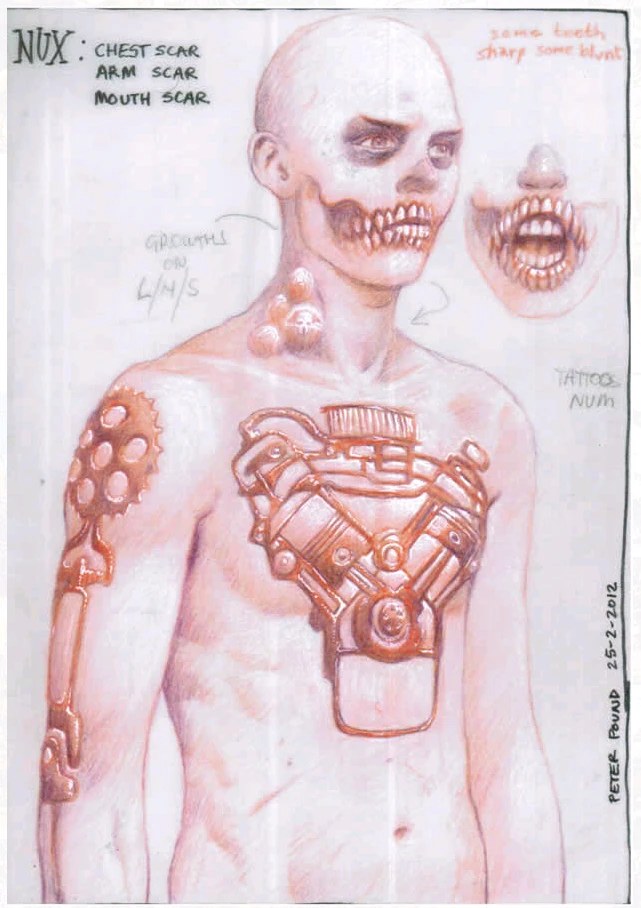
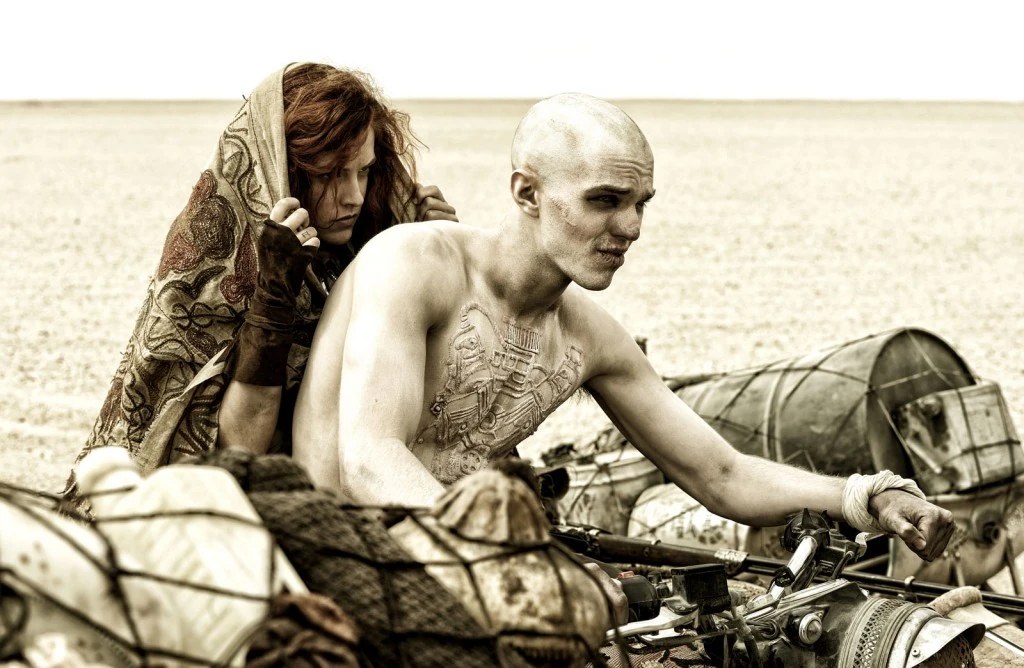
The War Boy’s body is a page, and he writes on it constantly. The ground is white. Miller has said the War Boys carry “some sort of neoplasm,” so they’re designated half-lives, and a half-life paints himself white in a skeletal look, with grey clay hollowing the eyes and mouth toward the skull beneath. They make themselves look dead in advance, as if to save everyone the trouble. The early concept drawings by Brendan McCarthy were far busier, with intricate face painting and showier kit; Miller kept paring them back because a half-life, he reasoned, wouldn’t bother.
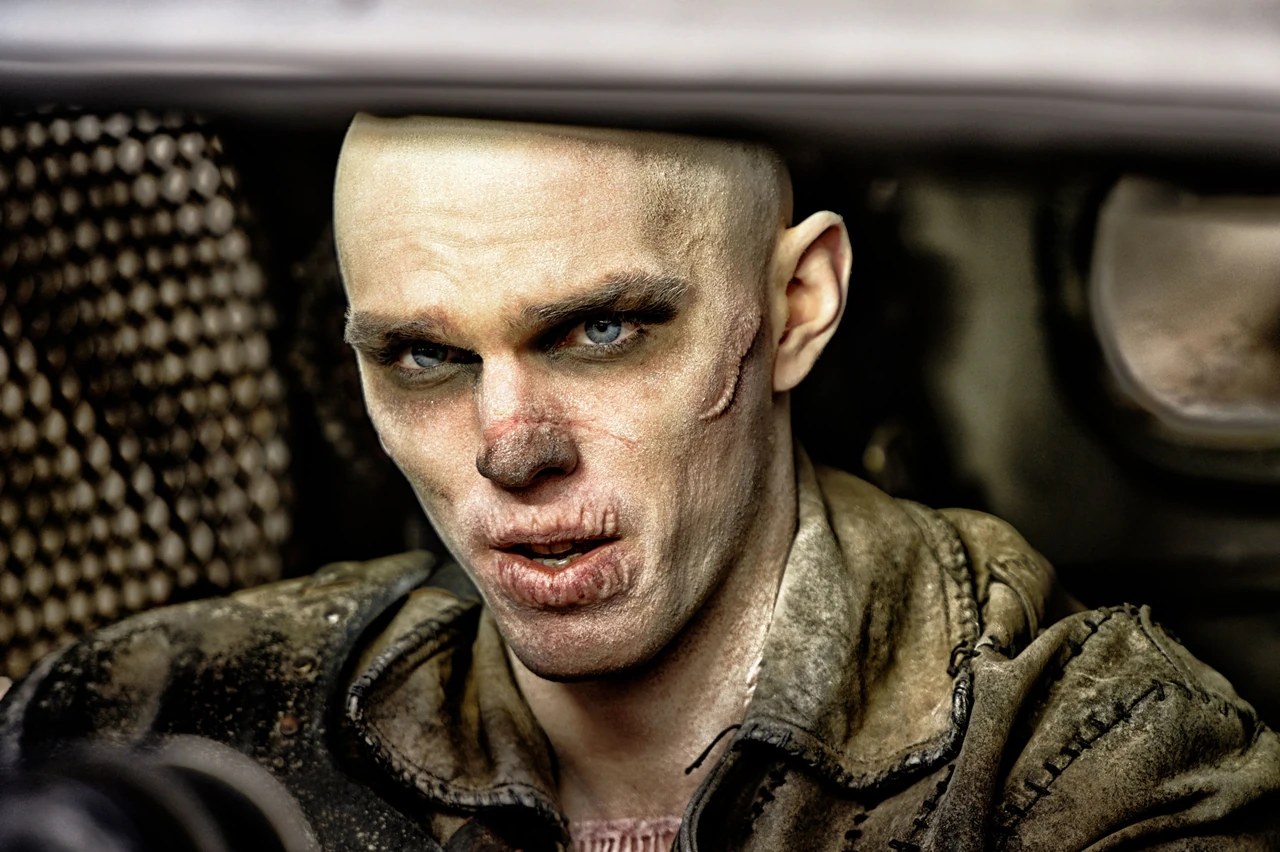
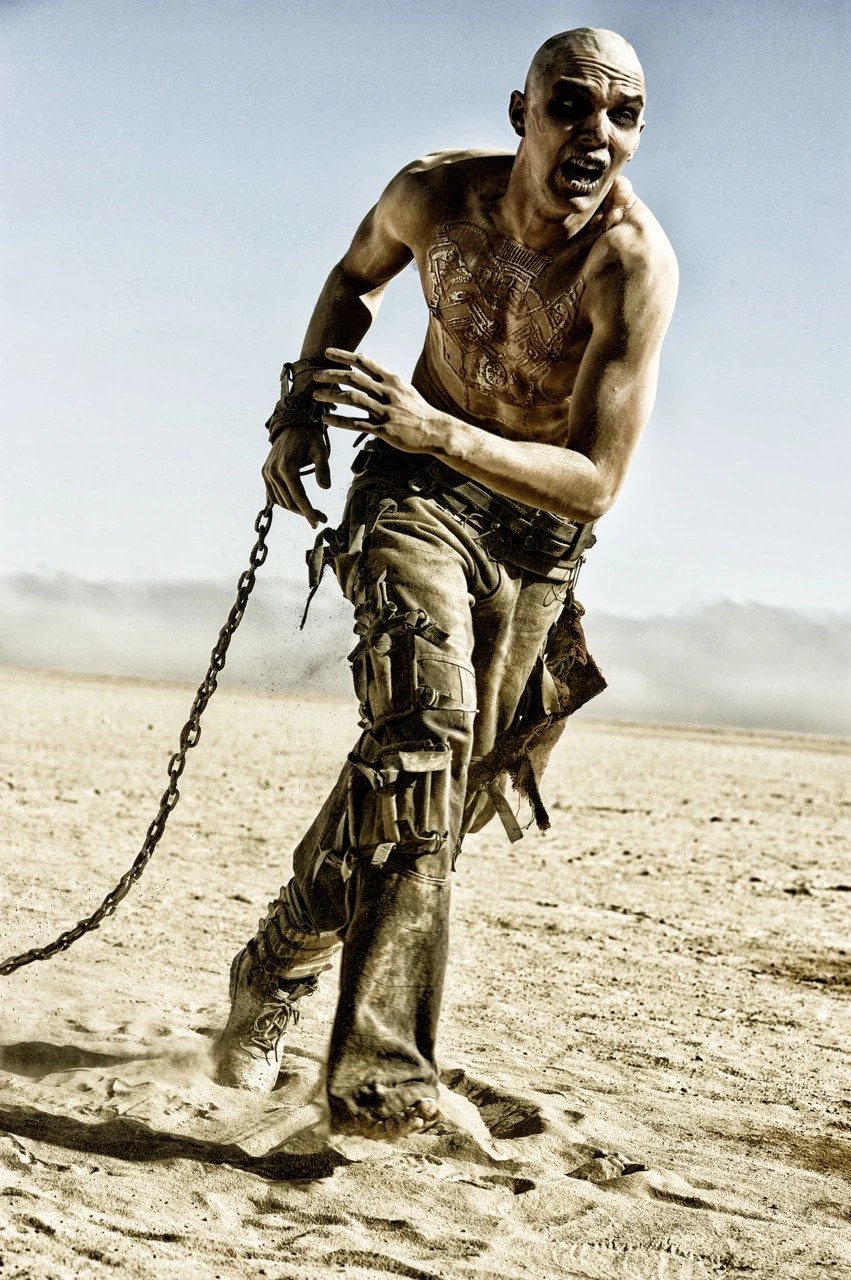
On the white go the scars: pistons, gears, and the V. The woman who made them up for the reels gave the most human account of why: with nothing to distract them, they carved simple artworks into their own skin out of sheer boredom, like cave drawings. A people with no paper wrote their repair manuals on the one surface they had. They even name their tumours. Nux calls his two Larry and Barry. A people who name their tumours aren’t without tenderness; they’ve been given very little else to name.
The most revealing writing in the Citadel isn’t on a War Boy, though. It’s on their captive. The Citadel’s holy-blood-man tattoos Max with his blood type and his use, upside down so that he himself can read it: “O-NEGATIVE HI OCTANE,” “UNIVERSAL DONOR.” The blood is graded like fuel. They wrote a man down as what he was for: one word, one use. We have a name for that. We call it the flat word, and we don’t forgive it easily.
The reels’ scholars have noticed the same ledger. Taylor Boulware, writing in Mise-en-scène (2016), borrowed Achille Mbembe’s term necropolitics to describe Joe’s rule: a regime that reduces its subjects to bodies and keeps whole populations in the condition of the living dead. The War Boys’ white paint makes that condition visible, and they wear it proudly. The authors of Furious Feminisms (2020) put it more plainly: in this reel, bodies matter, and value is bound to them. Corin de Freitas (2015) watched the War Boys perform their gender as they die crowing their cry. Each of them is reading the same costume I am: the body as the only property a War Boy has, and the property his father owns.
The Orchard reel shows another way to use ink. A captive girl, Furiosa, steals a tattoo gun and inks onto her own forearm the stars that lead home. Writing on the skin can make a person into a label, or it can carry her home. The War Boys knew only the first.
The witness and the shining
Before he dies, a War Boy sprays a can of silver paint across his teeth and lips, so that his last breath shines. Miller traced the rite to a documentary about young Cambodian soldiers who went into battle with little “jaded deities” held in their mouths by straps. He first imagined the War Boys themselves after the old world’s kamikaze pilots, he said, and wrote them in 1999, before the word suicide had acquired its later company. The chrome is an amulet that kills you.
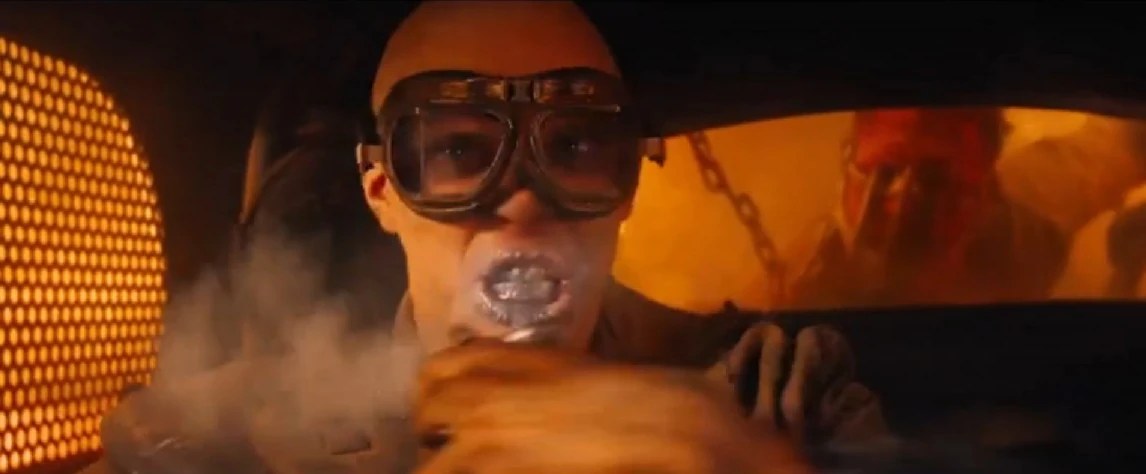
Then the cry. A War Boy silvers his mouth and roars “Witness me!” before he leaps, and the war party roars back. A death unseen doesn’t count. The old world understood this better than it remembered: its word for a holy death, “martyr,” comes from the Greek mártys, “witness.” The old martyrs bore witness. The War Boys turned the word inside out and demand it.
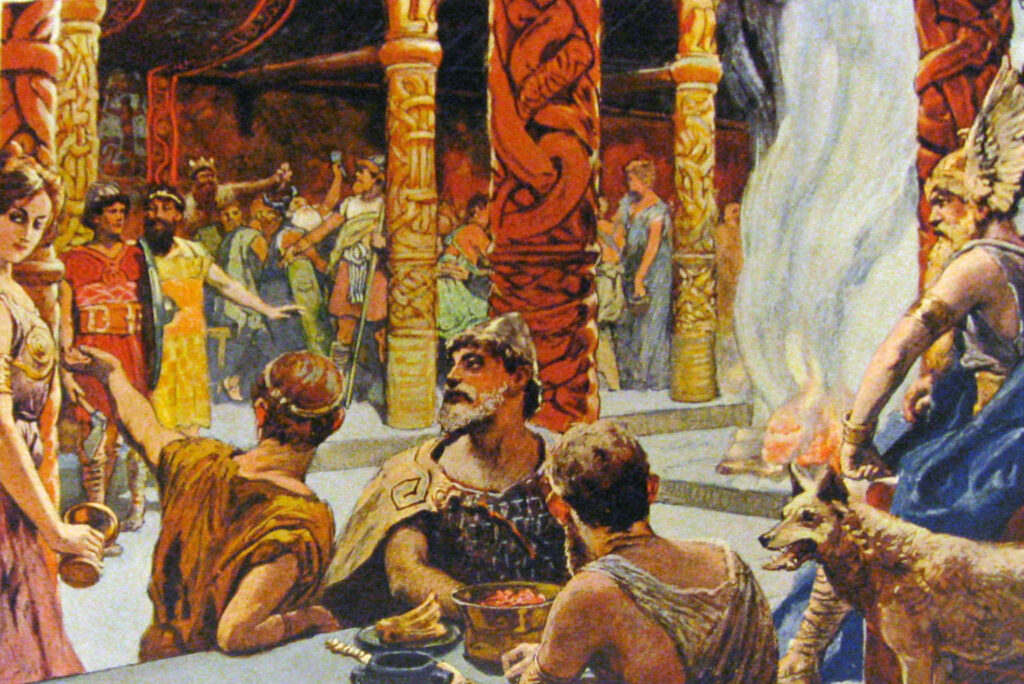
Their afterlife is borrowed from the north, where Odin is called Father of the Slain because all who fall in battle are his adopted sons. In the northern hall the warriors fight one another all day, and every evening their wounds are healed. The War Boys’ creed is that same day in three verbs: I live, I die, I live again. All three are in the present tense, and death is only the middle one. For a people with no future tense, it’s a sensible theory of time.

The failure is worse than the death. Nux botches his moment, and Joe dismisses him with the cruellest word in their vocabulary: mediocre. Nux hides in the rig, and a woman he was sent to recapture, Capable, finds him there. He tells her, “Three times the gates were open to me.” She doesn’t recapture him. She sits with him.
He gets his death at the end, at the wheel again, turning the rig across the canyon pass. This time he doesn’t call to the war party. He looks at Capable, and her answer is small enough to miss if you’re watching the vehicles. I missed it once. The cult taught him to be seen by many. He chose to be seen by one. On the same reel, Furiosa ends the father with a different word: “Remember me.” Witness belongs to the moment, and remember to everything after. At the fires we’re professionally on the side of remember, but I won’t pretend the other word is small.
The speech
The War Boys had few words, and every one of them worked for a living. “Half-life” is a measure of decay, worn as a name. “Immortan” is “immortal” worn smooth by shouting. “Aqua Cola” is water with a brand on it, which tells you who owns it. A “blood bag” is a man.
They weren’t a flat-worded people, though. Their vocabulary was small, but their words were round. “Chrome” meant metal, glory, death, and beauty at once. The finest sentence on either reel belongs to Nux, riding into a storm of sand and fire that should’ve killed him: oh, what a day, what a lovely day. He means the weather, and he means his death, both completely, with his whole chest.
Participant observation
Long ago, anthropology learned that some peoples can’t be understood from a chair. The method it settled on is called participant observation: go and stand where they stand. You can catalogue the Octad, but you won’t understand it until you’ve held the sign over your head in a crowd that’s holding it too, or carried your own wheel all day and refused to put it down.
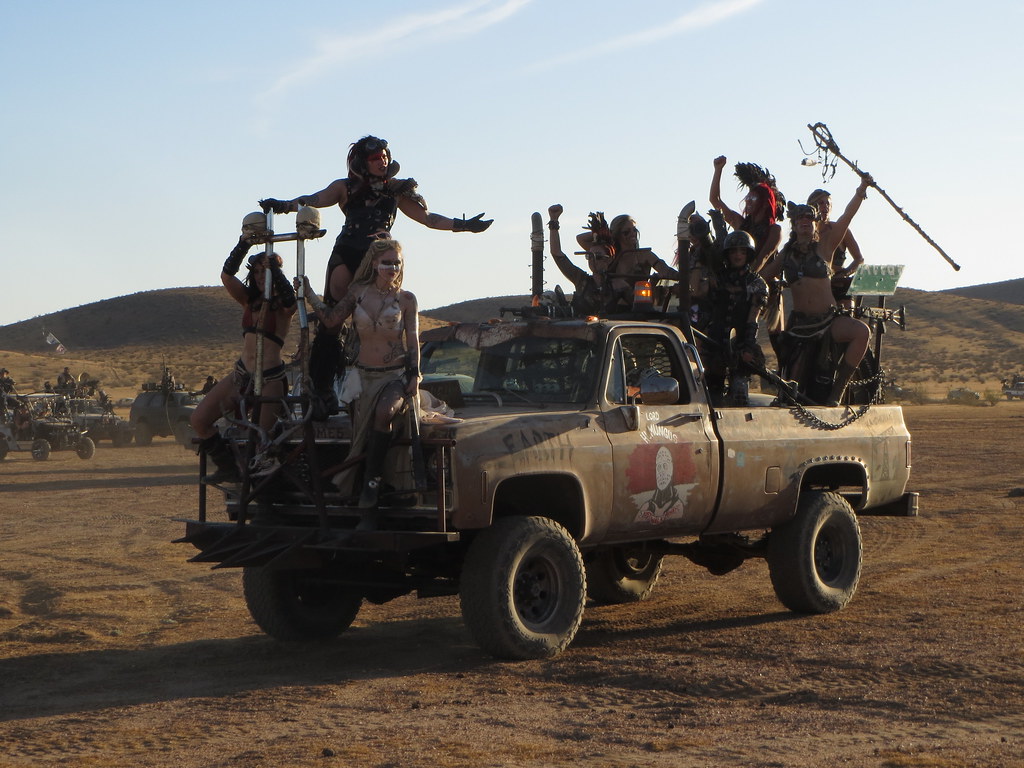
Start with the wheel. The paint tells the convoy which crew a boy belongs to; what hangs from his wheel is one of the few things he gets to choose for himself. Then do the paint properly, white to the waist and grey in the hollows, and scar it with something you’d be proud to repair. The War Boys were told that the only story worth having was a short one, and that it needed a witness. Afterland has the witnesses. It has the fires, and it has the road. Come down from the rock and be seen.
We’ll keep the kettle on.
The Reel Peoples
Sixteen peoples from the old reels and two from our own shore, written up at the fires by Perpétue Kettlewell, with a costume guide for each.
- No. 1The War Boys of the Citadel
- No. 2The Smokers of the Deez
- No. 3The Citizens of the Capitol
- No. 4The Bartertowners
- No. 5The Vuvalini of Many Mothers
- No. 6The Waiting Ones
- No. 7The Holnists
- No. 8The Londoners of the Traction City
- No. 9The Galadhrim
- No. 10The People of Zion
- No. 11The Droogs
- No. 12The Ape Society
- No. 13The Judges of Mega-City One
- No. 14The Morlocks
- No. 15The Aviators of Airhaven
- No. 16The Tail Section