

Ceux qui attendent
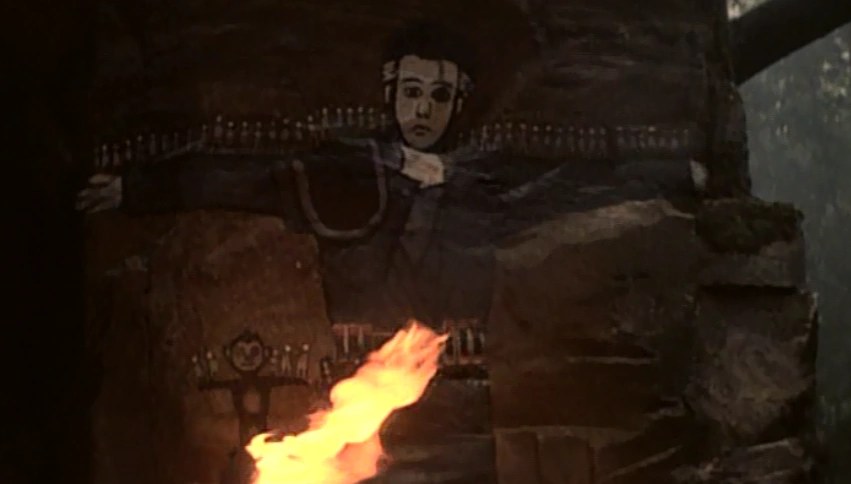
Dans la grotte, Savannah tient le récit dans un cadre de bois. Les enfants connaissent déjà la suite. Le cadre, les images et les objets de l’avion les aident à garder leur histoire.
Idée de costume. Donnez au costume un objet hérité et réinventé. Une casquette d’aviateur, une diapositive ou un disque peuvent être plus parlants qu’une tenue couverte d’accessoires.
L’essai intégral et le guide détaillé sont en anglais. Lire l’essai · Voir les références visuelles
The Reel Peoples · No. 6 of 16
The Waiting Ones
Notes on the Children of the Crack in the Earth
Perpétue Kettlewell, written at the fires, 2285
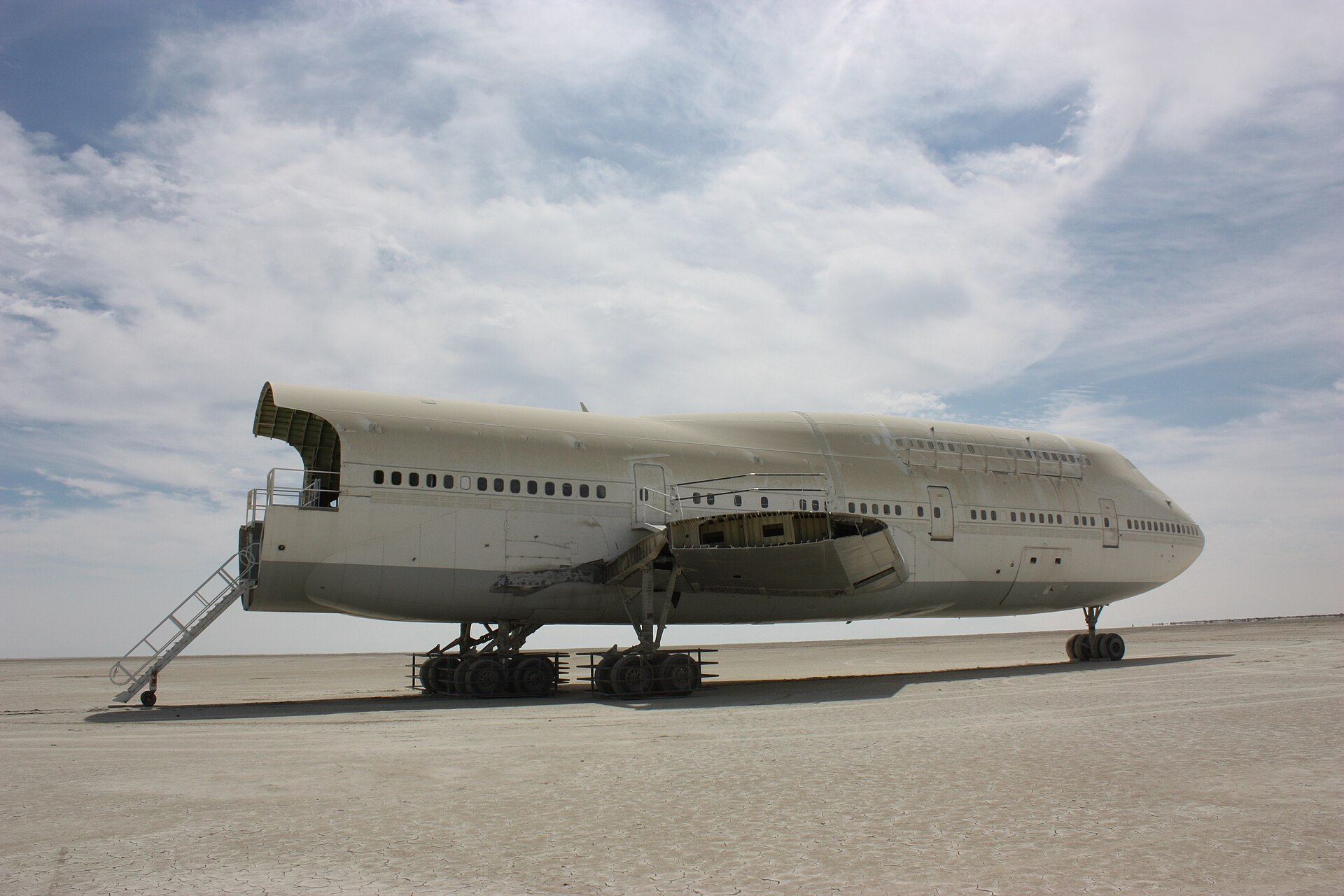
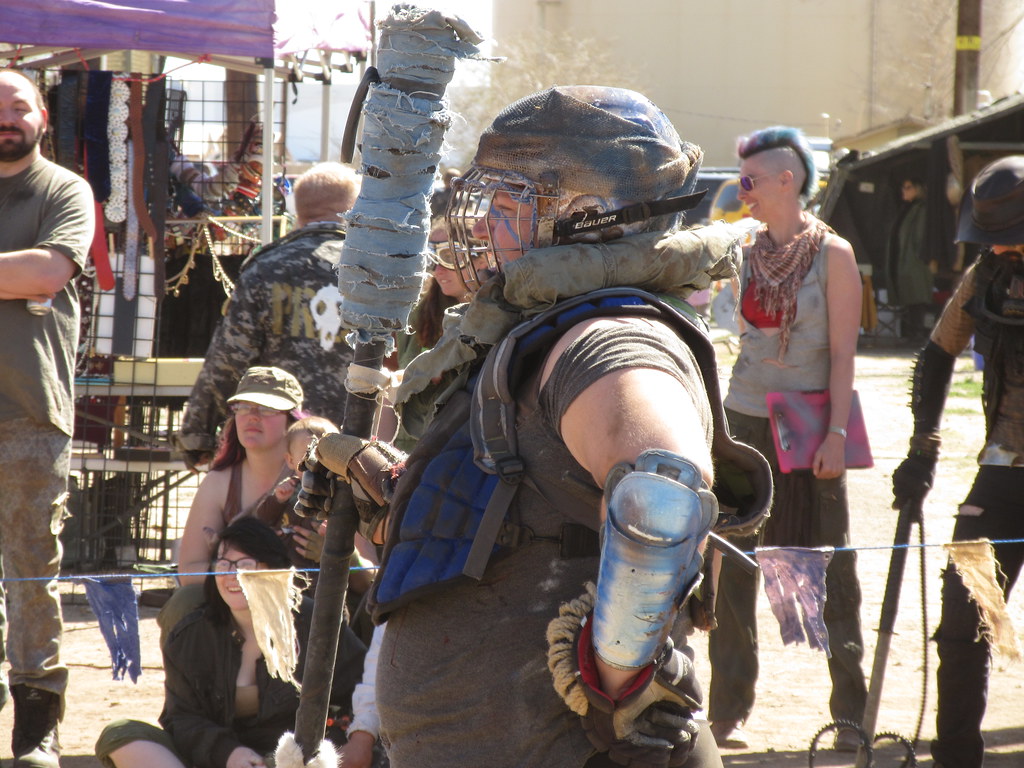
Photo: Ikluft, CC BY-SA 4.0

Every people tells a story about where it came from. The Waiting Ones tell theirs every night, in a cave, through a window made of sticks, and the story ends with a promise: that a man is coming back to take them home.
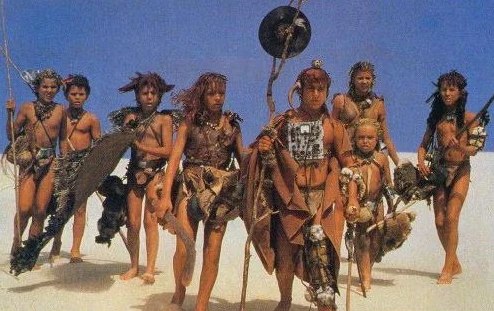
We know them from the second half of Mad Max Beyond Thunderdome (1985), and they’re the youngest people in this series by a generation. They’re children and teenagers, the descendants and survivors of a jumbo jet that came down in the desert as the world ended. The adults, led by the pilot, Captain Walker, walked out across the sand to find help and never came back. The children stayed, in a green gorge they call the Crack in the Earth, and waited. By the time the reel finds them, they’ve waited long enough to build a religion out of it.
The Tell
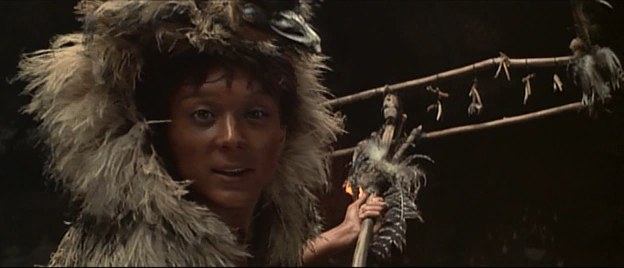
Their central rite is called the Tell. The tribe gathers in the cave at night, and a teller steps behind a wooden frame, a rough rectangle propped up like a window or a screen, and recites the history of the people. The usual teller is Slake, the Tribe’s leader; on the night the reel records, the honour goes to Savannah Nix, because she’s the one who found the stranger in the desert. She opens with a formula every oral culture would recognise: “this ain’t one body’s Tell. It’s the Tell of us all.”
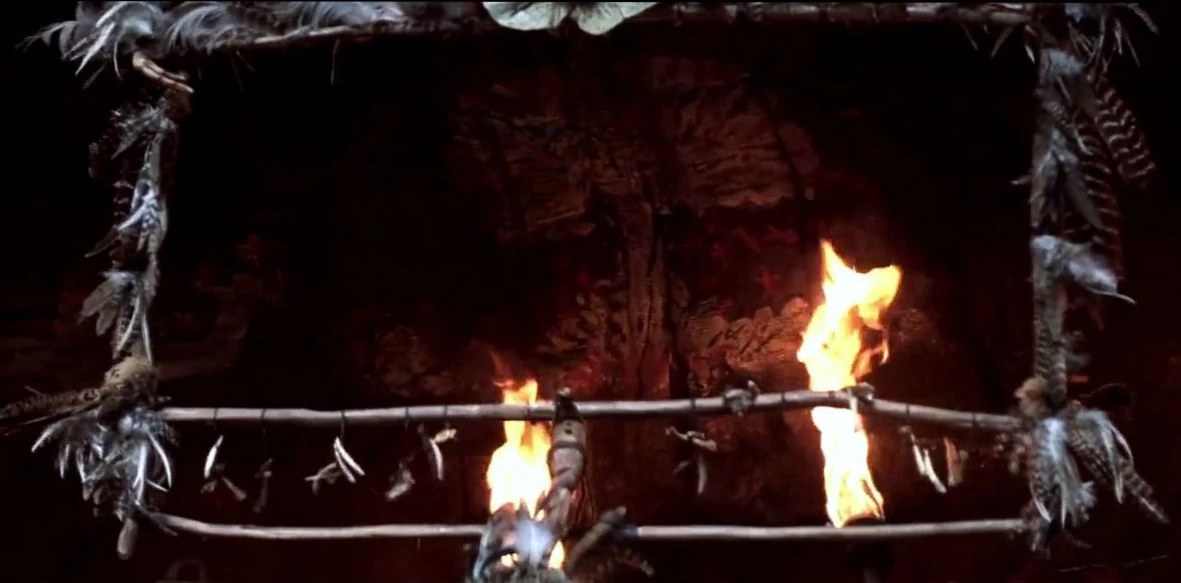
The Tell has a canon of images, painted on the cave wall and preserved on a little reel of photographs viewed through a plastic toy. There’s Tomorrow-morrow Land, a city of towers. There’s the River of Light, a road at night with its headlights drawn into streaks. There’s the Skyraft, which is the plane, and Captain Walker, and a glamorous Mrs. Walker. Then comes the Great Leaving, when the adults walked away, and the promise that one of them would come back. The children don’t own a book. They own a slide show, and they’ve made it scripture.


The old world’s scholars of oral societies would feel at home in that cave. Walter Ong, in Orality and Literacy (1982), argued that people without writing think in formulas, repetitions, and stock phrases, because a thought that can’t be written down has to be built to be remembered. The Tell is built exactly that way: a fixed opening, a fixed sequence of images, a fixed ending, and a chorus that knows every line. Jan Vansina, who spent a career turning African oral traditions into history, called such traditions messages from the past, distorted by every retelling and still carrying something true. The Tribe’s message is distorted beyond recognition. The true part is the plane.

The relics
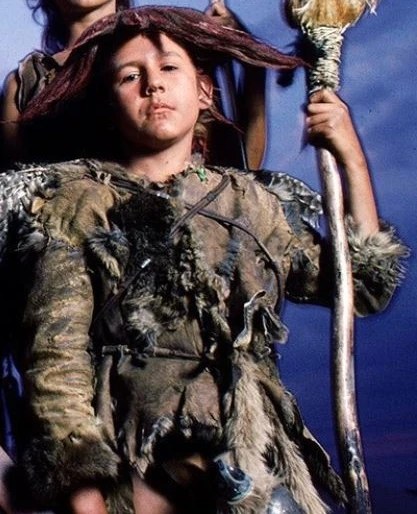
The Tribe’s material culture is a museum with the labels torn off. Everything they own came out of the plane or the bags of the people on it, and they’ve kept it all, not for its use but for its meaning. A child carries a gramophone record on a stick and calls it a “sonic.” A pilot’s cap waits, folded and kept, for the head it belongs on. The slide viewer is passed from hand to hand like a reliquary. They’ve painted the sacred images on the cave wall, and they wear the rest: scraps of uniform, bits of luggage, the debris of a flight that was supposed to take a few hours.
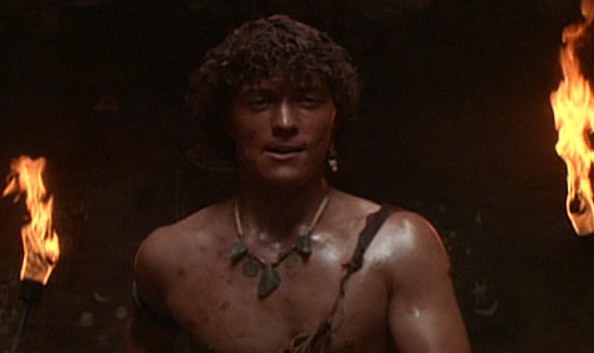
I’ve seen this before in the field, among peoples who received the old world’s goods without its instructions. An object that arrives without a manual becomes a sign. The Tribe can’t play the record, can’t fly the plane, and can’t reach the city in the pictures, so the objects stop being tools and start being promises. Every relic says the same thing: the world that made me is real, and it’s coming back.
The speech
Listen to how they talk. The children speak a language of their own, built from the scraps of their parents’ English and polished by years of use among themselves. Talk is “wordstuff.” Death is “Mr. Dead.” The apocalypse is the “Pox-Eclipse.” The empty desert is “the Nothing,” and their home in it is “Planet Erf.” Verbs are regularised the way small children regularise them: the stranger was “finded,” and the tribe “does the Tell.”
Linguists have a name for what happens when children build a language out of fragments. Derek Bickerton, in Roots of Language (1981), argued that the creole languages of the old world’s plantations were invented by children, who took the broken pidgin of their parents and gave it a full grammar in a single generation. Closer to the reel’s own country, the linguist Carmel O’Shannessy documented Light Warlpiri, a new language made by young people at Lajamanu in the Northern Territory, with grammatical inventions found in none of the languages it came from. Leave children alone with the ruins of a language and they will build a house in it. Listen to the Tribe try their words on a stranger who doesn’t understand them, and you can hear the carpentry.
At the fires we keep a law: the stranger drinks first. The Tribe gave the stranger their water, their best bed, and the best name they had: Captain.
The returning man
When Savannah finds a half-dead man in the desert, the Tribe sees the face from the wall. They decide that Max is Captain Walker, come back at last to fix the Skyraft and fly them to Tomorrow-morrow Land. They bring out the captain’s hat they’ve kept for him. Max tells them there is no Tomorrow-morrow Land, that the cities are gone, that the only town out there is Bartertown and it will eat them alive. They don’t believe him. A prophecy that its own subject can disprove was never much of a prophecy.
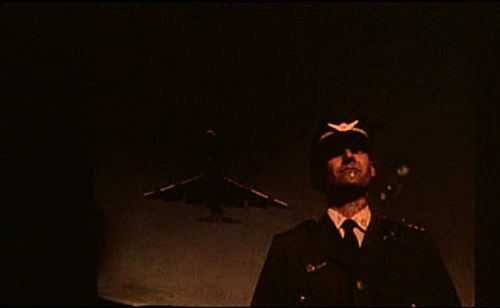
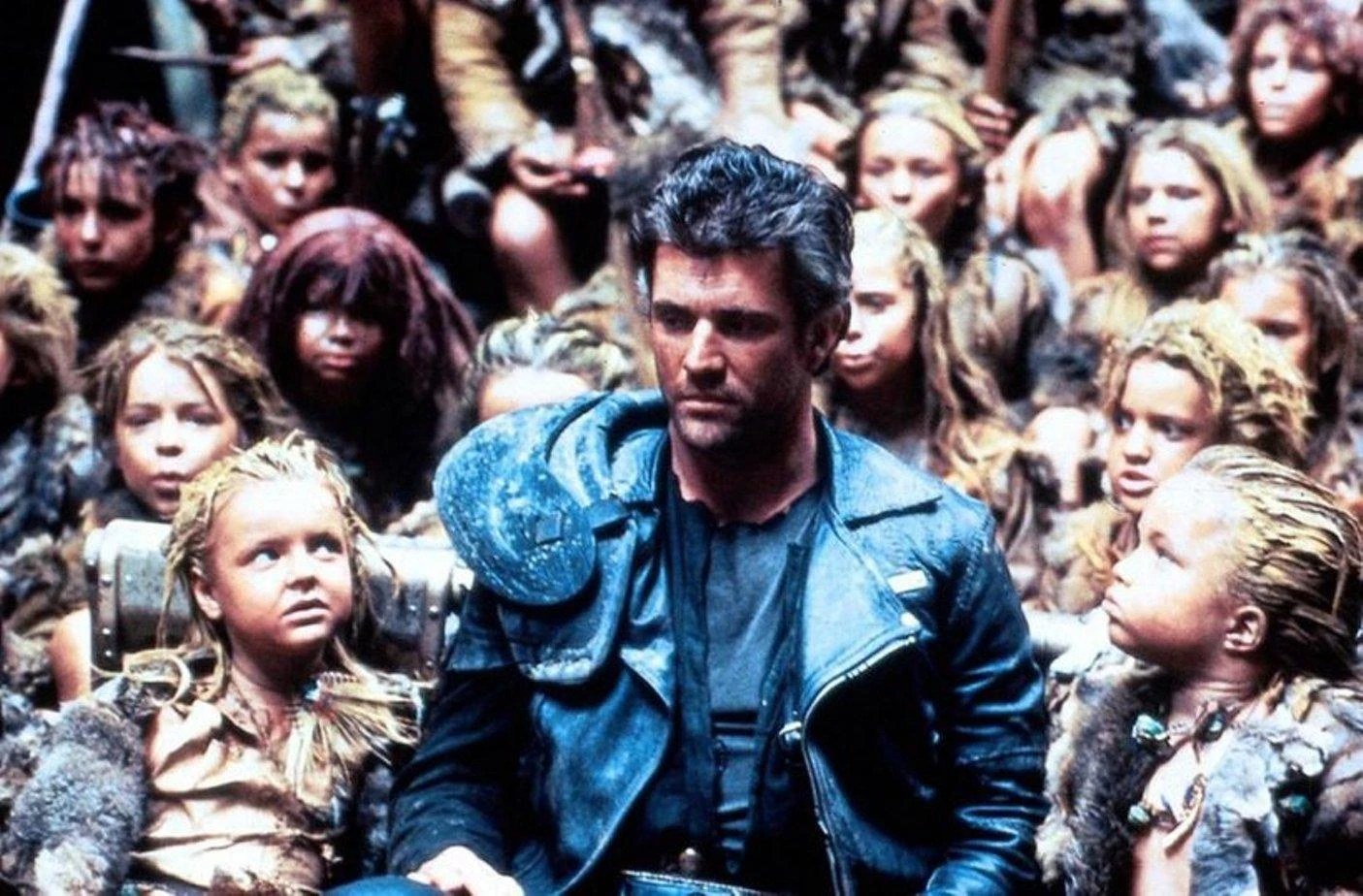
The old world had a name for this pattern, too, and it borrowed it from the islands north of the reel’s own continent. In Road Belong Cargo (1964), Peter Lawrence described movements in New Guinea that waited for ancestors or saviours to return with the wealth of the outside world, and took those beliefs seriously as reasoning rather than superstition. The Waiting Ones fit the description closely enough that the phrase “cargo cult” follows them through the old world’s writing about the reel. The Tribe’s cargo, though, isn’t goods. It’s grown-ups.
What the old world made of it
The reel’s own scholars found more in the gorge than in the rest of the reel put together. In 1985, Ross Gibson read the whole film as a Genesis story, the birth of a civilisation, and the Tribe is that birth at its most literal: a people inventing law, language, and scripture from scratch. Adrian Martin, who later wrote The Mad Max Movies (2003), found the cave scenes the least driven by action and the most openly theatrical in the series, and called the Tell a “dreamtime” recitation. That borrowed word deserves a pause, and I’ll come back to it. Dan Hassler-Forest (2017) counted the children’s oasis among the series’ stubborn little utopias. Claire Corbett, in the same journal issue, found the reel foregrounding Australia’s history of genocide and erasing it in the same gesture.
For a long time I wrote “empty country” in my notes for the stretch between the Crack and the city. Paul Williams sent me back to that phrase. He read the reel against the old world’s history of empire in Science Fiction Studies (2005), and in his book Race, Ethnicity and Nuclear War (2011) he named the habit I’d fallen into. Settlers had called the continent empty so that it could be claimed, and the reel, he argues, treats its desert the same way, as a blank stage where a hero can have his adventure. He’s hard on what the reel makes of the children, too, a people it shows slipping backwards. Savannah’s narration doesn’t read that way to me. She keeps the record, and the hero is a figure in it. Corbett kept me at the phrase. The children know where to find water and have names for every place that matters to them, but almost no one in the record can say what those places were called before the plane came down. The silence belongs to my sources as much as to the land, and I ought to have marked it that way.
The lights
The Tribe splits over Max’s refusal. Some stay in the Crack to keep waiting. Some, led by Savannah, set out across the Nothing to find Tomorrow-morrow Land themselves, and Max goes after them. The reel ends in the ruins of Sydney, a city of broken towers, where the children have made a home and, every night, light fires in the windows. Savannah narrates. They still do the Tell, she says, so they remember who they were and where they came from. And they light the city not just for the man who found them, but for all the ones still out there.
I’d put that split down to the stranger’s arrival. Savannah’s first Tell puts a version of it long before him. The first people in the Crack decided they didn’t need “the knowing” and could live there. Then they got lonely for “the high-scrapers and the video,” and Captain Walker picked twenty of them “of an age and good for a long haul,” and they walked out. The gorge had been home and not enough, both at once, before anyone came along to argue about it. When Savannah leads her party across the Nothing, she’s taking up one side of an argument older than she is.
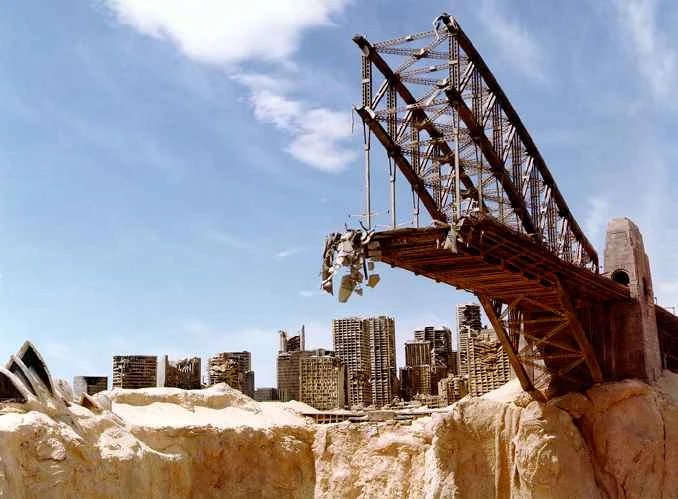


I find this the most hopeful ending in any reel in this series. The Waiting Ones didn’t stop waiting; they changed what they were waiting for. In the cave, one grown-up had to come back and recognise them. In the city, Savannah lights the windows for people whose names she’ll never know. The prophecy said a grown-up would bring them home. In the end the children went home on their own and became the grown-ups who light the way. I don’t know whose city it was before them. I know what they’ve begun to use it for.
Participant observation
The Waiting Ones are the people in this series I’d most like to see brought back to life on the October shore, because their rite needs nothing but a frame, a fire, and a crowd. Come as one of the Tribe. Wear the old world wrong: a necktie as a headband, a pilot’s cap as a crown, a record on a string, a fur over a scrap of airline uniform.
Build a Tell frame out of driftwood and tell the story of your people, real or invented, to anyone who’ll sit. Then hand the frame to the person beside you and let them say what they see through it. The Tribe gave the stranger its water and the best name it had; a turn at the Tell is the least you can offer. Learn the wordstuff. And at nightfall, light a lamp and leave it on for the ones still out there.
We’ll keep the kettle on.
The Reel Peoples
Sixteen peoples from the old reels and two from our own shore, written up at the fires by Perpétue Kettlewell, with a costume guide for each.
- No. 1The War Boys of the Citadel
- No. 2The Smokers of the Deez
- No. 3The Citizens of the Capitol
- No. 4The Bartertowners
- No. 5The Vuvalini of Many Mothers
- No. 6The Waiting Ones
- No. 7The Holnists
- No. 8The Londoners of the Traction City
- No. 9The Galadhrim
- No. 10The People of Zion
- No. 11The Droogs
- No. 12The Ape Society
- No. 13The Judges of Mega-City One
- No. 14The Morlocks
- No. 15The Aviators of Airhaven
- No. 16The Tail Section