


Les Londoniens de la ville-traction
Au musée, les Historiens exposent deux petites figurines jaunes comme des divinités. Pendant ce temps, dans les étages inférieurs, des villes entières sont démontées. Qui décide de ce qui mérite d’être gardé?
Idée de costume. Imaginez la poche où un Historien glisserait une trouvaille étiquetée. Dans les étages du bas, un manteau plus court et des habits de travail racontent une autre journée.
L’essai intégral et le guide détaillé sont en anglais. Lire l’essai · Voir les références visuelles

The Reel Peoples · No. 8 of 16
The Londoners of the Traction City
Notes on a City That Eats
Perpétue Kettlewell, written at the fires, 2285
Photo: Pappnaas666, CC BY-SA 3.0

The people of the old world built their cities on rock and called them eternal. The Londoners put theirs on wheels, and then on tracks, and then on the backs of a thousand smaller towns, and called it progress. I’ve studied many peoples who move with their herds. This is the only one I know whose herd is the city.
We know them from Mortal Engines (2018), the reel made from Philip Reeve’s novel of 2001. Their London is a city of tiers stacked on an enormous rolling chassis, with the dome of St Paul’s Cathedral on its summit and furnaces in its belly. It crosses a dried-up Europe called the Hunting Ground, chasing smaller towns, catching them in its jaws, and dragging them inside to be stripped for fuel, metal, and labour. The Londoners call this Municipal Darwinism. The towns call it something else.

What makes them worth a field guide is that they aren’t a wasteland people at all. They’re a civilisation: a people with guilds, museums, manners, and a cathedral, who happen to eat their neighbours.
The tiers
London is a social order you can see from a distance. The rich live at the top, near the cathedral, in clean streets with gardens and a view. The middling sort live below them. At the bottom, near the furnaces and the jaws, is the Gut, where the captured towns are torn apart and their people put to work. Altitude is class. To rise in London is literally to rise, and to fall is to fall towards the engines.

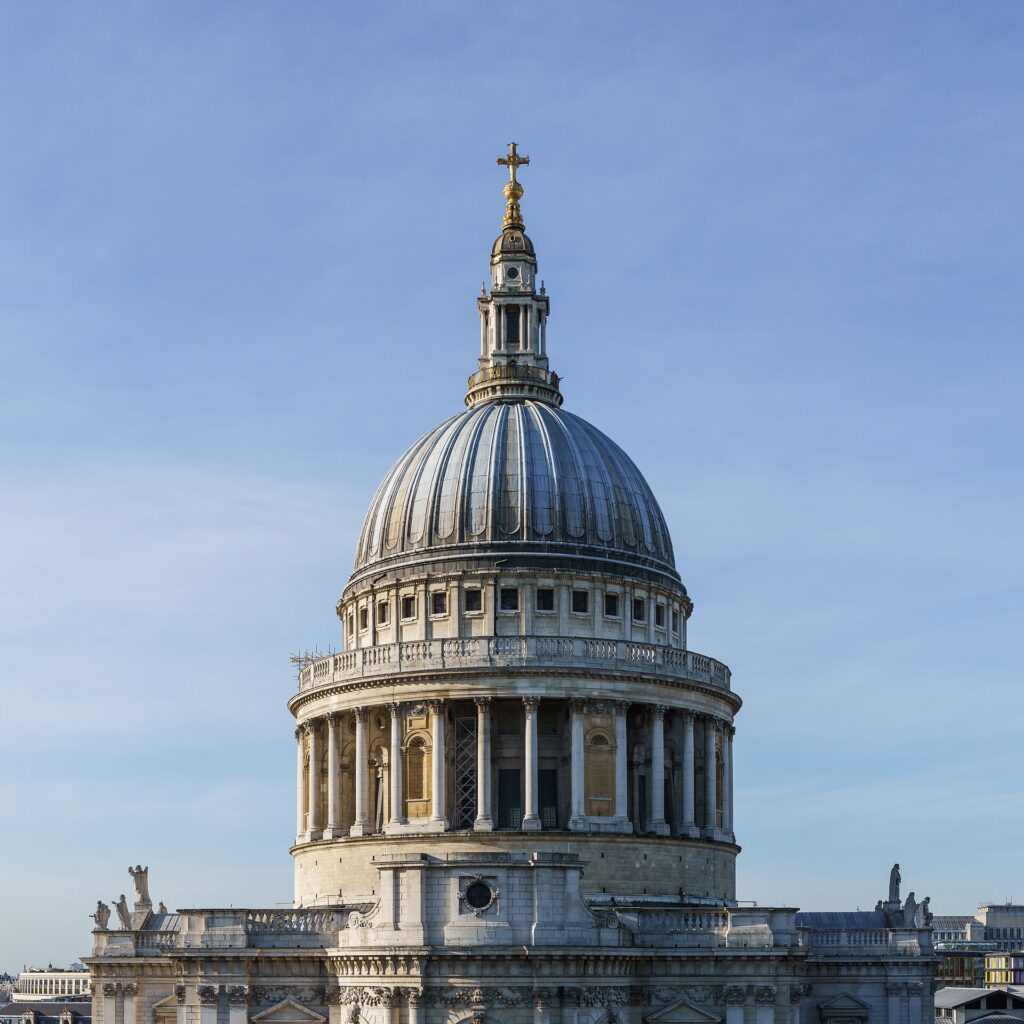

Every people builds a cosmology, and the Londoners have built theirs out of steel. Lewis Mumford, the old world’s great historian of cities, argued in The City in History (1961) that the first cities were containers before they were anything else: of grain, of people, of power. In a later book, The Myth of the Machine (1967), he described the ancient kingdoms as megamachines, vast organisations of human beings arranged like parts in an engine and directed from the top. Mumford meant it as a metaphor. The Londoners have taken it as a blueprint. Their city is a megamachine with a cathedral on top, and every citizen knows which tier of it they were born on.
The guilds
The city is run by guilds, and a Londoner is first of all a member of one. The Engineers keep the engines turning and the city moving, and a guild that holds the engine holds a great deal else. The Navigators steer it and choose its prey. The Merchants run the markets where the spoils are sold. And the Historians keep the past. Each guild wears its own badge, and the badges are worth studying: the Engineers’ is a cog with an eye in it, the Historians’ a star. One guild watches the machine. The other keeps the shine on the past.


It’s the Historians I find most revealing. The reel’s hero, Tom Natsworthy, is an apprentice in their guild, and his hero, at first, is the guild’s head, Thaddeus Valentine, a gentleman explorer with a long coat and a scholar’s charm. Their work is to go down into the Gut when a town is caught and rescue whatever’s left of the old world before the furnaces get it. They call it Old-Tech, and they treat it with something close to reverence.
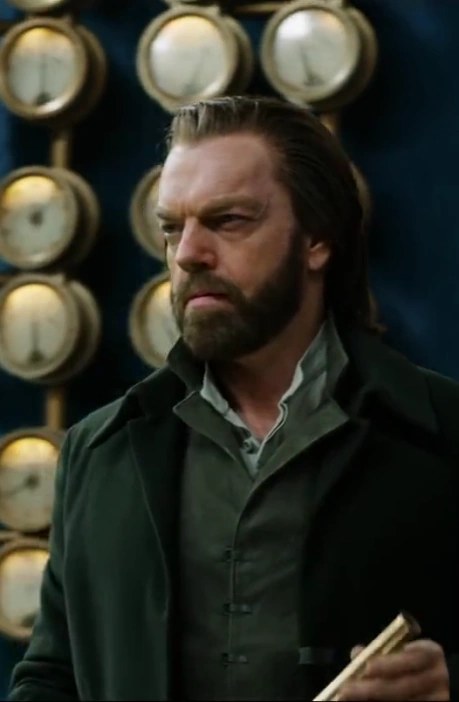

Look at how the upper tiers dress and you’ll see the cosmology again. The cut is tailored and buttoned, with high collars, waistcoats, long coats, and badges at the breast, in dark cloth for the guilds and pale cloth for their daughters. Nothing about it was made to run, climb, or work. A Londoner of rank dresses like a person who will never need to leave the city, because the city does the travelling.



The museum
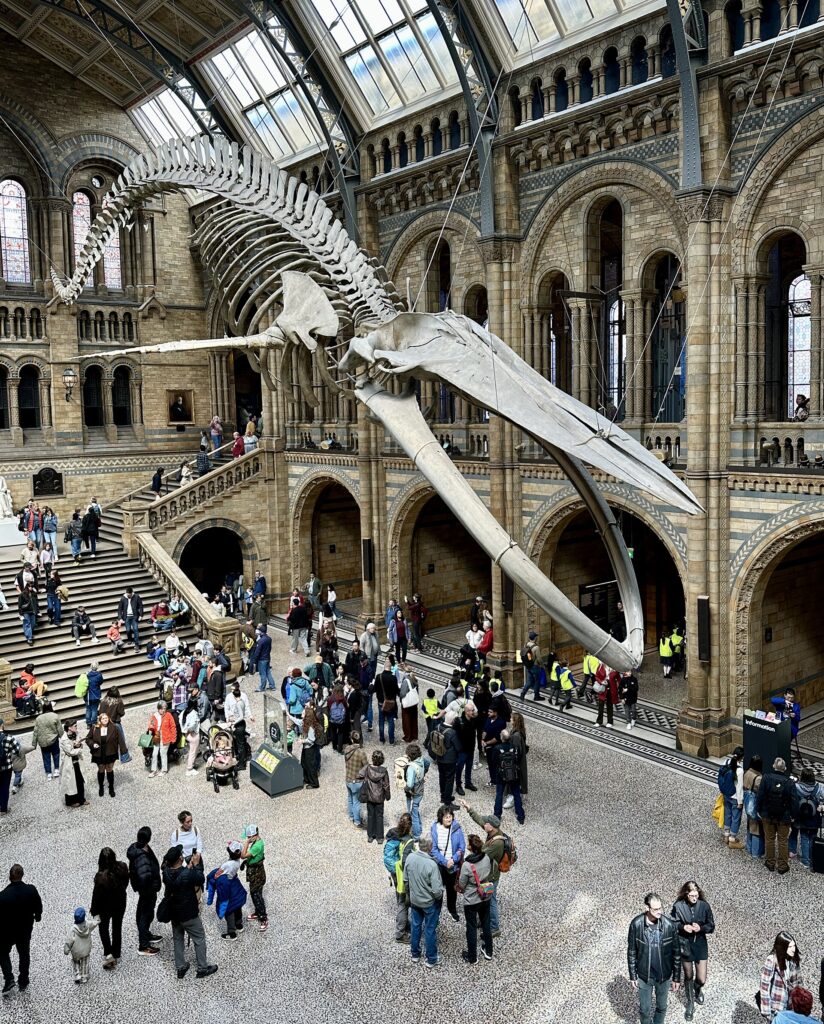
The London Museum is where the Historians keep their finds, and it’s the funniest room in any reel in this series. My own century has been laughing at it for as long as it has been watching the reel. There’s a gallery of old-world telephones, broken and polished, under the heading “Screen Life.” And there’s a shrine labelled “American deities,” which holds a pair of small yellow figures in goggles, raised on a plinth like gods of a lost religion.
I laugh too, and then I stop, because I’m an anthropologist and I’ve worked in museums. James Clifford, in The Predicament of Culture (1988), wrote about how the old world’s museums gathered objects from other peoples, stripped them of their uses, and arranged them into systems of meaning that said more about the collectors than about the people who made them. The London Museum is that argument with the lights on. The Historians don’t know what a telephone was for or who those yellow figures were, so they’ve made them into whatever London needs them to be: proof that the past was strange, and that London is its rightful heir.
I used to stop the reel on the city’s approach and try to count the tiers. Now I watch the intake instead. Down at the jaws, where Tom goes looking for old-world salvage, somebody has to decide what goes upstairs with a label and what goes straight to a furnace. The little yellow figures in the museum cases survived that choice. I’d like to know who made it, what else came in with them, and what was burnt on the day they were chosen. Nothing in the museum tells me that.
Some of the answer is in the reel, if you listen rather than look. Down in the Gut, a voice tells the people London has just swallowed that their Old-Tech is to be deposited in the bins provided. Later Tom tells Katherine Valentine what has been happening to the finds: pieces keep disappearing, he has reported it up the chain, and nothing has been done. So he has taken precautions of his own. The weapons-grade pieces he’s set aside, he means to tip over the side the next time the city passes a swamp. I’d gone to the museum to see what a Historian keeps. I’m glad I stayed to hear what this one meant to throw away. The joke in the cases has a serious twin below decks: London decides which past survives, and in what form, and not every Londoner agrees with the decision. Valentine, meanwhile, has been gathering an old weapon of his own. The reel lets me set the two practices side by side, and that’s where I’ll leave them.

The law of the jaws
Municipal Darwinism gives Londoners a language for defending what their city does to smaller towns. Big towns eat small towns. Fast towns eat slow ones. It’s nature, the Londoners say, and nature can’t be cruel.
The old world had heard this sermon before. It was Herbert Spencer, not Darwin, who coined the phrase “survival of the fittest,” in his Principles of Biology (1864), and Spencer’s followers took a theory about finches and barnacles and made it into an excuse for empires, factories, and the poorhouse. The Londoners have done what Spencer’s followers did. They’ve taken a description of how things happen and turned it into a commandment about how things ought to happen. A city that eats its neighbours wants to believe it had no choice.
The scholars of the novel the reel was made from saw the same sermon in their own century. Elizabeth Bullen and Elizabeth Parsons, writing in Children’s Literature in Education (2007), read Reeve’s predator cities as a dystopian vision of global capitalism, drawing on the sociologists of their day, Ulrich Beck and Zygmunt Bauman, who described a world in which risk is manufactured by the very systems that promise safety. London is a fine example. The faster it hunts, the less there is to hunt, and the hunting is the danger.
The reel found its own scholar later. Monica Alina Toma, writing in Caietele Echinox (2025), reads the moving city as a spectacle whose ingenuity can’t be separated from its appetite, a machine that devours weaker towns for fuel, and she notices how the upper decks cheer each catch. She follows Tom’s fall from the city as an education that takes his certainties apart, and she sets Valentine, who turns science into a weapon, against Governor Kwan of the Shield Wall, who uses it to protect. Toma calls the cheering complicity. I haven’t found a kinder word for it.
The reel gives London’s ambition a weapon from the old world, a buried engine of destruction called MEDUSA, and gives it a target: the Shield Wall, the great barrier that protects the static cities of the east, where people still live on the ground. London wants to break through and eat a whole country at once. The Londoners in the lower tiers are never asked what they think.
At the fires we keep a law: the stranger drinks first. In London, the stranger is caught first, stripped second, and offered a place in the Gut third.
The stranger in the Gut
Into this city comes Hester Shaw: a young woman with a scarred face, a red scarf, and a grudge against Valentine, who killed her mother. She’s from outside, from the ground, the kind of person London eats. Tom follows her, falls off the city with her, and learns, in the slow way of every young man raised at the top of a hierarchy, that the world below it is full of people.


Hester’s own people are the strangest in the reel. She was raised, after her mother’s death, by Shrike, a Stalker: a dead soldier rebuilt with Old-Tech into a walking machine, a relic of the old wars that kept on marching. And she finds her allies among the aviators, who live in Airhaven, a town held up in the sky by balloons, and fly for the Anti-Traction League under Anna Fang, a pilot with a price on her head and an airship called the Jenny Haniver. The ground, the air, and the dead: the reel surrounds London with every kind of people London can’t eat.
These strangers are the counter-culture to London, and they dress like it. Where London is waistcoats, brass, and buttons, the people of the air and the ground are leather, scarves, and practical layers in rich colours. You can tell which side someone’s on by whether their clothes were designed to stand still or to move.

In the end, the weapon is broken and the engine stops, and a people who had never stood still has to learn what every other people in this series learned long ago: how to live in one place, among neighbours, without eating them. The reel takes its title from Othello, where the “mortal engines” are cannons. I’ve always thought it fits the city better. London was mortal all along. It just ran too fast to notice.


Participant observation
London is a city of guilds, and nobody walks its decks without one. Come to the October shore in a guild’s colours: Historian, Engineer, Navigator, or a Gut worker with oil to the elbows. Pick the guild first and the clothes follow, because every Londoner dresses for the tier he stands on and the work he does there. Make the badge yourself, in brass or card, and wear it where people can read it.
Then bring a relic small enough for one pocket and give it a label. The best label will make perfect sense to somebody who has never seen the thing work, and no sense at all to anyone who has. When a stranger offers to explain what it really was, thank them politely, and write down what they say. That’s how museums happen.
We’ll keep the kettle on.
The Reel Peoples
Sixteen peoples from the old reels and two from our own shore, written up at the fires by Perpétue Kettlewell, with a costume guide for each.
- No. 1The War Boys of the Citadel
- No. 2The Smokers of the Deez
- No. 3The Citizens of the Capitol
- No. 4The Bartertowners
- No. 5The Vuvalini of Many Mothers
- No. 6The Waiting Ones
- No. 7The Holnists
- No. 8The Londoners of the Traction City
- No. 9The Galadhrim
- No. 10The People of Zion
- No. 11The Droogs
- No. 12The Ape Society
- No. 13The Judges of Mega-City One
- No. 14The Morlocks
- No. 15The Aviators of Airhaven
- No. 16The Tail Section