

La société des singes
Cornelius découvre une poupée dans la grotte. Quand elle parle, l’histoire que les autorités racontent sur les humains devient beaucoup plus difficile à défendre.
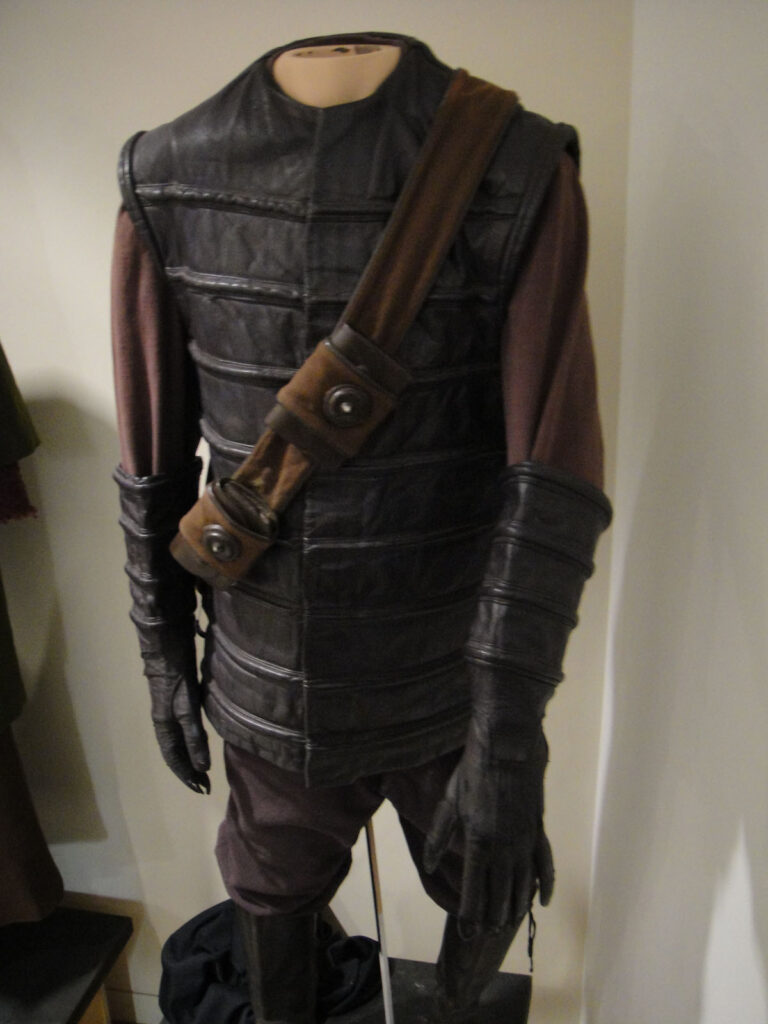
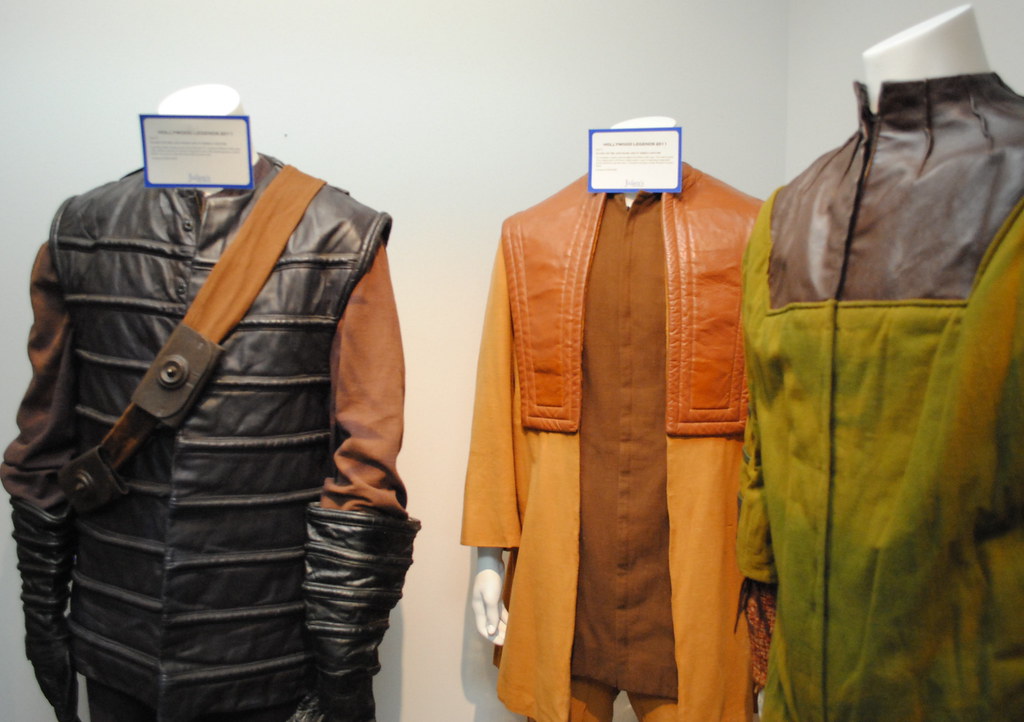
Idée de costume. Les couleurs identifient le rôle. Regardez aussi les épaules, les poignets et la coupe des manteaux. Le vêtement peut annoncer un scientifique ou un magistrat avant même qu’on voie le masque.
L’essai intégral et le guide détaillé sont en anglais. Lire l’essai · Voir les références visuelles

The Reel Peoples · No. 12 of 16
The Ape Society
Notes on a Society That Wrote Us Out of Its Scriptures
Perpétue Kettlewell, written at the fires, 2285
Photo: tmastro, CC BY-SA 3.0

This series began with a people that worshipped engines and ends with a people that worships a book. In between, I’ve described eleven human cultures. The twelfth isn’t human. It’s the only people in this series that has studied us the way I’ve been studying them, and come to the same conclusion I sometimes do.
We know them from Planet of the Apes (1968), the reel made from Pierre Boulle’s novel of 1963. An astronaut named Taylor crash-lands with his crew on what he takes to be a distant planet. He finds a world ruled by apes, who speak, read, write, keep laws, and hold trials, and humans who run wild in the fields, speechless, and are hunted, caged, and studied like animals.
Taylor’s throat has been wounded in his capture, so for the first part of his stay he can’t speak either. He’s the perfect subject for an anthropologist: a stranger who can observe but not explain himself. The apes, in their turn, are the perfect subjects for him, because they’ve built a complete civilisation and they’re absolutely certain of everything in it.


The three estates
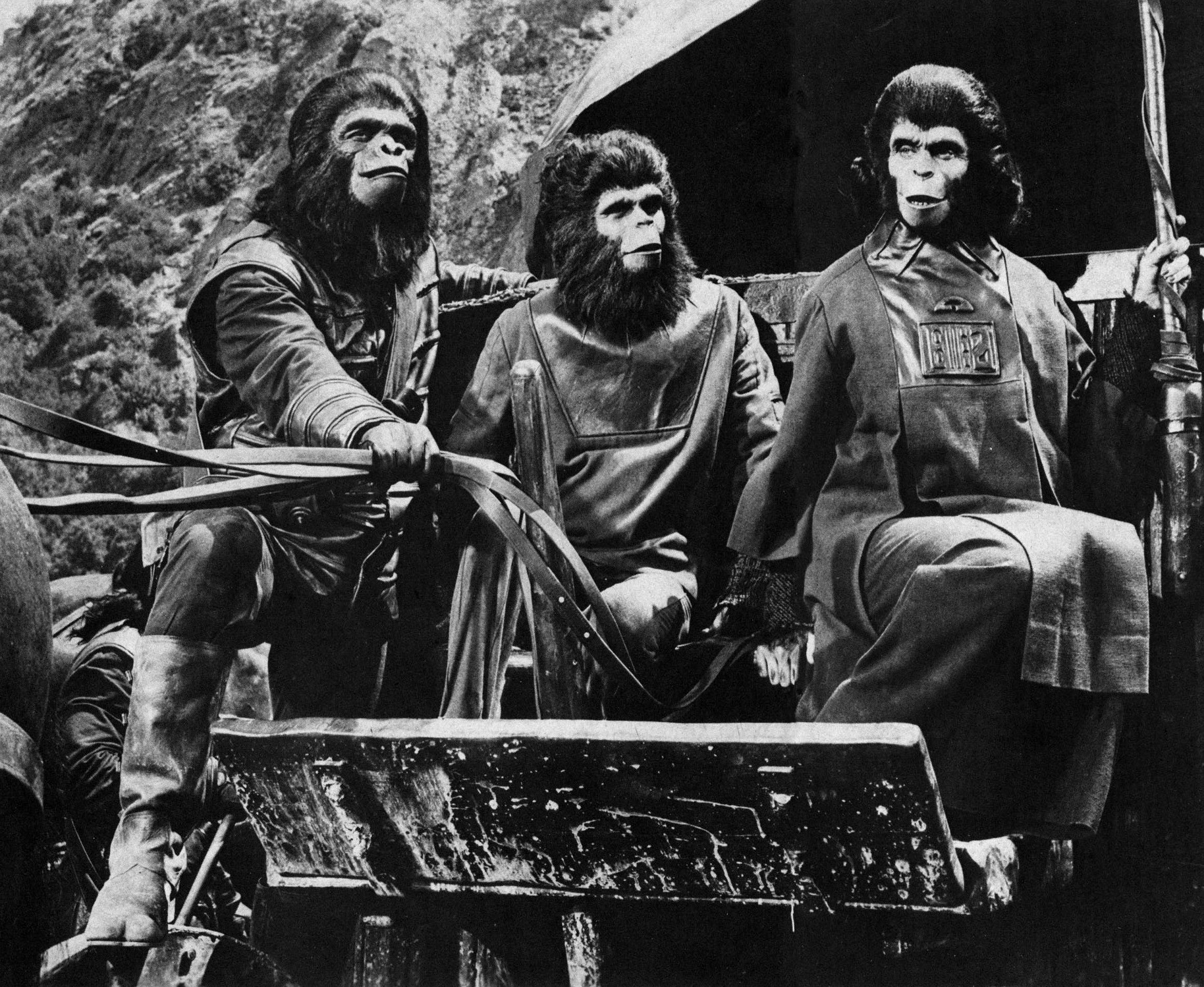
Ape society is divided into three castes, and you can tell which is which at a glance. The gorillas are the soldiers, police, hunters, and labourers. The orangutans are the government and the clergy, the keepers of law and faith. The chimpanzees are the scientists, doctors, and scholars: the intellectuals, with all the brains and none of the power.
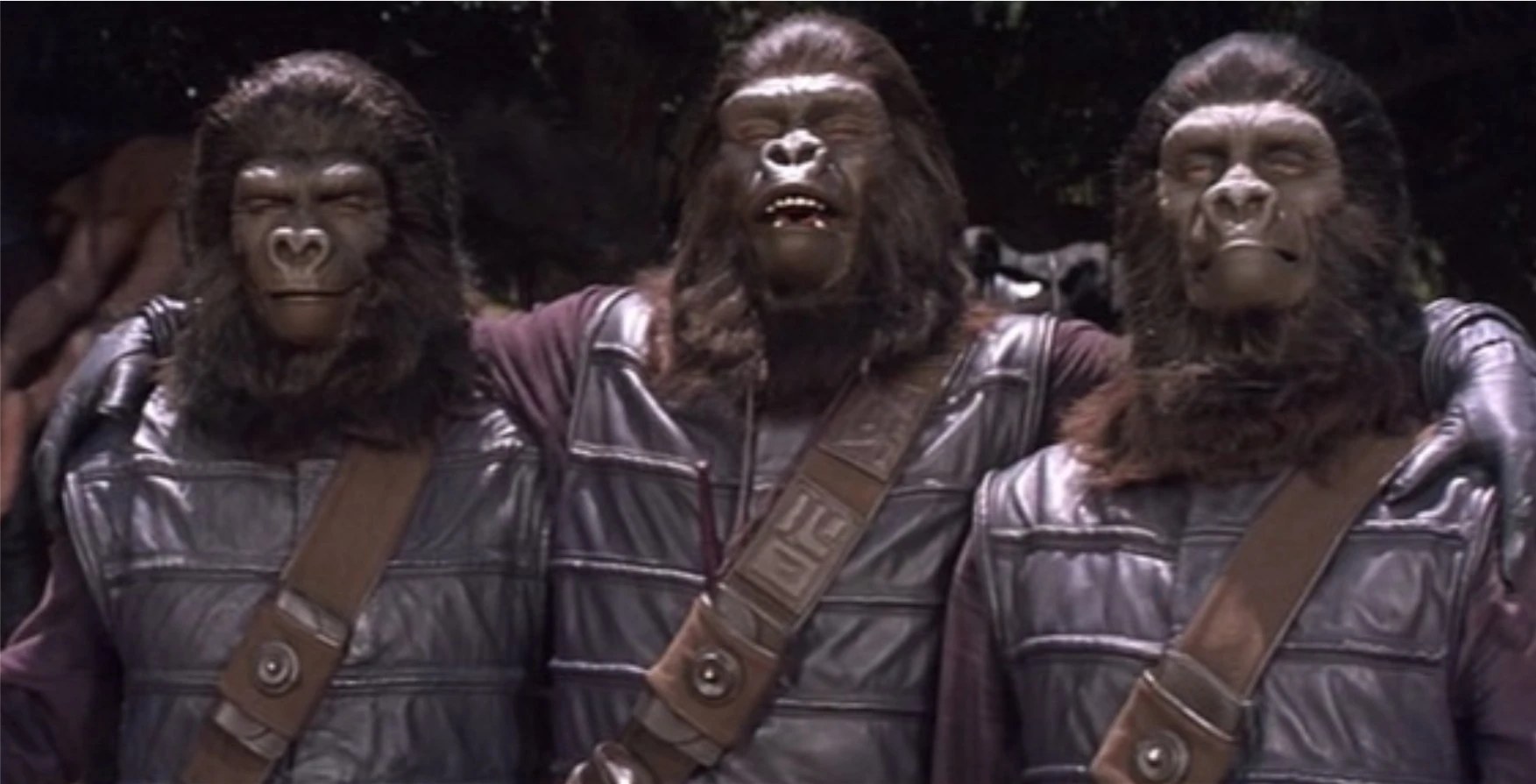
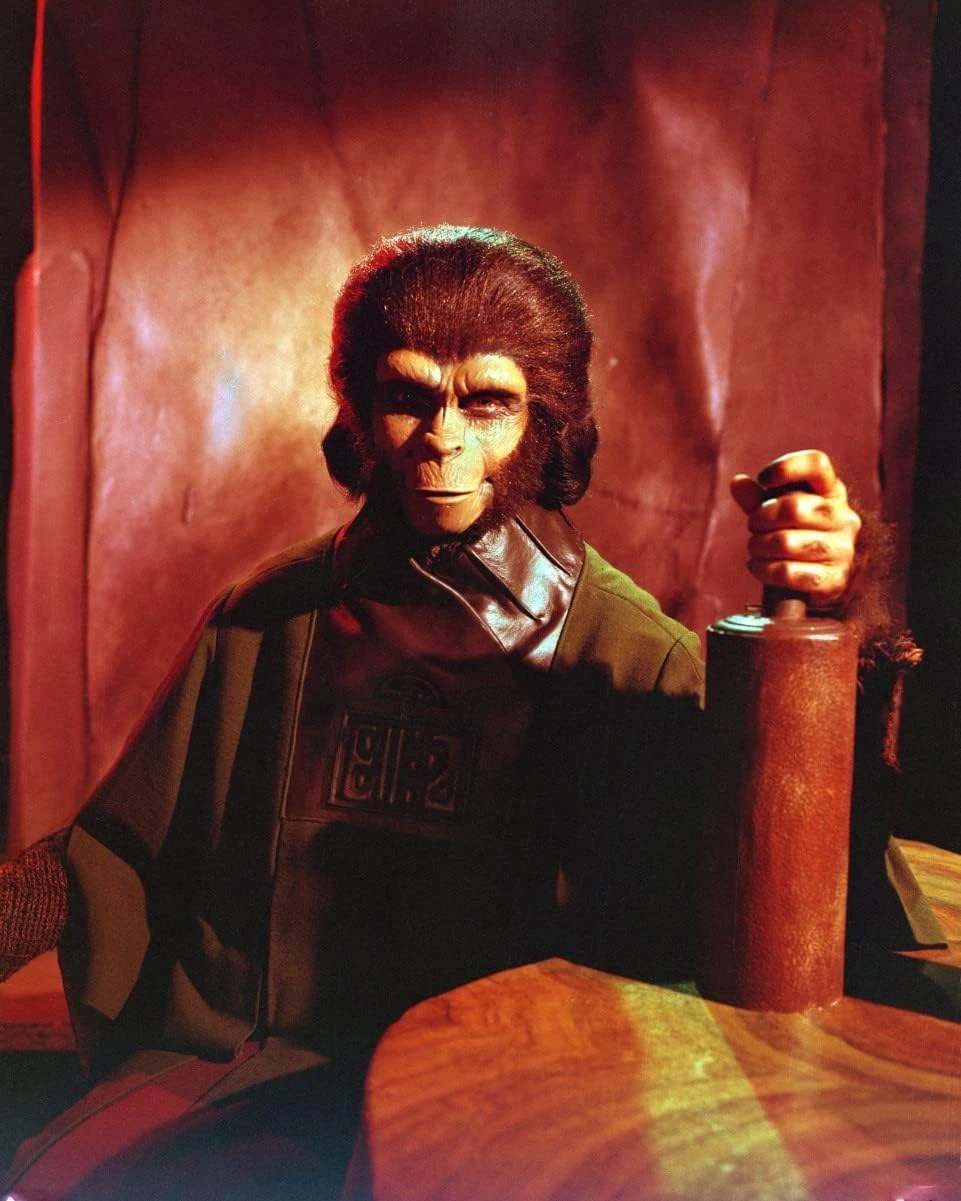
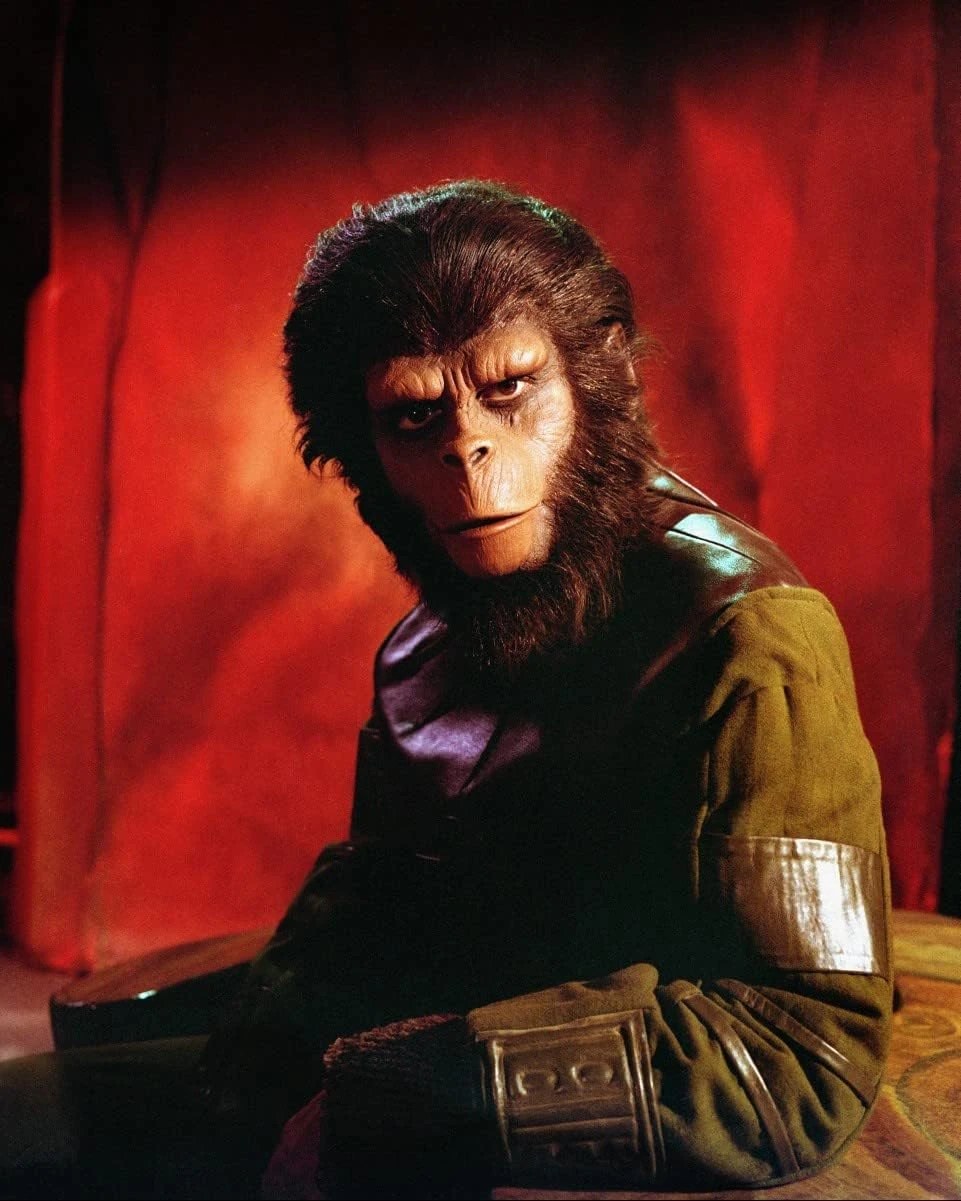
Each caste has its own colour. The reel’s costume designer, Morton Haack, dressed the chimpanzees in green, the orangutans in orange and tan, and the gorillas in a dark maroon purple with black leather, gloves, and bandoliers. One of the reel’s wardrobe men explained the logic later: orange for orangutans because nothing else could be right, and maroon for gorillas because a darker brown vanished against the trees. It’s the most legible social system I’ve ever studied. The old world had castes too, but it rarely colour-coded them so honestly.



The faces were the work of John Chambers, whose ape make-up earned him an honorary award from the old world’s film academy the following spring. It’s worth noticing what the faces leave to the clothes. Chambers gave each species its own head, but within a species the faces are close kin; it’s the cut and colour of the coat that tells you whether a chimpanzee is a student, a doctor, or a fugitive.
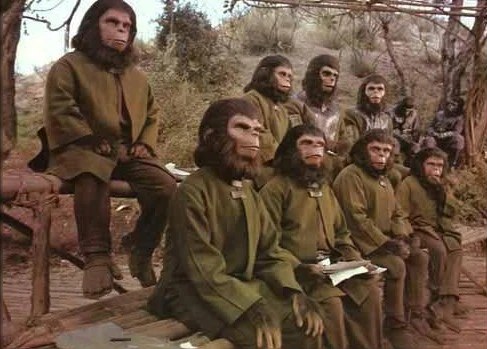
Louis Dumont, in Homo Hierarchicus (1966), argued that caste is not simply a ladder of power but a structure of value, organised by a single principle that places each group above or below the others, and that the people inside it experience the order as natural rather than imposed. That’s how the apes live. The gorillas don’t resent the orangutans; the chimpanzees grumble, but they don’t revolt. The old world’s actors who played the apes reported that, on the set, between scenes, the chimpanzees tended to eat lunch with the chimpanzees, and the gorillas with the gorillas, without anyone asking them to. Costume, it seems, is stronger than it looks.
The Sacred Scrolls
The orangutans rule by scripture. Their law and their faith are written in the Sacred Scrolls, attributed to a founding figure called the Lawgiver, and among the things the Scrolls teach is that ape was made in God’s image and that man is a beast, to be feared and kept down. The highest official we meet, Dr. Zaius, holds two titles at once: Minister of Science and Chief Defender of the Faith. In the apes’ city, there is no difference between what’s true and what’s permitted.
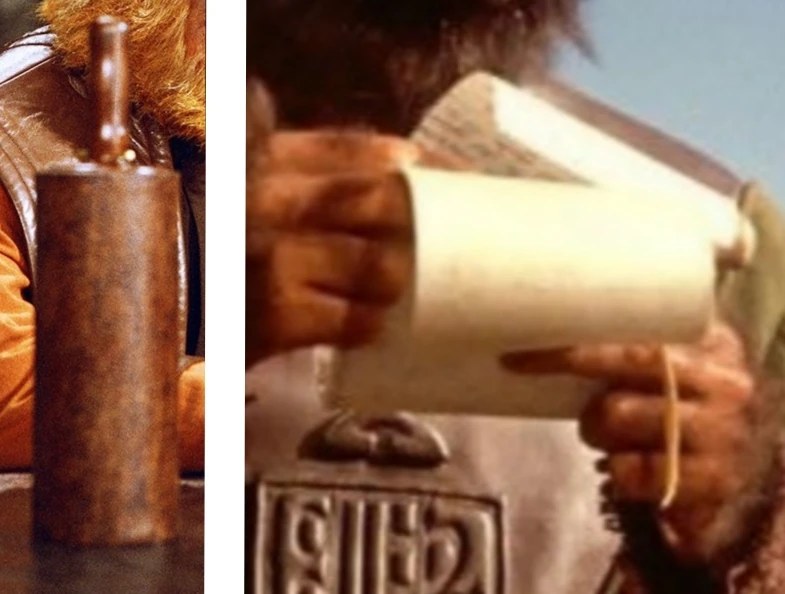
When Taylor finally speaks, the orangutans put him on trial, not for any crime, but for the heresy of being a talking man. The reel gives us one of its great images here: the three orangutan judges, faced with evidence they don’t want to hear, strike the old poses of the three wise monkeys, one covering his ears, one his eyes, and one his mouth. It’s a joke, and it’s also an exact description of how an orthodoxy defends itself.
The old world’s critics recognised the trial at once. It echoed the famous American trial of 1925 in which a schoolteacher was prosecuted for teaching evolution, turned inside out: here it’s the evolved creature in the dock, and the defenders of scripture who win. Eric Greene, in Planet of the Apes as American Myth (1996), went further, reading the reel and its sequels as a long American allegory about race, caste, and the fear of the powerful that the people they’ve kept down will one day rise. With Greene beside me, I watched the judges’ hands again. They can sit there covering their ears because Cornelius and Zira, the two apes who speak for Taylor, already know the price of speaking. A tribunal can keep a great many distinctions without ever having to write them down.
The dig
The hero of the reel, to my mind, isn’t Taylor. It’s a chimpanzee archaeologist named Cornelius, who has been digging in a cave in the Forbidden Zone, a desert beyond the city where apes are forbidden to go, and has found things that shouldn’t be there: tools older than any ape, and a doll, a little human figure that speaks when it’s squeezed. He and his fiancée, Zira, an animal psychologist, are the first apes to suspect that Taylor isn’t an animal.
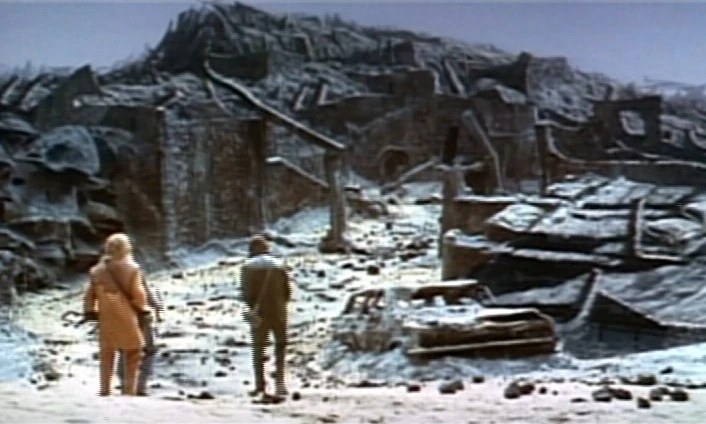
I can’t read those scenes without a pang of professional fellow-feeling. Cornelius is doing what I do: reading a dead culture through its rubbish, and finding that it contradicts the official history of his own. Donna Haraway, in Primate Visions (1989), argued that the old world’s science of apes was always partly a science of itself, that its primatologists looked at apes and saw stories about human nature, family, sex, and race. Planet of the Apes turns the instrument around. The apes look at humans and see what they need to see, until a chimpanzee with a trowel shows them something else.
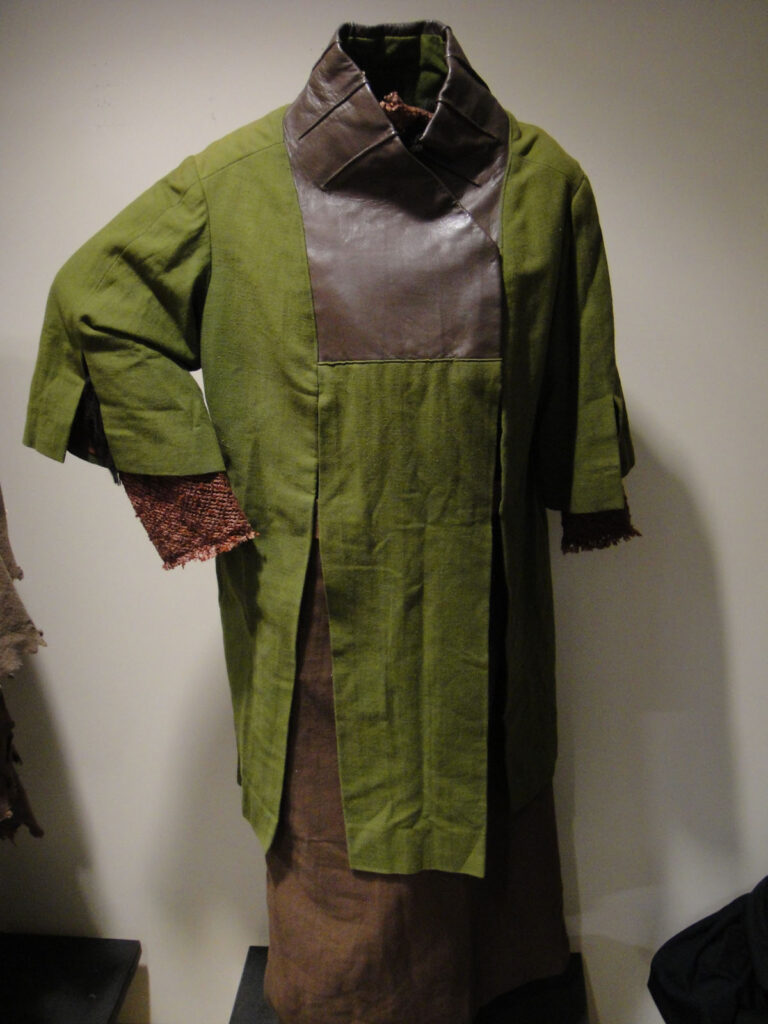

The colours tell you who works where. They don’t tell you who decides which evidence counts, and that work is done case by case. Noël Carroll, a philosopher of the old world writing in Ethical Perspectives (2013), read the whole reel as a thought experiment aimed at one doctrine: natural slavery, the claim that some beings are born to be ruled. The apes hold it about men, and the reel tests it the only way it can be tested, by putting among them a man who can argue back. I used to think the test was run at the tribunal. I’ve come to think it’s settled in the cave. Cornelius brings what he’s dug out of the ground, the remains of a people who made things before any ape did. Zaius has the Scrolls. Each has brought a way to tell what came first. Then the toy speaks, and Zaius is asked whether an ape would make a human doll that talks. I watched what Zaius did with the cave after that. He had it sealed, with the evidence inside, and charged the two chimpanzees with heresy.
Zaius, it turns out, knew all along. He knew that men had once ruled, and he knew what they’d done with the world. His orthodoxy is a decision, not ignorance. He has looked into the evidence and chosen to bury it, because he believes the apes are safer not knowing what humans are capable of. I disagree with him, as a scholar must. As a citizen of a world that was very nearly destroyed, I understand him better than I’d like.
At the fires we keep a law: the stranger drinks first. In the apes’ city, the stranger is caged first, and whether he may drink at all is a question for the tribunal.
The city
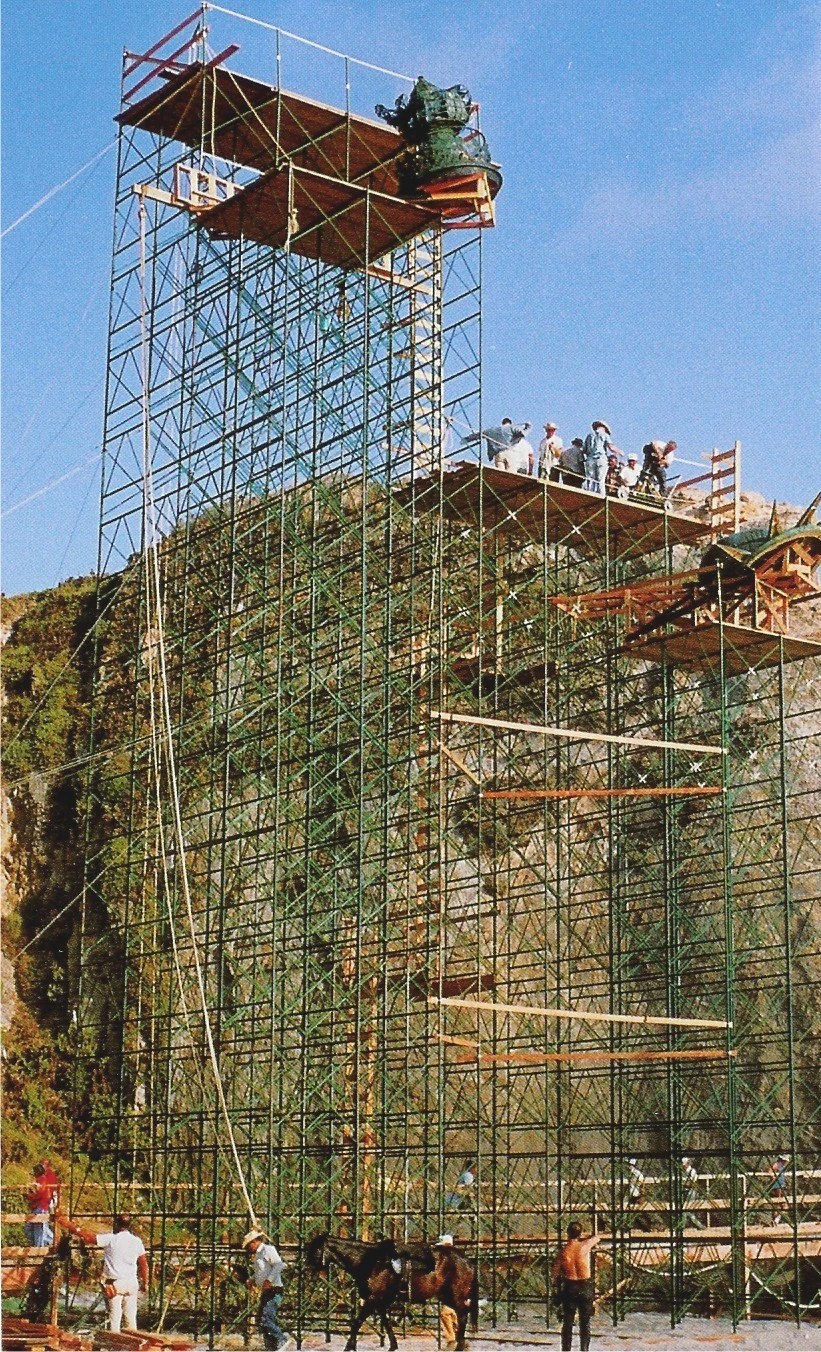
A word on the city itself, because it’s the apes’ largest artefact. Its houses are rounded and cave-like, carved, it seems, out of the rock itself, with no straight lines anywhere. The reel’s builders made them by spraying a hard skin of foam over timber frames, so that a city meant to look ancient and organic was, underneath, scaffolding. I find that the most honest thing about the apes’ civilisation. Their orthodoxy works the same way.
The shore
A warning for readers who haven’t seen this reel: the next three paragraphs give away its ending. The apes would prefer you stopped here.
And then the reel ends, on a beach. Taylor rides off along the sea with Nova, a human woman who can’t speak, to find out what’s beyond the Forbidden Zone. He finds it half-buried in the sand: the head and torch of a great green statue of a woman in a crown, the old world’s monument to liberty, broken and drowned and impossible to mistake. He wasn’t on a distant planet. He was home, and his own species had done this.
It’s the most famous ending in any reel in this series, and I’ve saved it for last for a reason. Every people I’ve described in these notes lived after an end. The apes are the only ones who know exactly whose end it was, and who’ve organised their whole civilisation around never letting it happen again. Their faith is false, their science is censored, and their society is a cage. But their founding law, as far as we can reconstruct it, is a warning about us.
This series began on a road in a desert and ends on a shore. That’s where our festival ends too. I’m content to leave it there.
Participant observation
The apes are the most fun people in this series to come as, and the most uncomfortable to think about, which is the best combination there is. Come to the October shore as one of the three estates, and start with the coat, not the face. You can tell which room an ape works in by the cut of it: the gorilla’s leather and bandolier, the orangutan’s robe and collar, the chimpanzee’s working green with ink on the cuffs. Get the yoke, the cuffs, and the colour right, and the coat makes the introduction before anyone looks at the mask.
Then stay in your caste’s character: march if you’re a gorilla, pronounce if you’re an orangutan, and ask awkward questions if you’re a chimpanzee. And if a human at the fire starts to talk, call a tribunal.
We’ll keep the kettle on.
The Reel Peoples
Sixteen peoples from the old reels and two from our own shore, written up at the fires by Perpétue Kettlewell, with a costume guide for each.
- No. 1The War Boys of the Citadel
- No. 2The Smokers of the Deez
- No. 3The Citizens of the Capitol
- No. 4The Bartertowners
- No. 5The Vuvalini of Many Mothers
- No. 6The Waiting Ones
- No. 7The Holnists
- No. 8The Londoners of the Traction City
- No. 9The Galadhrim
- No. 10The People of Zion
- No. 11The Droogs
- No. 12The Ape Society
- No. 13The Judges of Mega-City One
- No. 14The Morlocks
- No. 15The Aviators of Airhaven
- No. 16The Tail Section