

Les Galadhrim
Gimli demande un cheveu à Galadriel. Elle lui en donne trois. Les présents de Lórien continuent leur voyage bien après que leurs hôtes ont disparu de la vue.
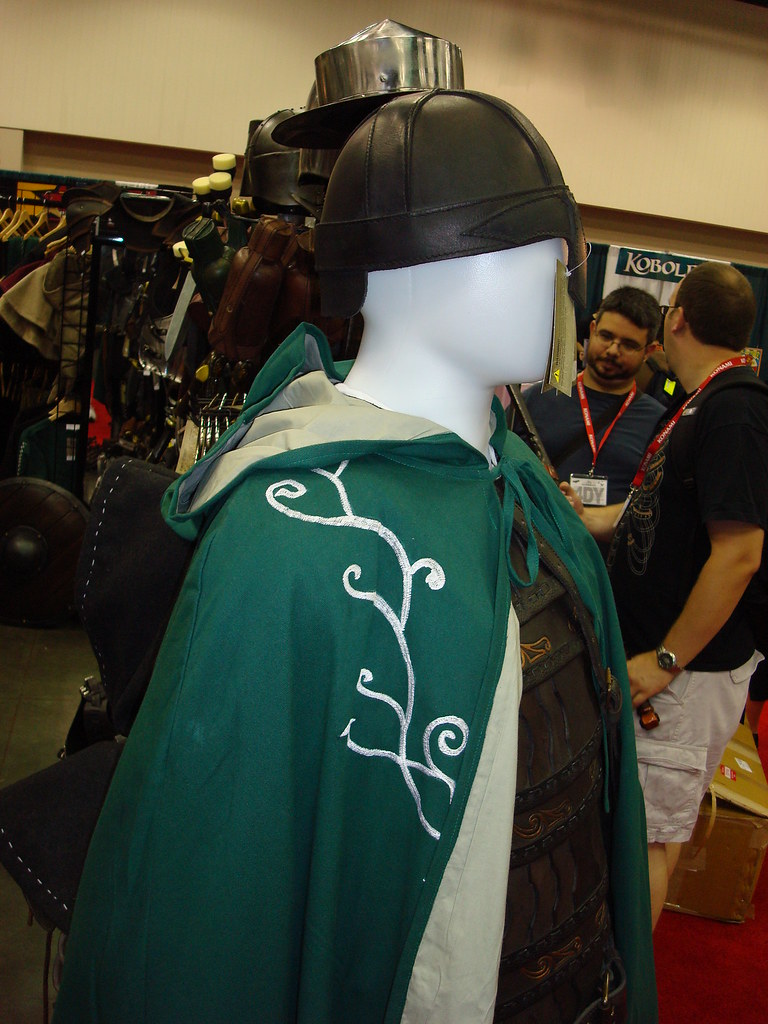
Idée de costume. Une cape grise et une broche en feuille donnent un point de départ. Pour évoquer Galadriel, observez le tombé d’une étoffe pâle. Pour un garde de la forêt, étudiez plutôt la cape et son attache.
L’essai intégral et le guide détaillé sont en anglais. Lire l’essai · Voir les références visuelles
The Reel Peoples · No. 9 of 16
The Galadhrim
Notes on a People Preparing for Their Own Afterwards
Perpétue Kettlewell, written at the fires, 2285
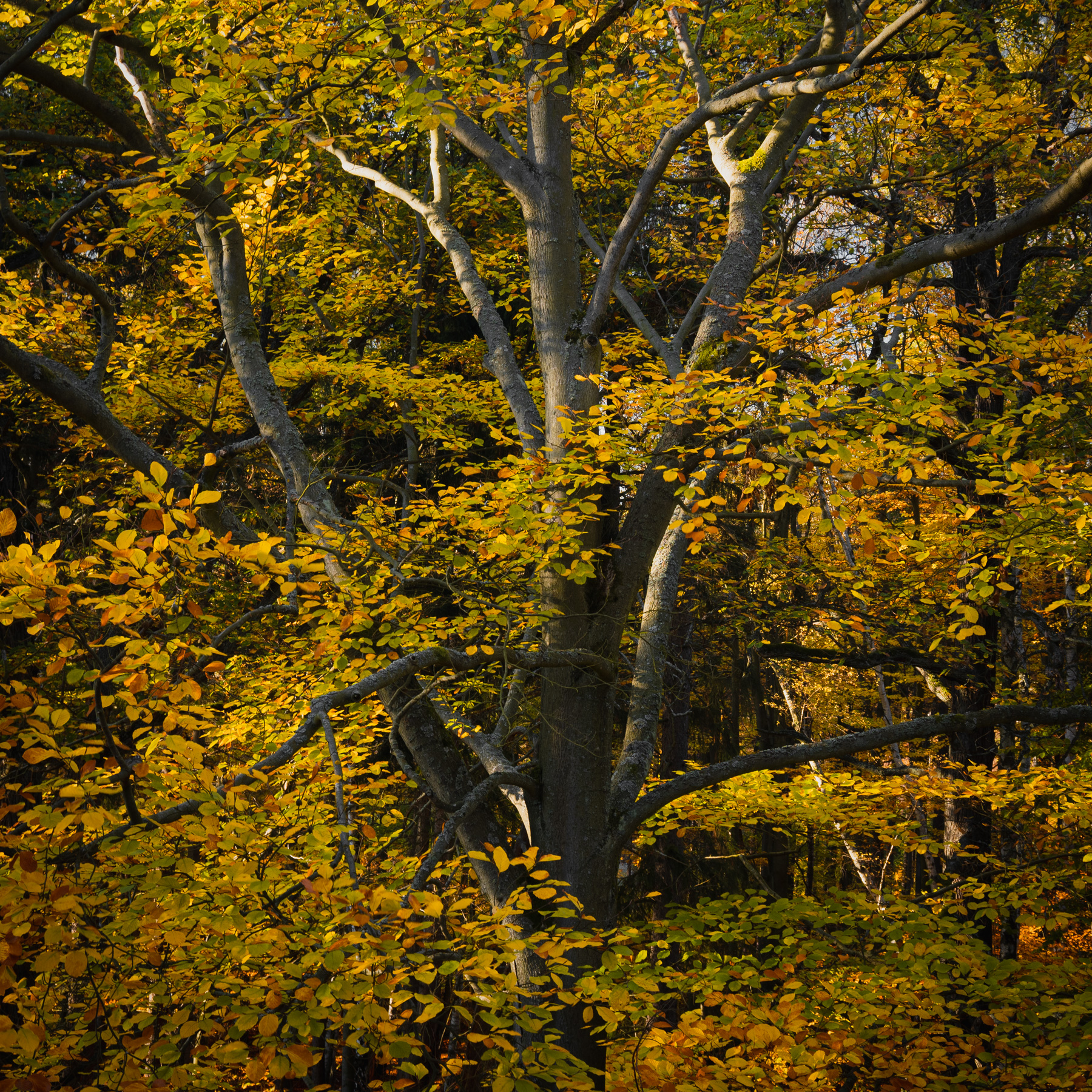
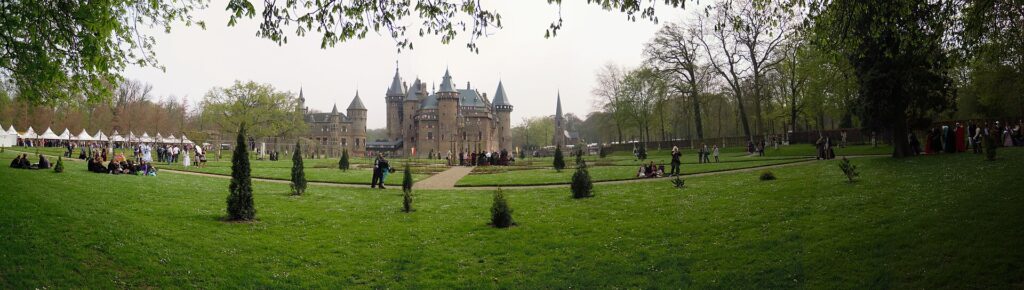
Photo: Ted Moravec, CC0

Every people in this series lives after the end of a world. The Galadhrim are the only one that lives before the end of its own, knows it, and has decided to spend the time beautifully.
We know them from The Fellowship of the Ring (2001), the first of Peter Jackson’s three reels made from J. R. R. Tolkien’s The Lord of the Rings. Their name means the tree-people. They live in Lothlórien, a forest of immense silver-barked trees with golden leaves that, in the novel, don’t fall until spring brings new ones, and they make their homes not on the ground but in the branches, on platforms called flets, joined by stairs that wind up the trunks. Their rulers are the Lady Galadriel and the Lord Celeborn. Their guardian on the borders is Haldir, a marchwarden.

They are old. Some of them are very old: the Lady remembers the world as it was thousands of years before the reel begins. And they are leaving. The age of their people is ending, and one by one they are taking ship into the West, away from the world, never to return. Lothlórien is a place held in suspense, as beautiful as it is because it’s the last of its kind, and everyone in it knows that.
The border
The Fellowship comes to Lothlórien in grief, having lost their guide, the wizard Gandalf, in the mines of Moria. They’re met in the forest by archers who seem to step out of the trees, arrows already drawn. The marchwarden looks the company over and remarks, of their dwarf, that he “breathes so loud we could have shot him in the dark.”
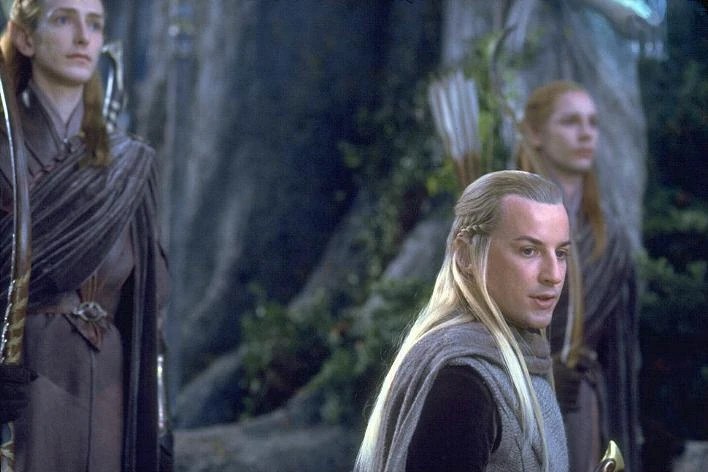
It’s the coldest welcome in any reel in this series, and I’ve come to think it’s also the most honest. The Galadhrim are not a hospitable people by temperament. They’ve survived by being hidden. A stranger in Lórien is a danger first, because every stranger is a sign that the world outside has found the way in. They take the company to their city at arrow’s point, and only there, before the Lady, is it decided whether they’re guests.

The Lady’s test
The city is called Caras Galadhon, and the reel shows it at night: a forest of giant trees hung with lights, with the Lady and the Lord descending a long stair to meet their visitors in a pool of white radiance. It’s staged like a liturgy, and it is one. The Lady doesn’t speak aloud at first. She looks at each member of the company in turn, and each of them hears her in his own mind, and each of them is tested.
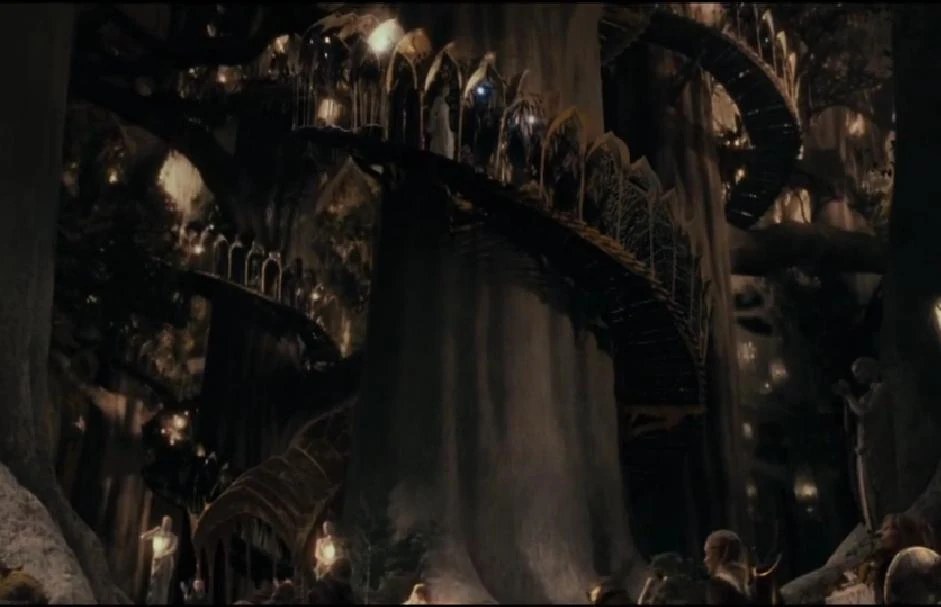
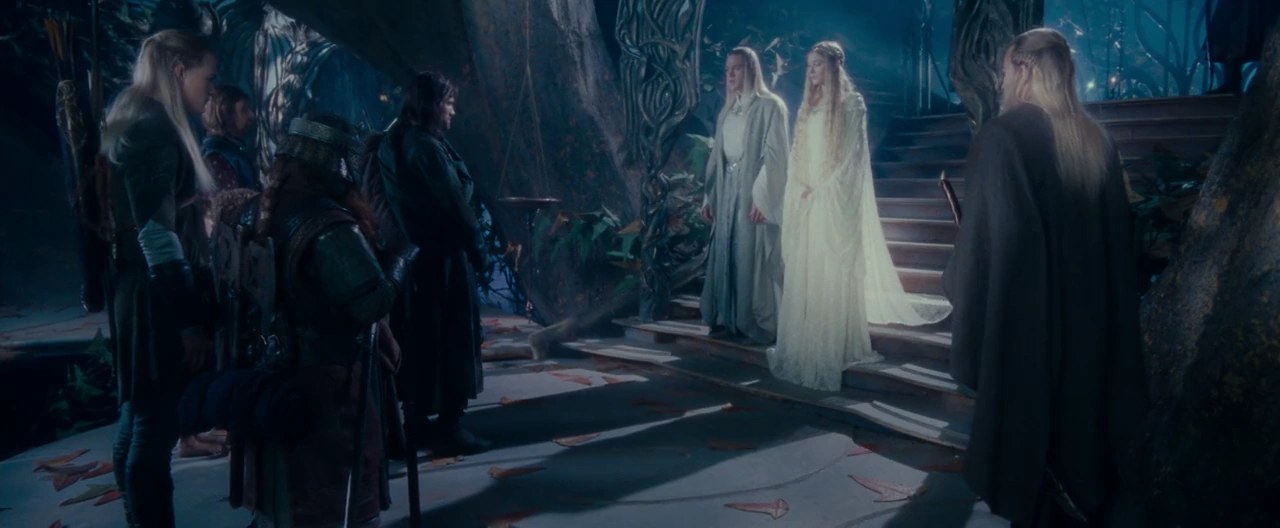
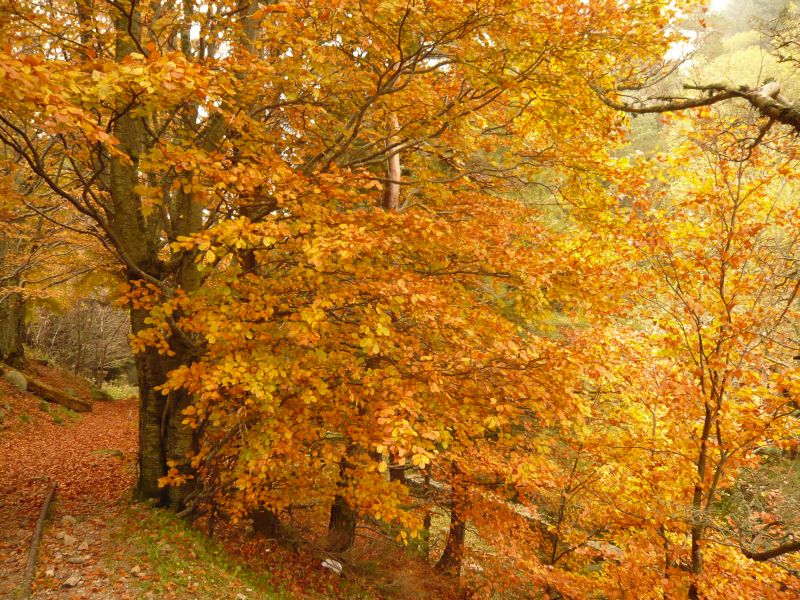
Look at the material culture around that stair and you’ll see a people who have arranged their whole lives so as not to mark the ground. They build in the trees, not on the earth. Their stairs wrap the trunks instead of cutting into them. Their lamps are soft, their clothes are made in the colours of bark and moss and fallen leaves, and their weapons are bows, which kill at a distance and leave nothing behind. When they go, there will be almost nothing for an archaeologist like me to dig up. I suspect that’s the point.
The reels’ costume designer, Ngila Dickson, had nine peoples to dress across Middle-earth, and she gave the elves their own grammar: sheer elegance, mossy greens, tree-bark browns, autumn scarlets, an androgynous quality, and a touch of antiquity. She wanted them to float, and chose fabrics that were light and semi-shimmery so that they would. The Galadhrim are the purest form of that grammar. Their lords wear white and silver; their border guards wear the forest.
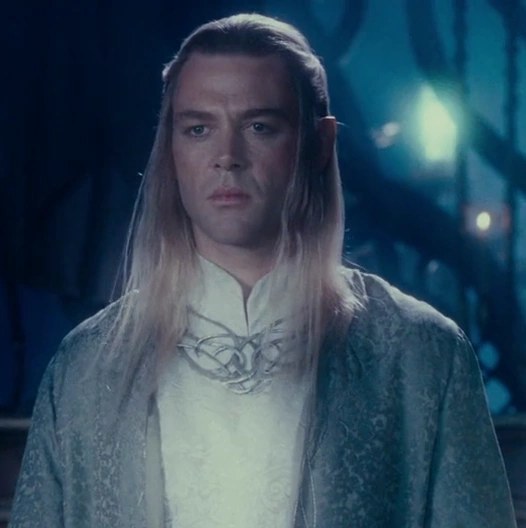

I want to note what this rite accomplishes. The Galadhrim don’t ask strangers for papers or passwords. They ask the stranger’s own heart whether he can be trusted, and they ask it in a way the stranger can’t lie to. Some of the company come out of the test shaken. All of them come out of it known. This is a people whose security depends not on walls but on discernment, and the Lady is their wall.
The test runs both ways. At night, the Lady shows the ring-bearer, Frodo, her mirror: a silver basin filled with water from a pitcher, in which he sees things that were, and are, and may yet be. He offers her the Ring. She’s tempted, and the reel shows the temptation in its full terror. Then she refuses it, and says she will “diminish, and go into the West.” It’s the moment the whole people turns on. Their queen has been offered the power to stop their ending. She has chosen to end.
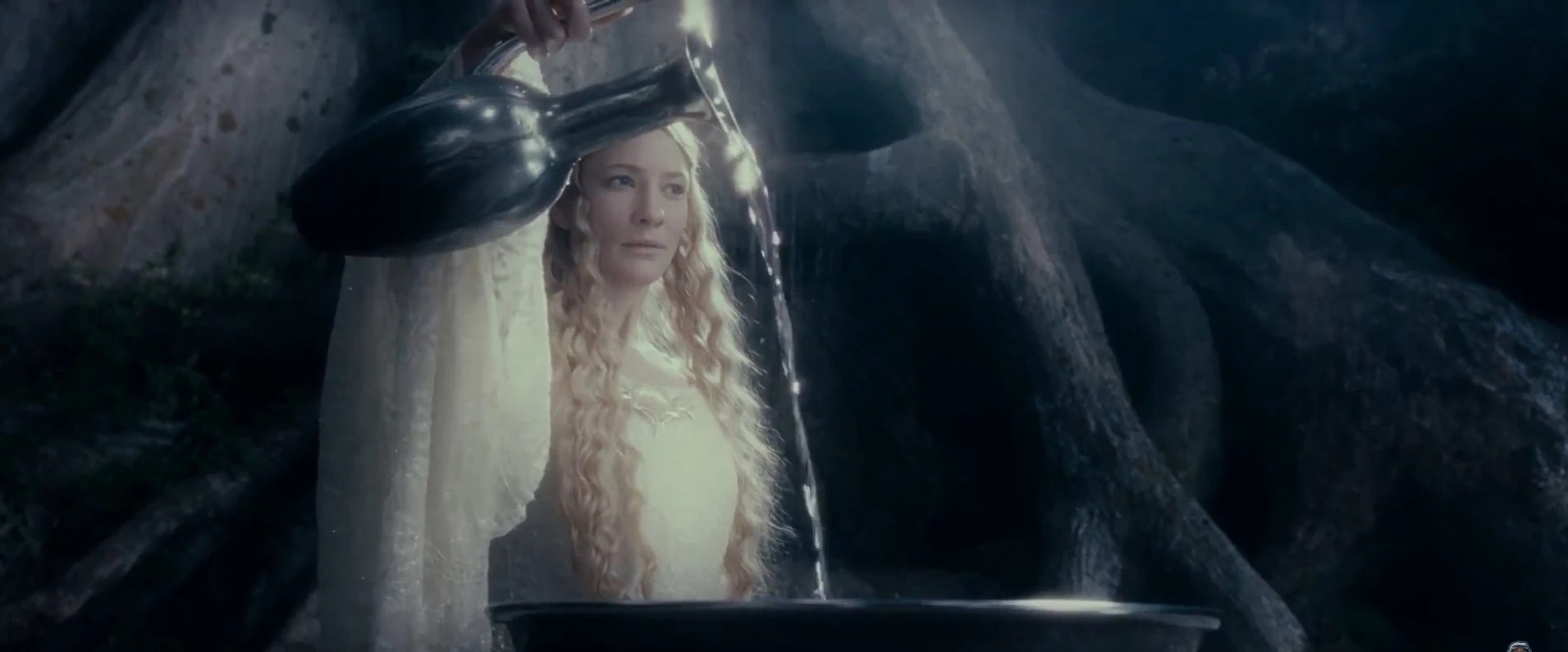
Ralph C. Wood, reviewing the reels in 2004, noticed how carefully they make the Ring work on its bearers’ virtues rather than their vices: Boromir is undone by his courage, Gandalf threatened through his compassion, and the elven queen through her beauty. That last is the Galadhrim’s danger in one sentence. A people this beautiful could rule by it. The Lady’s refusal is a refusal to let the beauty become a weapon.
Alison Peirse, writing in the Journal of Adaptation in Film and Performance (2012), noticed how often these reels turn looking into a danger, and Lothlórien is one of the places she studies. She borrows from the old world’s horror reels to describe it: the ring-bearer is most exposed when he’s watching, and when he’s watched. That changed how I hear the arrival. Doug Adams, who annotated the score note by note, describes the music that carries the company into the city as a rolling tam-tam and a flourish of brass and strings, then harps and women’s voices, and he hears in it a welcome that impresses more than it comforts. I had counted the basin as a second welcome. Then I watched how hard Frodo found it to look away.
The time of the trees
The old world’s scholars noticed that time behaves strangely in Lórien. In the novel the reel was made from, the company spends what feels like a few days among the Galadhrim and comes out to discover that a month has passed. Verlyn Flieger, in A Question of Time (1997), wrote at length about this: about Tolkien’s fascination with the idea that time might run differently in different places, and about Lórien as a land held in a kind of present that refuses to become the past.
The reel can’t show a month disappearing, but it shows the stillness, and it lets you hear it. Nothing in Caras Galadhon is hurried. The elves sing a lament for the fallen wizard in their own language, and when one of the company asks what the song says, Legolas declines to translate it: the grief, he says, is too near. I’ve done fieldwork among peoples who keep that kind of silence about their dead. The silence keeps grief from becoming information, and a visitor’s first courtesy is to sit with the song and not ask twice.
Tolkien himself, in his lecture “On Fairy-Stories” (delivered in 1939, published in 1947), suggested that the stories of mortal people are about escaping death, and that the stories elves would tell, if they told stories, would be about escaping deathlessness. Lórien is that story: a people that can’t die of age and has chosen to leave anyway, because a world that never changes is a world that’s already over.

At the fires we keep a law: the stranger drinks first. In Lórien, the stranger is held at arrow’s point first, and offered a drink only once the Lady has looked into him.
The gifts
And then, as the company leaves, the Galadhrim do something remarkable. They give gifts. Every member of the company receives a grey cloak, fastened at the throat with a brooch shaped like a leaf, woven, they’re told, to hide the wearer from unfriendly eyes. They receive the elves’ waybread, lembas, of which, they’re told, one small bite will fill a grown man. And in the longer cut of the reel, each member receives a gift chosen for him alone: a bow for the archer, rope for the gardener, a vial of starlight for the ring-bearer. The dwarf, who had come into the forest under arrow, asks the Lady for a single strand of her hair. She gives him three.
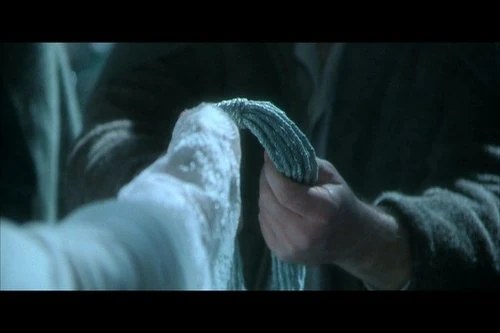
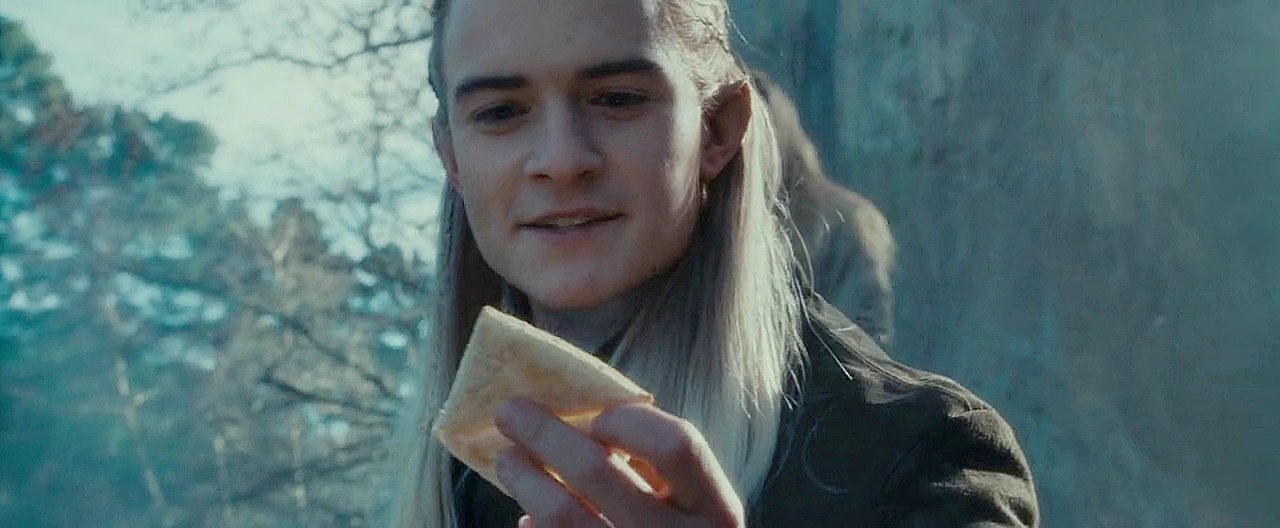
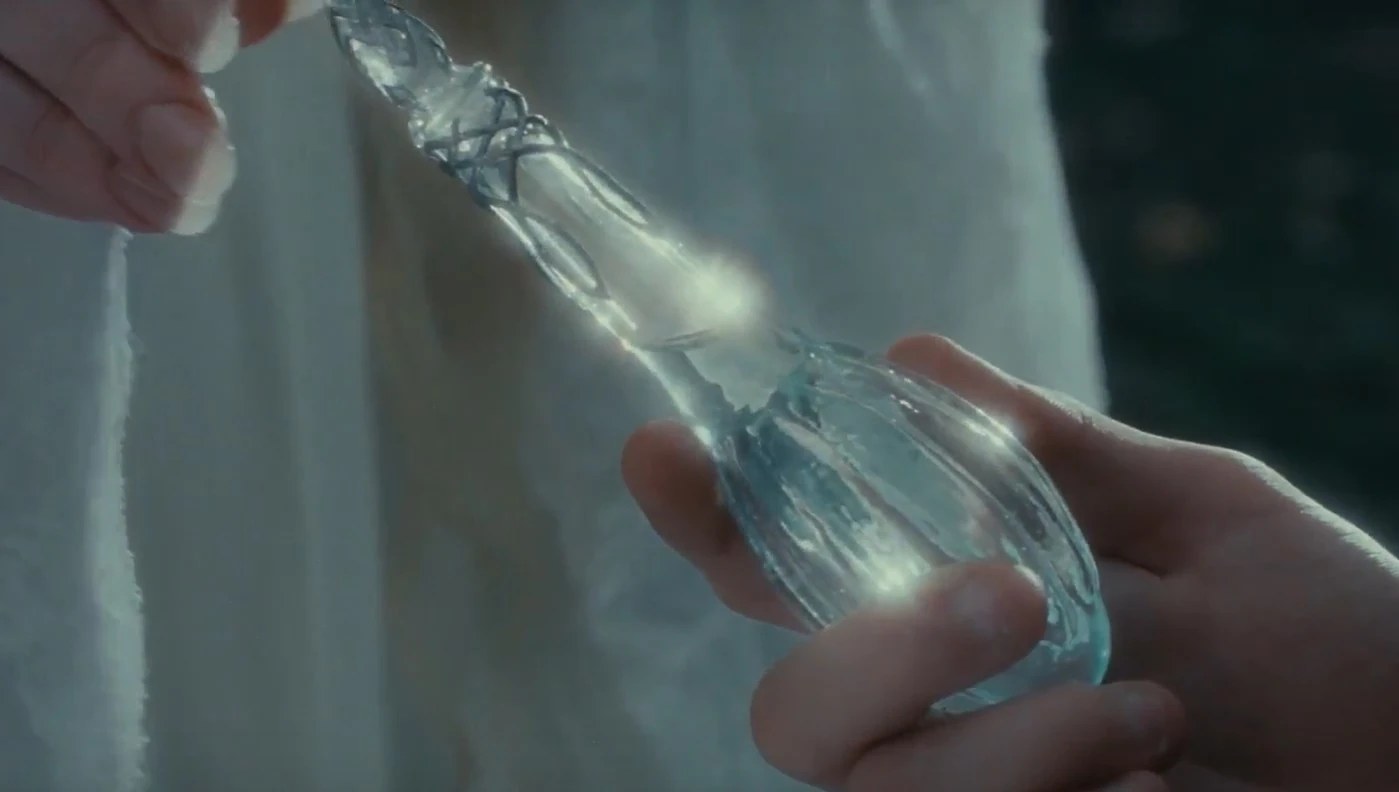
Marcel Mauss, in The Gift (1925), argued that no gift is ever free. To give is to bind; to receive is to be bound; and every gift carries something of the giver with it, a part of their spirit that wants to return home. The Galadhrim understood this better than any people Mauss studied. Their gifts aren’t charity. They’re an alliance, sealed in cloth and bread and light, and the gifts work exactly as Mauss predicted: they call the givers back. In the second reel of the cycle, The Two Towers (2002), Haldir and an army of the Galadhrim march to a fortress of men called Helm’s Deep, to fight beside people they barely know, because, as Haldir says, an alliance once existed between their peoples. He doesn’t come home.
The leaving
The Galadhrim aren’t the last people in this series, but they’re the only ones who leave on purpose. At the end of the cycle the Lady takes ship into the West with the other great elves, and the reel lets her go without a battle or a villain. The world simply moves on, and the people who loved it most decide that the kindest thing they can do is make room.
I’ve studied many peoples who were pushed out of their lands. I’ve studied very few who chose to step aside, and none who did it with such grace. The Galadhrim teach a hard lesson to a festival like ours, built in the ruins of an old world and making a new one out of its pieces. Every age ends. The question is what you give away before it does.
Participant observation
The Galadhrim are the quietest people in this series to come as, and the hardest to do well, because their beauty isn’t in their ornaments; it’s in their stillness. Come to the October shore in grey that shifts with the light, with a single leaf at the throat, and practise standing very still at the edge of the firelight. Challenge every stranger who comes too close, gently.
If you make one thing from Lórien, make something you can give away: a cloak clasp, a leaf of brass or felt, a length of cord. When a stranger has passed your test, give it to them. It could travel for years after you’ve gone, which, as the Lady would tell you, is the whole point.
We’ll keep the kettle on.
The Reel Peoples
Sixteen peoples from the old reels and two from our own shore, written up at the fires by Perpétue Kettlewell, with a costume guide for each.
- No. 1The War Boys of the Citadel
- No. 2The Smokers of the Deez
- No. 3The Citizens of the Capitol
- No. 4The Bartertowners
- No. 5The Vuvalini of Many Mothers
- No. 6The Waiting Ones
- No. 7The Holnists
- No. 8The Londoners of the Traction City
- No. 9The Galadhrim
- No. 10The People of Zion
- No. 11The Droogs
- No. 12The Ape Society
- No. 13The Judges of Mega-City One
- No. 14The Morlocks
- No. 15The Aviators of Airhaven
- No. 16The Tail Section