

Les gens de Bartertown
À l’entrée, le Collecteur demande à Max ce qu’il peut offrir. Sous la ville, Master sait ce qu’il peut retenir. Quand il coupe le courant, tout le monde entend Aunty négocier.
Idée de costume. La ferraille d’Aunty, les objets à vendre du marchand et les couches courtes d’une tenue de travail racontent trois vies différentes. Pour un marchand, de petites balances ou des pochettes suffisent à montrer le métier.
L’essai intégral et le guide détaillé sont en anglais. Lire l’essai · Voir les références visuelles
The Reel Peoples · No. 4 of 16
The Bartertowners
Notes on a People Who Keep Their Word
Perpétue Kettlewell, written at the fires, 2285

Every economy runs on something it would rather not discuss. Bartertown runs on pig dung, and has the decency to say so out loud. Its ruler uses a shorter word.
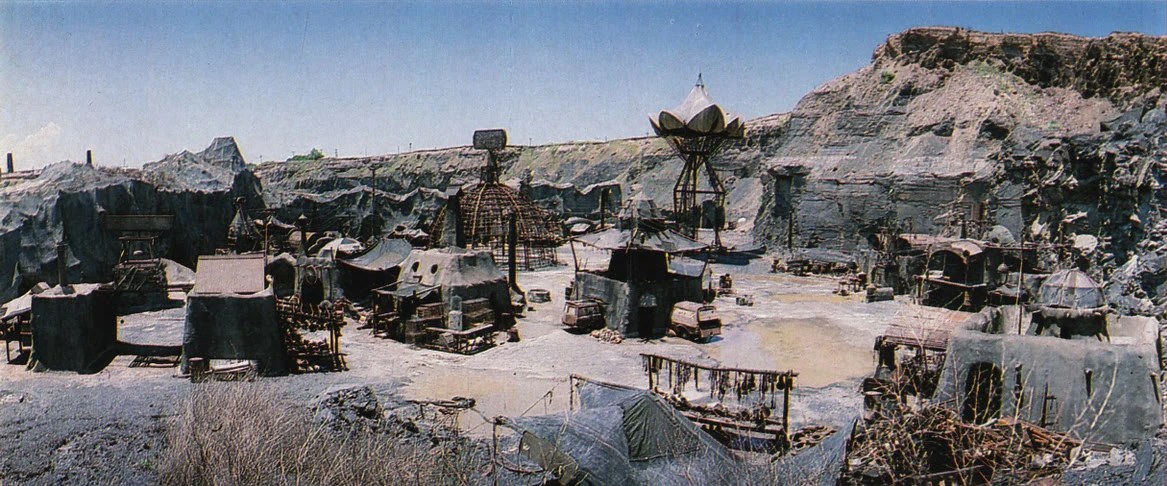
We know the Bartertowners from one reel, Mad Max Beyond Thunderdome (1985), made by George Miller and George Ogilvie. They’re the first people in this series who are neither raiders nor worshippers. They’re traders. Their town sits in a quarry in the desert, a ramshackle market of stalls, cages, and scaffolds where anything can be swapped for anything: water for a camel, a camel for a weapon, a day’s labour for a night’s shelter. Above the market lives its founder and queen, Aunty Entity. Below it, in the dark, live the pigs. Between the two runs the one thing the Bartertowners hold sacred: the deal.
The gate
Bartertown’s first rite happens before you’re inside. Every newcomer at the gate is asked what he has to trade, and a traveller with nothing to offer has no business in Bartertown, in both senses of the phrase. Max arrives robbed of everything but his own skill, and his skill is what gets him through. The town never asks who you are. Inside, the exchange is run by an official called the Collector, played by Frank Thring, and nobody there asks either.
The old world’s economists told a story about barter. Adam Smith, in 1776, wrote of a human “propensity to truck, barter, and exchange one thing for another,” and the textbooks that followed him imagined villages swapping eggs for shoes until somebody invented money. The anthropologist David Graeber spent a book, Debt: The First 5,000 Years (2011), showing that no such village has ever been found. Barter, he argued, turns up mostly among strangers, and among people who already know what money is but can’t get any: in prisons, in collapsing states, in the places where currency has failed. Bartertown fits his description closely. Its people aren’t primitives inventing commerce. They’re survivors who remember money, have lost it, and keep the habit anyway. With no coin to carry trust from hand to hand, a promise has to carry it alone, and so the promise becomes the most closely policed thing in town.
The law
Bartertown’s constitution runs to two sentences, and every citizen knows both by heart. The first governs the arena: “Two men enter, one man leaves.” The second governs everything else: “Bust a deal, face the wheel.” I’ve read old-world law libraries that covered less.
Notice what the law leaves out. It says nothing about theft, cruelty, or murder. It asks one question: did you do what you said you’d do? When Max refuses to finish a fight he agreed to, Aunty doesn’t call it mercy or cowardice. She calls it a broken contract, and she says so to the whole town.
Right and wrong, in other words, are private matters here. A deal is public, and the public keeps it.
The penalty is the nearest thing to theology in the reel. The guilty party stands before a great painted wheel, divided into unequal slices: death, hard labour, acquittal, exile, and stranger fates besides. A showman spins it. I’ve met the pattern in older peoples, who handed their hardest judgments to dice or bones so that no human hand would carry the blame. Bartertown kept the dice and dropped the gods. When the wheel stops on Gulag, Max is masked, tied to a horse, and walked out into the open desert, and the stalls are trading again before the dust settles.

Thunderdome
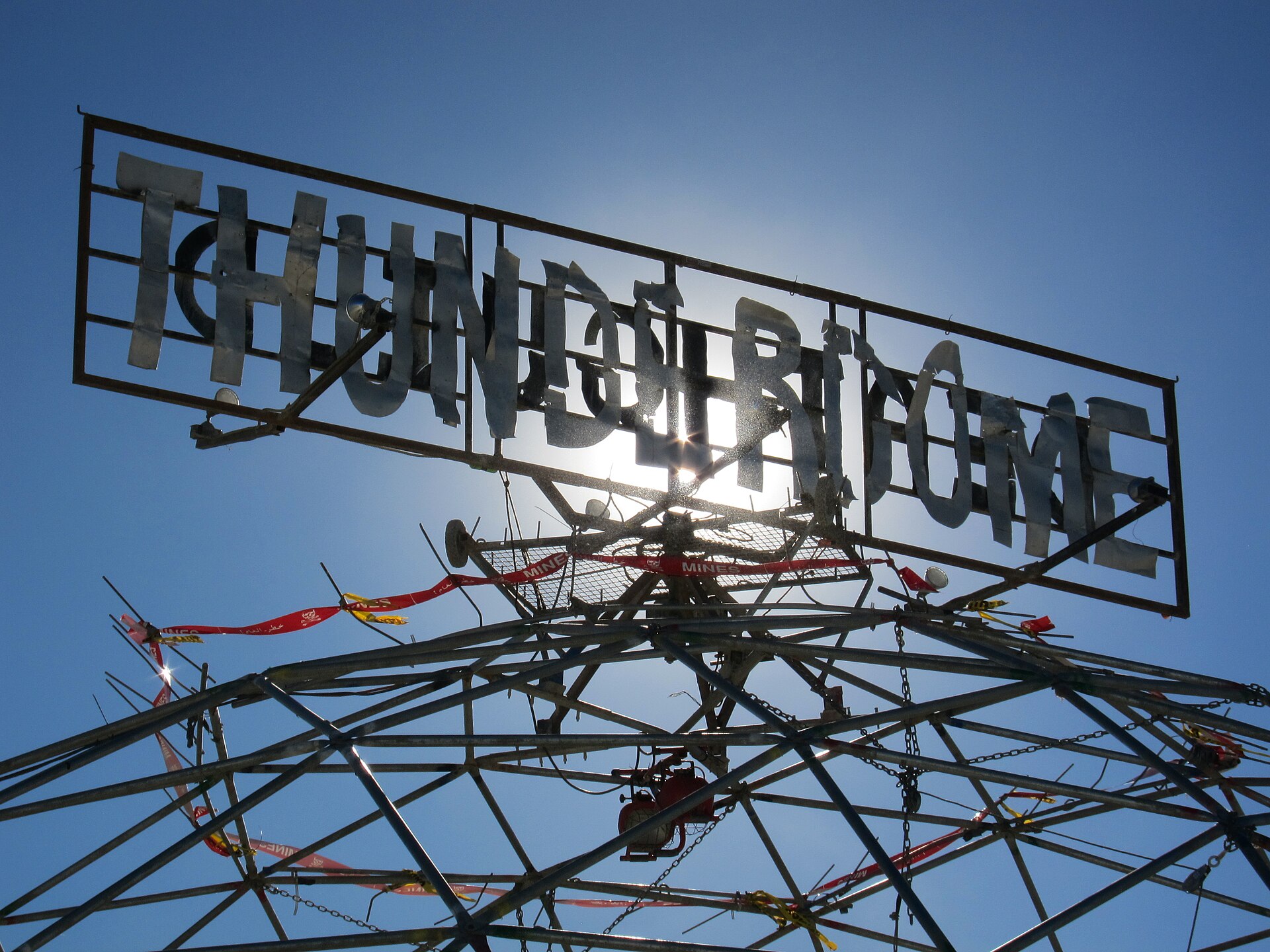
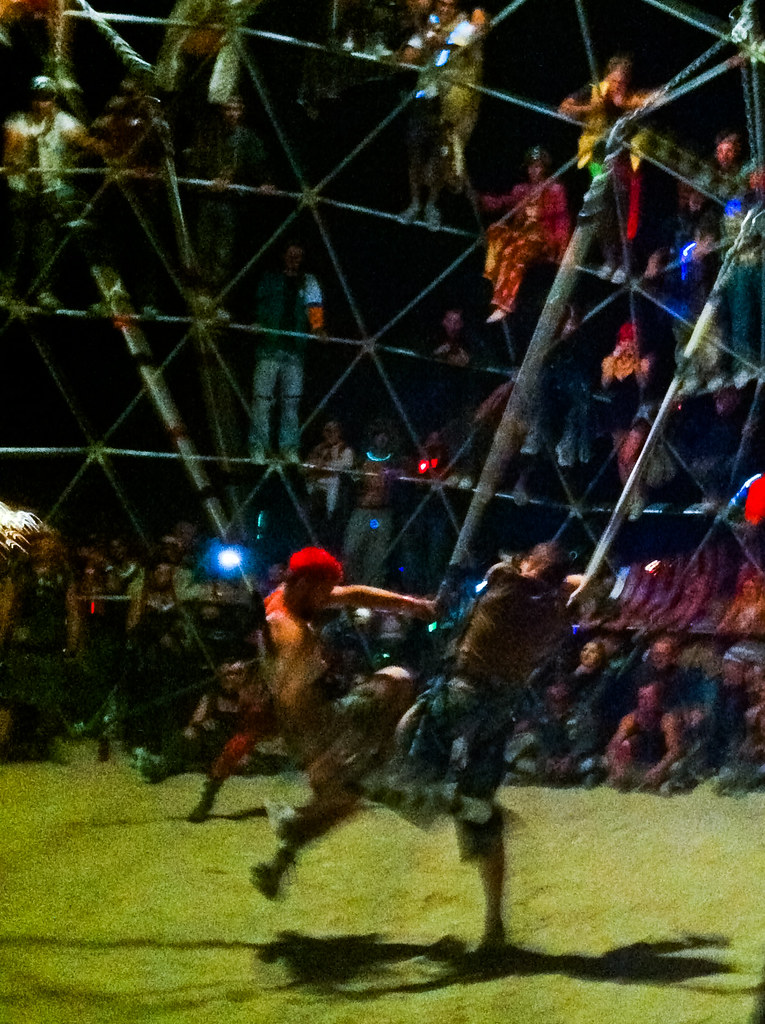
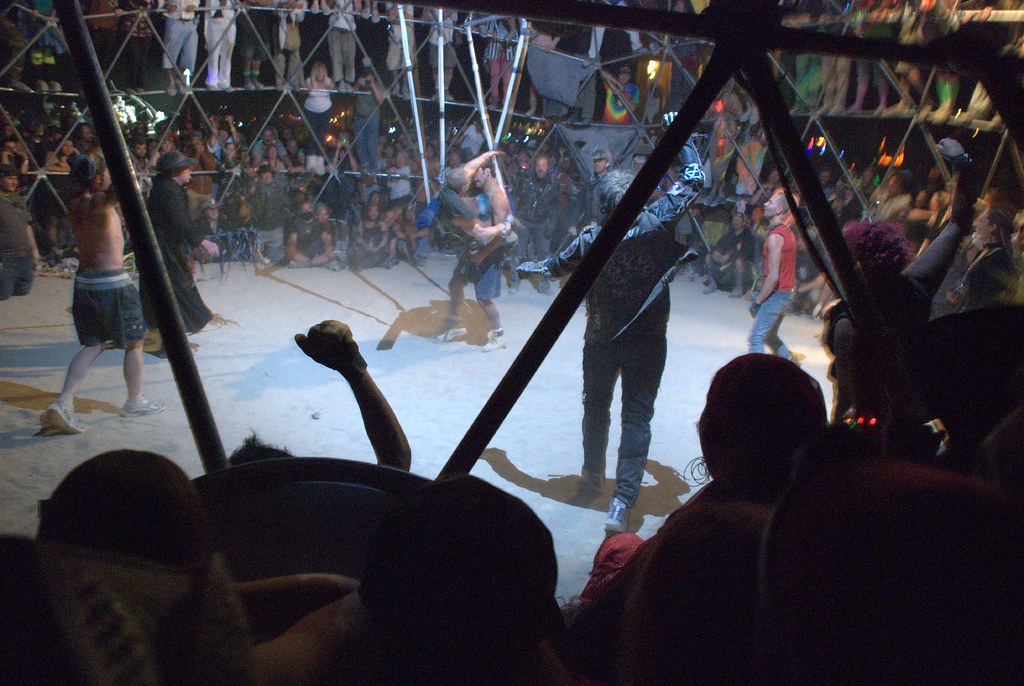
Every market needs a court, and Bartertown’s is a cage. Thunderdome is a great hemisphere of steel scaffold, and the townspeople climb its outer walls to watch, hanging by their hands and knees and shouting advice. The fighters are strapped into elastic harnesses and bounce through the air toward weapons hung from the ceiling: a chainsaw, a sledgehammer, a spiked club. A master of ceremonies, Dr. Dealgood, opens the rite with a showman’s cry, “Dying time’s here!”, and the crowd answers with the law, chanting it until it turns into a rhythm.
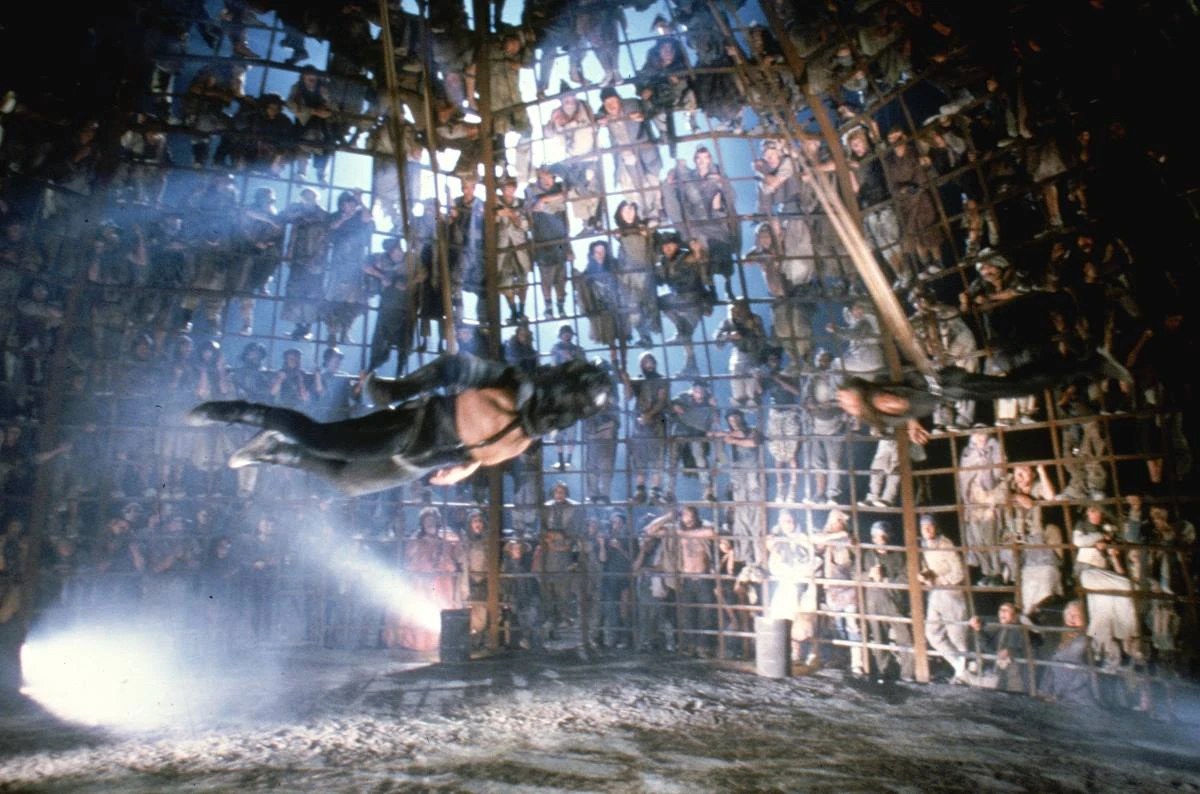
Most visitors from my century call it a circus. I file it under courts. The dome settles the disputes that trade can’t: two men with a grievance go in, and the grievance comes out with only one of them. The people on the cage came for the show, but for the parties to the quarrel the arena offers something rarer in the desert, a verdict nobody can appeal.
Underworld
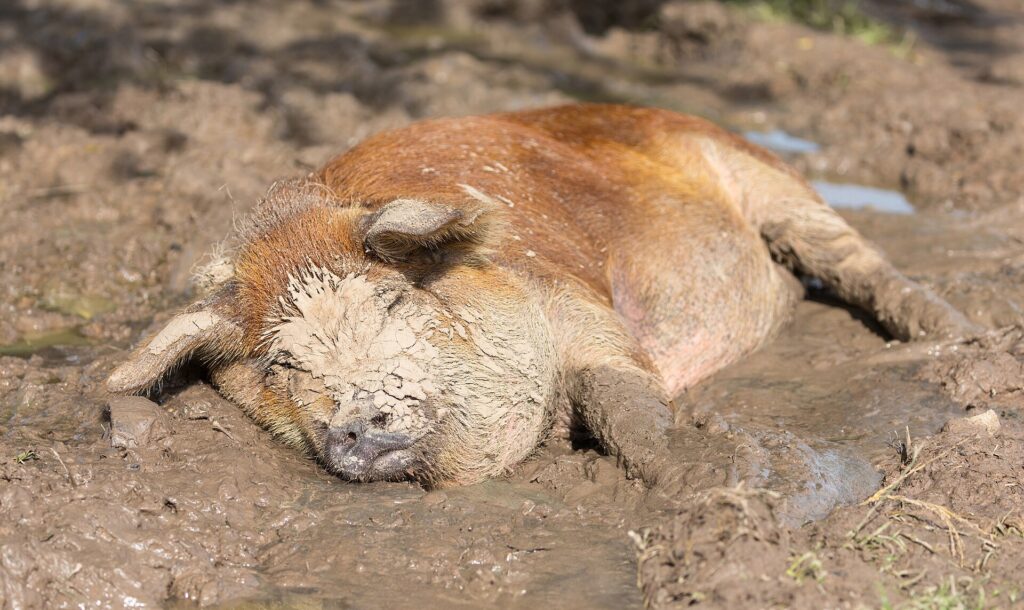
Beneath the market lies the town’s engine room, Underworld, and I learn more from it than from any other part of Bartertown. In a cavern full of pigs, convicts shovel dung into vats that breathe out methane, and the methane lights the lamps, turns the motors, and fills the tanks above. The old world called this anaerobic digestion. The Bartertowners call it power, and they mean the word both ways.
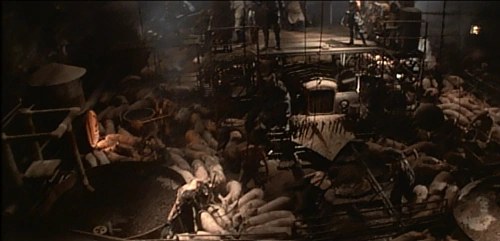

Underworld is ruled by Master Blaster, a partnership the town treats as one officer of state. Master is a small, sharp engineer who knows every pipe and valve. Blaster is the masked giant who carries him on his shoulders and enforces his will. When the queen tries to bargain with them, Master cuts the town’s power and makes her announce, over the loudspeakers, who runs Bartertown. She does. Political economy rarely gets taught so briskly. In a town built on trade, the throne belongs to whoever holds the energy.
The convicts show what the town values. One of them, called Pig Killer, is serving his sentence among the pigs for killing one to feed his family. A pig is fuel; a child is a mouth. Every culture ranks its creatures, and Bartertown ranks them by output.
Max gets to leave Bartertown. I’ve grown more interested in the people who had nowhere to go when it came apart: the traders who took in any stranger with something to offer, and the convicts below, whose shovels kept the lights on out of sight. The reel follows the departing party. My notes keep going back down the stairs.
Wearing the inventory
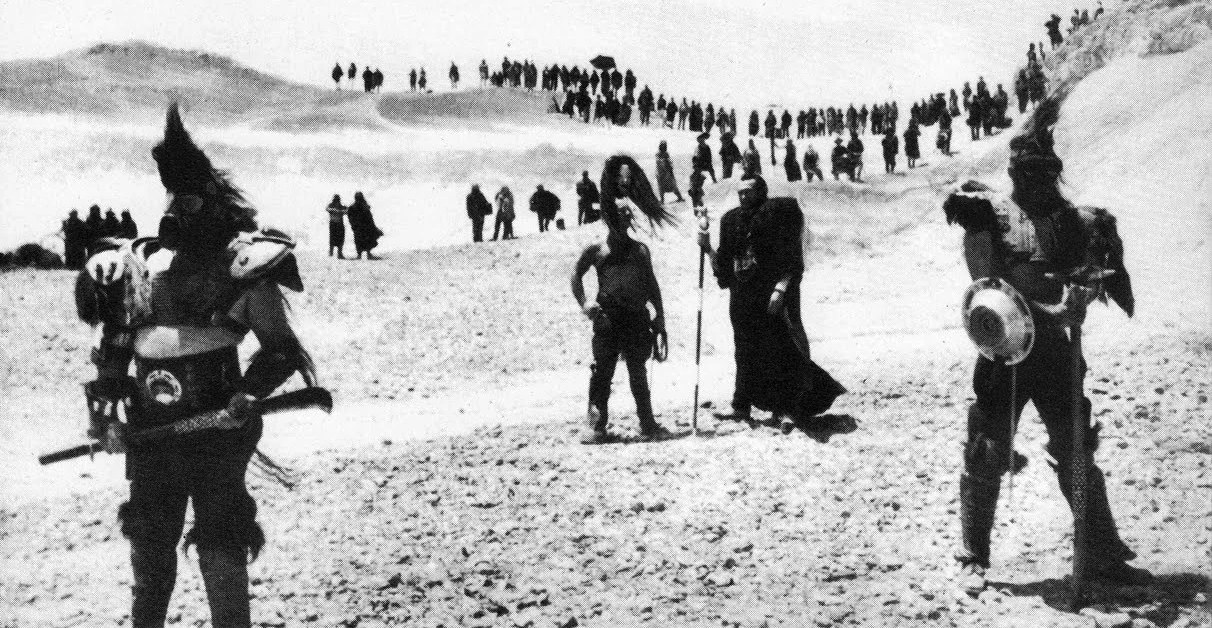
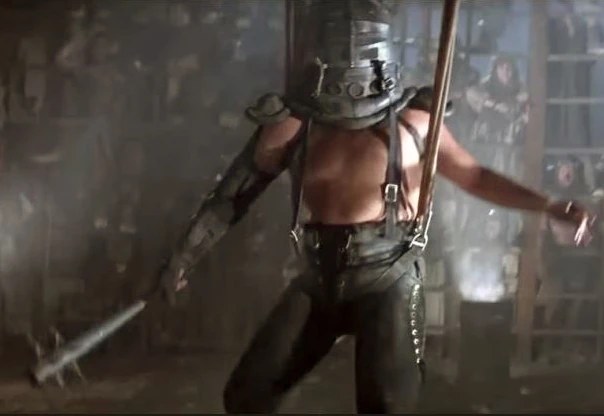
In a market, clothes are a balance sheet, and Bartertown dresses accordingly. The town was costumed by Norma Moriceau, who came to the desert from the London punk and fashion scenes. Rose Mulready, writing for Australia’s National Film and Sound Archive, describes the result as a warrior culture assembled from salvage and worn with pride. Look closely at any extra in the market and you’ll find a working wardrobe: a robe hung with pouches, keys, and tins, a scarf against the dust, and somewhere about the person a little stock that could be sold by nightfall.
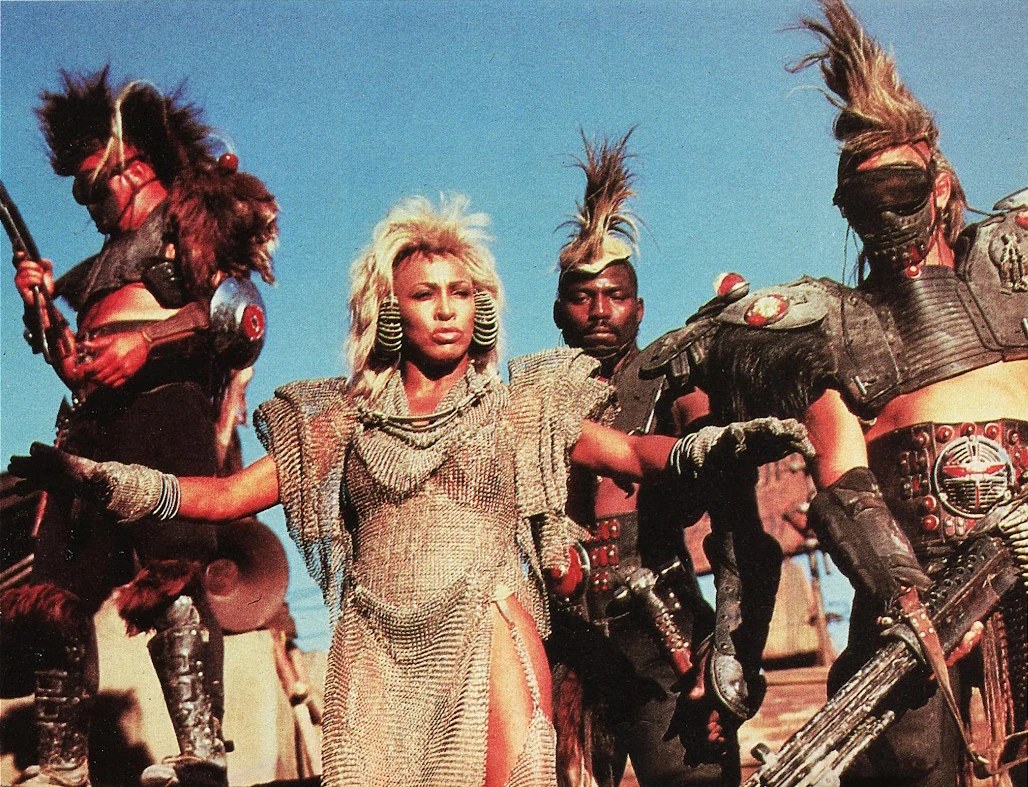
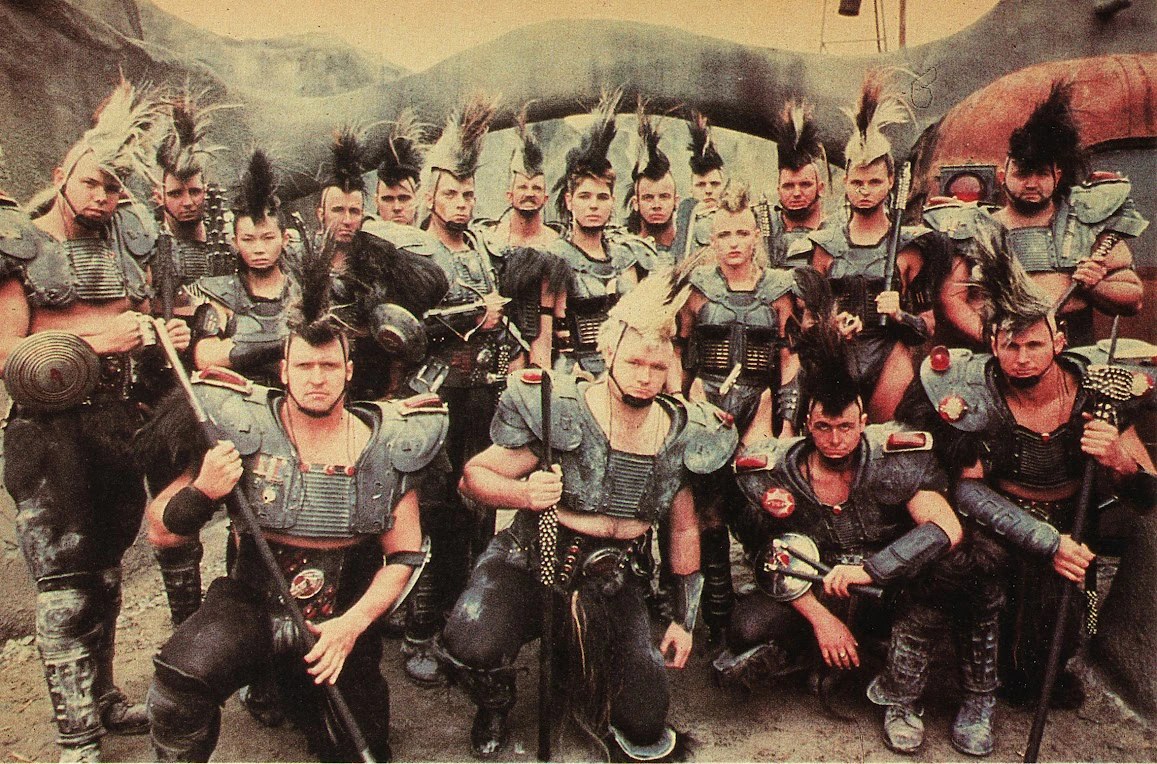
Aunty’s guard is the clearest example. The archive’s inventory of their kit reads like a scrapyard ledger: horse and cow tails, goat hair, car parts, gridiron pads, medals, gas masks, and goggles. Moriceau herself called the look “big butch business,” and added cricket shin guards, mud flaps, hubcaps, and bicycle reflectors. Every piece came from somewhere else and was meant for something else. Worn together, in rows, they turn into a uniform, which is how a militia gets made from a junk pile.
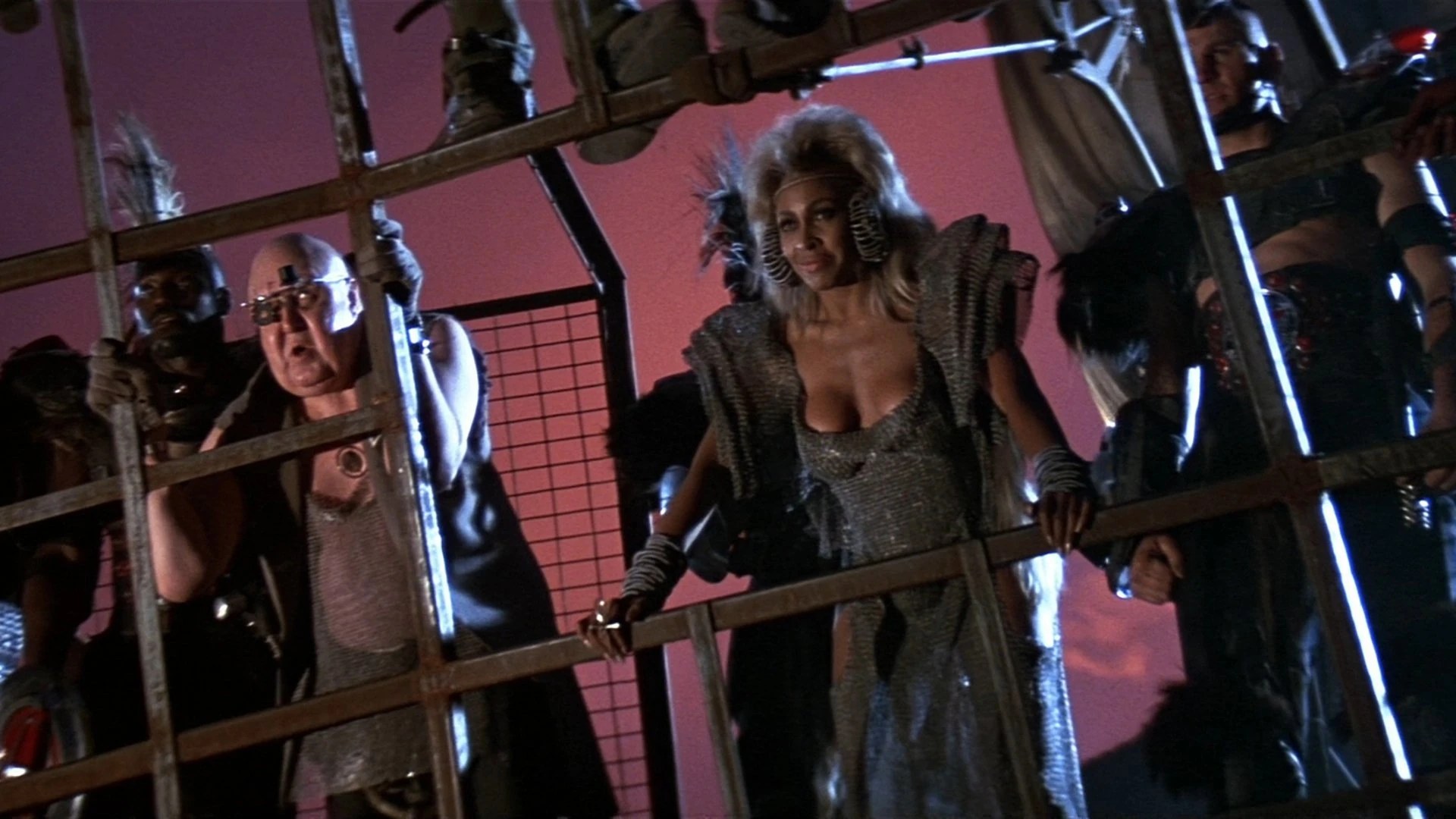
The queen
Aunty Entity founded the town, and she wears its ledger. Moriceau built her gown from soldered dog muzzles, metal butchers’ aprons, chicken wire, and coat hangers, with more than thirty kilograms of chain mail over the top and earrings made from car springs. Tina Turner shaved her own head so the great blond wig would sit right. The guards wear the junk raw. On the queen it has been polished, which tells you who owns the scrapyard.
Her officers carry the same logic in smaller amounts. Blaster, the most feared man below ground, hides his whole head in a riveted helmet, and the guards nearest the throne wear the most salvage. In Bartertown, rank shows in what you’ve been allowed to keep.
What the old world made of it
The reel’s own scholars have been arguing about Bartertown since the year it opened. In 1985, Ross Gibson read the film as a Genesis story, the birth of a civilisation, and tied that myth to Australia’s own history and national legends; his essay “Yondering” was later collected in South of the West (1992). Adrian Martin, the critic who later wrote The Mad Max Movies (2003), put Bartertown’s economy in three words, “blood and shit,” and found the film’s hope somewhere unexpected: in its improvising, its habit of making a world out of whatever lies to hand. A costumer will recognise the method.
Others read the town more darkly. Paul Williams, writing in Science Fiction Studies (2005), read the reel against the history of empire. He noticed how mixed and multicultural Bartertown is, and that the story nonetheless destroys it so that its white hero can lead the children “home.” In a later book, Race, Ethnicity and Nuclear War (2011), he put the argument to work on Aunty herself. He reads her as a Black woman who has turned the old colonial story around, a queen who raised a town where there was only desert, and he points to what her throne actually rests on, which is the labour below ground. The embargo is his evidence, and it’s a public one: the ruler of a town of traders has to announce, over the loudspeaker, that the engineers run it, and only then does the power come back. Williams also watched her last scene more closely than most. After the chase she has Max in front of her again, and she lets him go. “Goodbye, soldier.” He reads it as a ruler’s recognition that the town and the wanderer need each other. The people I’d been keeping accounts for have fallen out of the record by then. I had no column for either of her decisions.
Dan Hassler-Forest (2017) counted Bartertown among the series’ precarious communities, the stubborn little utopias that keep turning up in its wastelands. And Claire Corbett, in the same journal issue, came to the reel with an advantage I envy: she’d been an extra on the Thunderdome set. She reads it alongside an older Australian story, Peter Carey’s “Crabs,” and finds the film doing two things at once, putting Australia’s history of genocide in plain view and erasing it in the same gesture.
I can’t settle their argument, and I suspect the Bartertowners would charge admission to watch it. The reel ends with the town in flames. Max and a band of children steal Master away, their escape sets off the methane, and the blast wrecks Underworld and much of the town above it. I’ve no doubt the traders were back at their stalls within the week, haggling over the salvage. A market is the one institution that profits from its own ruins.
The pit
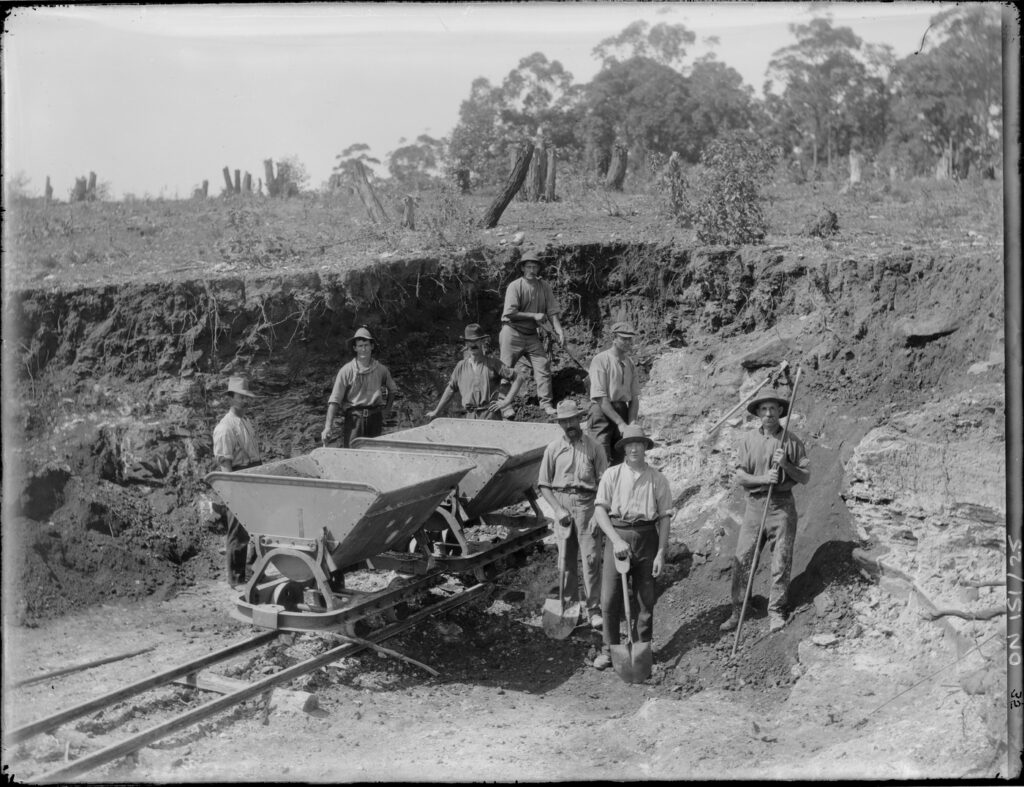
The town’s real ground has its own epilogue. The reel built Bartertown in a disused brickworks quarry at Homebush Bay, in Sydney. Within a decade, the city had chosen the surrounding land for its Olympic Games and planned to put a tennis centre in the pit. Then, in 1992, a colony of endangered green and golden bell frogs turned up in the water at its bottom. The tennis centre went elsewhere. The pit became a frog sanctuary, with a ring-shaped walkway built high above it so people could look down without disturbing anyone.

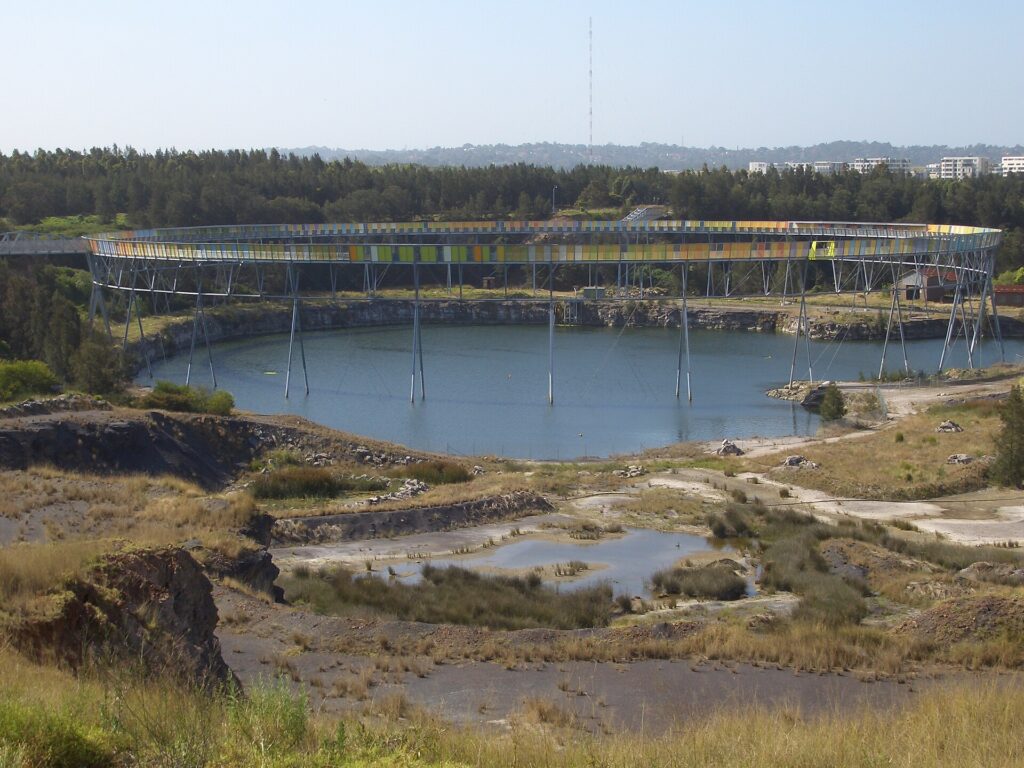



A town whose only law was the deal deserves that ending. The frogs got there first and kept their side of the bargain simply by staying. Nobody had to face the wheel.
At the fires we keep a law: the stranger drinks first. In Bartertown, the stranger pays first.
Participant observation
Bartertown is the easiest people in this series to join, because it wants your business. Come to the October shore as a trader, and bring something to trade: a carved token, a jar of something, a song, a story, a favour. Wear your wares, small enough to carry and good enough that another trader stops to ask about them. One honest bargain will teach you more about Bartertown than a night at the dome.
Shake on everything. Learn the two sentences and say them as though they were scripture, because in Bartertown they are. And if somebody breaks a promise to you, don’t argue. Point solemnly at the nearest wheel of any kind, and wait. Claire Corbett worked as an extra on the Thunderdome set before she wrote a word about it, and I count her as the best precedent this field guide has.
We’ll keep the kettle on.
The Reel Peoples
Sixteen peoples from the old reels and two from our own shore, written up at the fires by Perpétue Kettlewell, with a costume guide for each.
- No. 1The War Boys of the Citadel
- No. 2The Smokers of the Deez
- No. 3The Citizens of the Capitol
- No. 4The Bartertowners
- No. 5The Vuvalini of Many Mothers
- No. 6The Waiting Ones
- No. 7The Holnists
- No. 8The Londoners of the Traction City
- No. 9The Galadhrim
- No. 10The People of Zion
- No. 11The Droogs
- No. 12The Ape Society
- No. 13The Judges of Mega-City One
- No. 14The Morlocks
- No. 15The Aviators of Airhaven
- No. 16The Tail Section