


La queue du train
Dans Snowpiercer (2013), un manteau jaune entre dans un wagon sombre. On mesure les enfants; on en emmène deux. Le Peintre, lui, les dessine. Deux registres d’un même enfant, dont un seul a un visage.
Idée de costume. Un wagon entier en vêtements rapiécés, tous marqués d’un même morceau de tissu. En solo : une lampe frontale et un carnet de croquis, pour dessiner qui le souhaite.
L’essai intégral et le guide détaillé sont en anglais. Lire l’essai · Voir les références visuelles
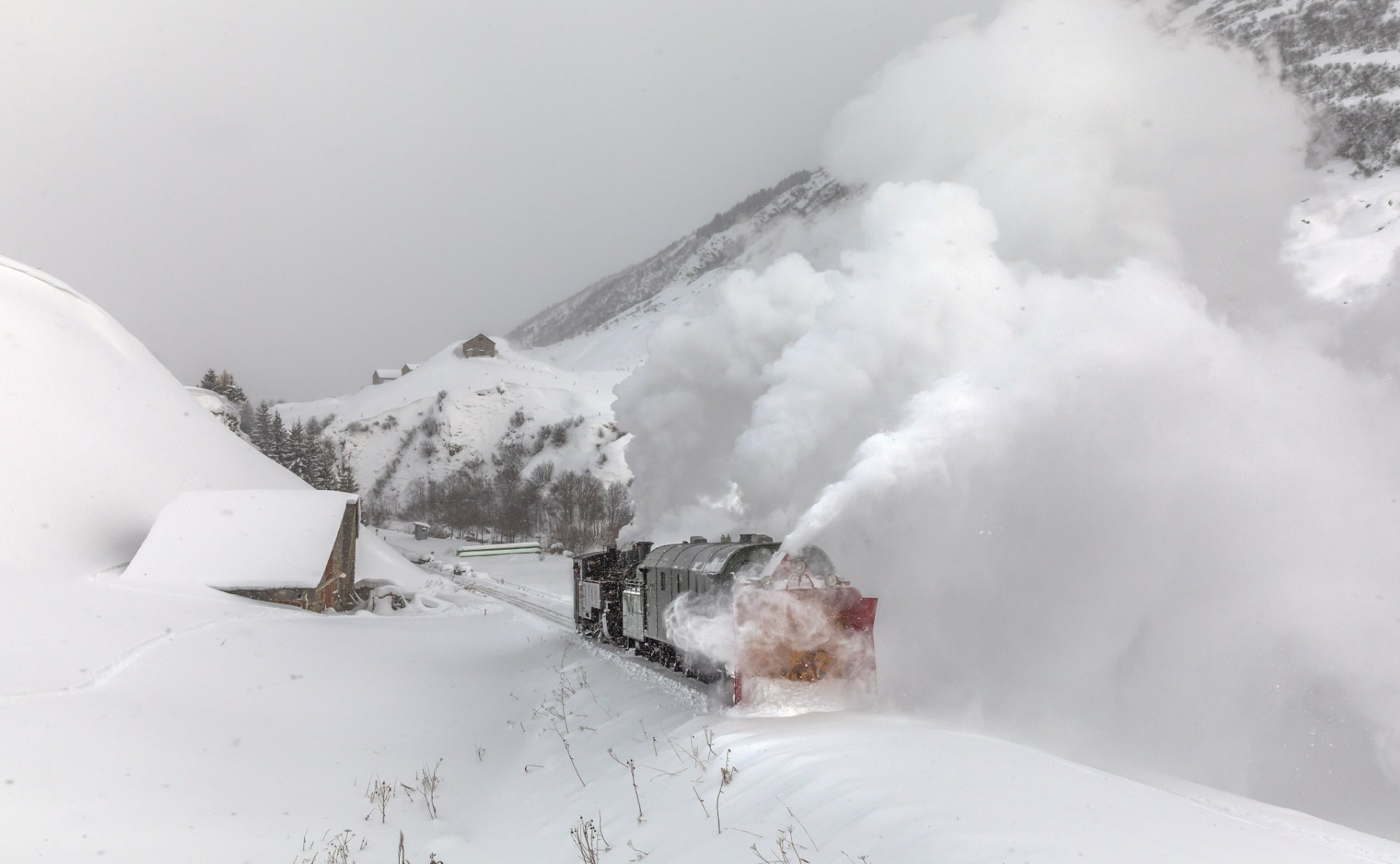
The Reel Peoples · No. 16 of 16
The Tail Section
Notes on a Child the Front Measured
Perpétue Kettlewell, written at the fires, 2285

A clean yellow coat comes into a dark carriage. Everyone in the Tail knows at once that it belongs to the front, and most of them know what it usually means: somebody is about to be counted.
We know them from Snowpiercer (2013), the reel Bong Joon Ho made from Le Transperceneige (1982), the picture-book by Jacques Lob and Jean-Marc Rochette. The world outside has frozen. What’s left of humankind rides a single train around it, on a track one man built, and by the time the reel begins the train has been running for seventeen years. The front holds the engine and the people who keep it holy. The Tail holds everyone who boarded without a ticket.
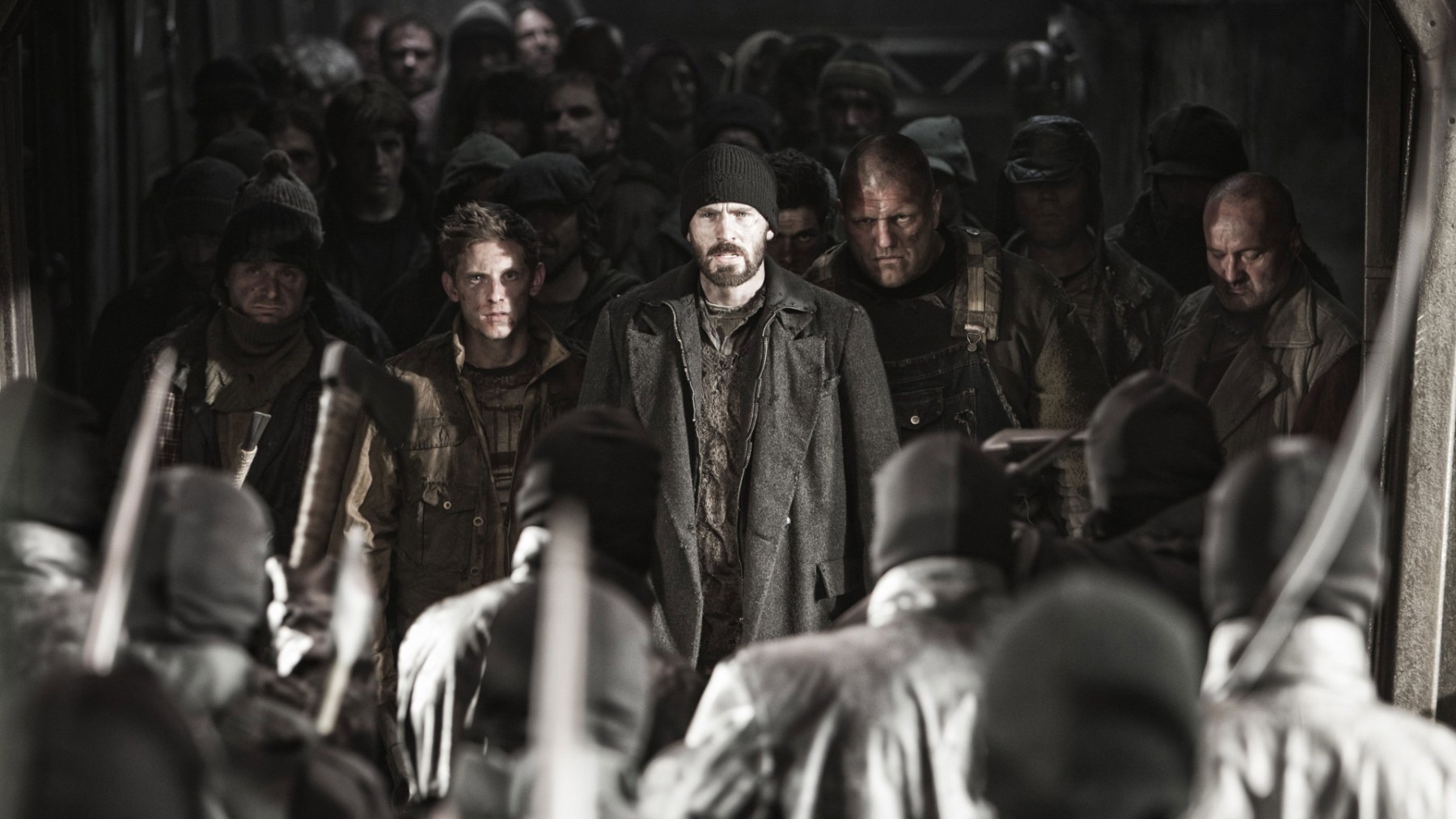
The yellow coat
The costume designer, Catherine George, chose yellow as the first burst of colour the Tail would see, calling it “the most luminous of the spectrum.” The woman who wears it calls her visit a medical check-up. She lines up the children and goes along them with a measuring tape. She lifts a mother’s skirt with the end of it to see whether a child is hiding underneath. Then she takes two small boys, Timmy and Andy, and leaves. Their parents fight to follow and are held back. Nobody tells them what the tape was for.
I’ll be honest about why this scene stops me: my own discipline once carried a tape. Franz Boas, the old world’s great anthropologist, spent the years before 1912 measuring the heads of immigrants’ children in New York, and used his figures to challenge the claim that racial types were fixed. Later scholars re-measured his data and argued for decades over how much it really showed. What doesn’t change is that he came to the instrument with a question about whether a category was true. The woman in yellow comes to it with a slot she means to fill. The tape is the same in both hands.
The head check
The Tail’s days are punctuated by arithmetic. Guards come down the aisle, line the passengers up, call the count aloud, and order them to sit. Nobody tells them the total. They’re counted the way stock is counted, for the benefit of whoever owns the stock.
Matthew Abbey, writing in Theory, Culture & Society (2025), reads the reel as a study of a regime that manages life by numbers, and turns some lives into an acceptable loss. I’d been treating the count as a humiliation. Abbey made me treat it as a measurement, and after that the tape looked like one more instrument from the same kit.
The shoe
A father, Andrew, throws a shoe. The guards force his arm through a port in the wall into the frozen air outside, hold it there until it’s solid, and shatter it with a hammer while the carriage watches. Then Mason, the minister sent back from the front, gives a sermon.
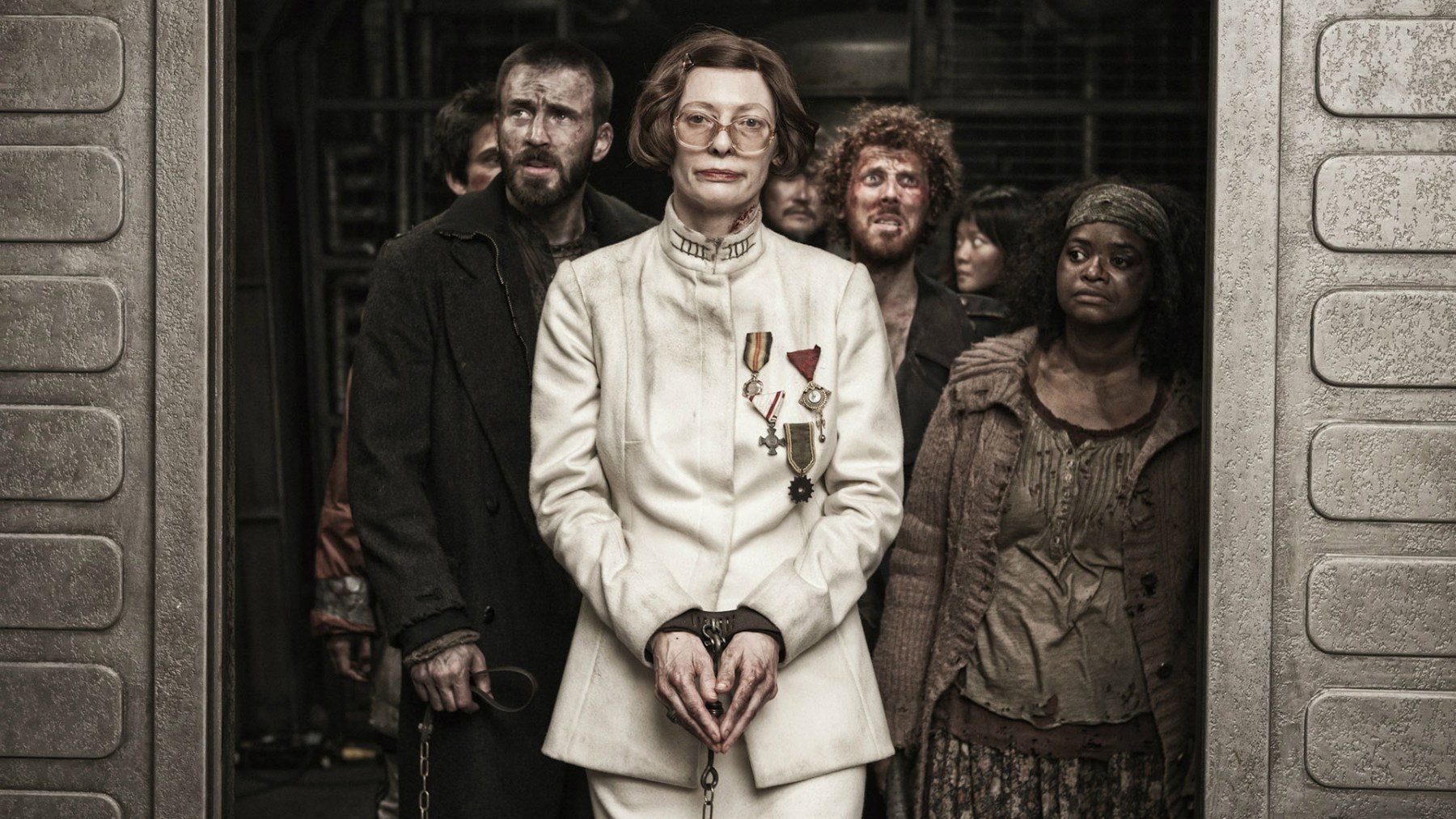
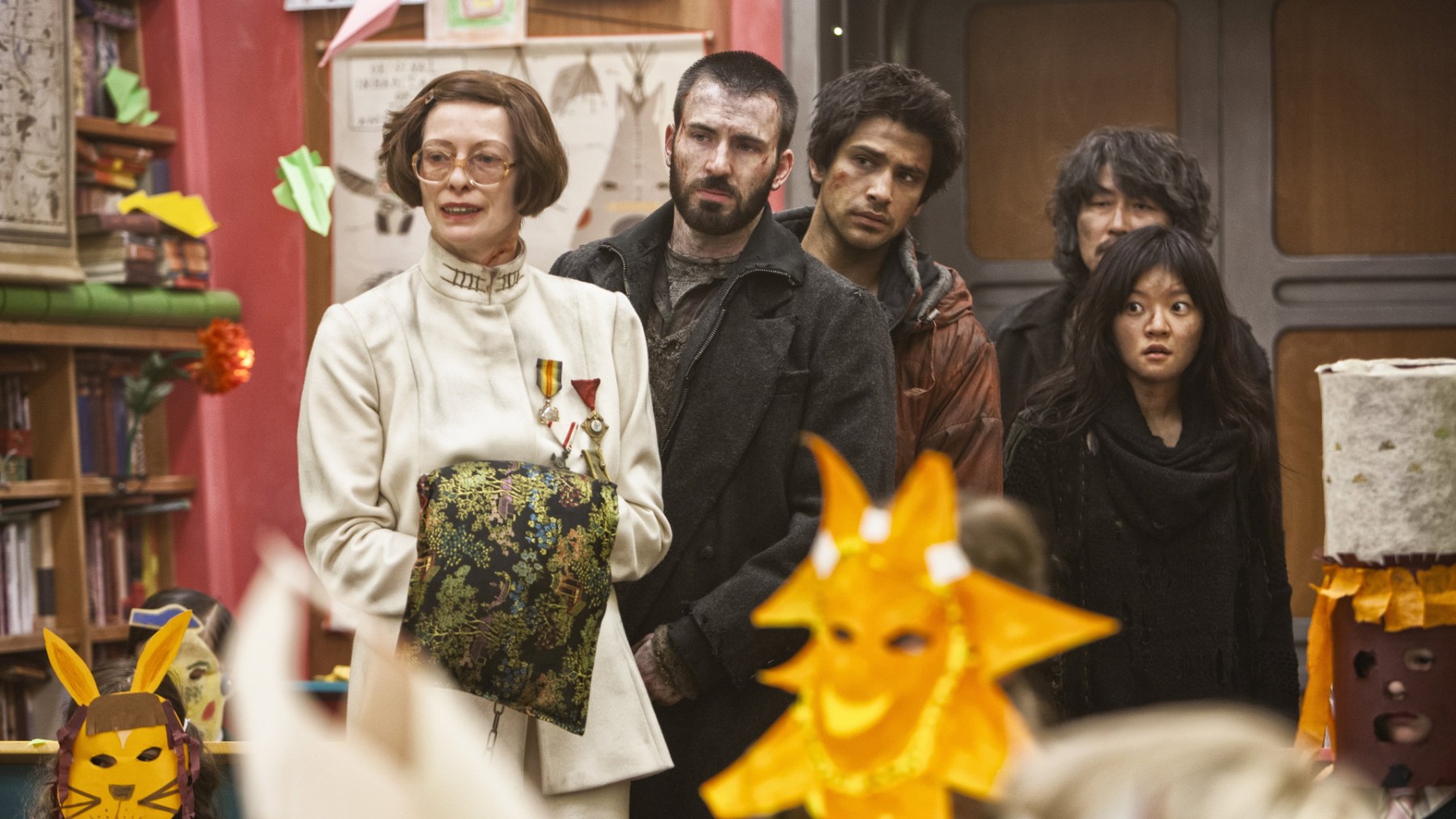
She’s worth a close look, because she’s the front’s idea of a priest on a mission to the poor: false teeth, spectacles, a wig, a long fur coat, and on her chest medals the costume department made from odd bits of hardware found on the train. Her text is the shoe. A shoe belongs on the foot, and a hat on the head; a shoe on the head is disorder. Everyone has a place. Know your place. Be a shoe.
Mary Douglas defined dirt as matter out of place. Mason has made the definition a law, under which the Tail becomes dirt only by moving.
The Painter
The front keeps two records of the Tail: the count and the tape. The Tail keeps one of its own, and he wears a lamp on his head. The Painter’s helmet carries a light so he can draw at night when the carriage is dark; George imagined it as something left behind by a track-repair crew. His poncho is cut from a packing blanket. I noticed the lamp before I noticed the man, which is, I suspect, how he’d want it.
He draws the people around him, and after the boys are taken, he gives Timmy’s mother, Tanya, a picture of her son. The drawings themselves were made by Jean-Marc Rochette, who drew the picture-book the reel came from. Bong Joon Ho, Rochette said later, asked him to draw the whole story of the train. So the Tail’s own artist is played, on paper, by the artist who drew the Tail first.
When I go back through my notes looking for a record of Timmy, I find two kinds. The front measured how small he was. The Painter drew who he was. Only one of them has a face.
What a body can be asked for
The Tail’s history is written on arms. In the first month, before the front began sending protein blocks, the Tail ate its weak. Curtis, who leads the rising, tells the story late in the reel. He was about to kill a baby when an old man cut off his own arm and offered it instead, so that the child would be spared. The baby grew into the young man at Curtis’s side. The old man was Gilliam.
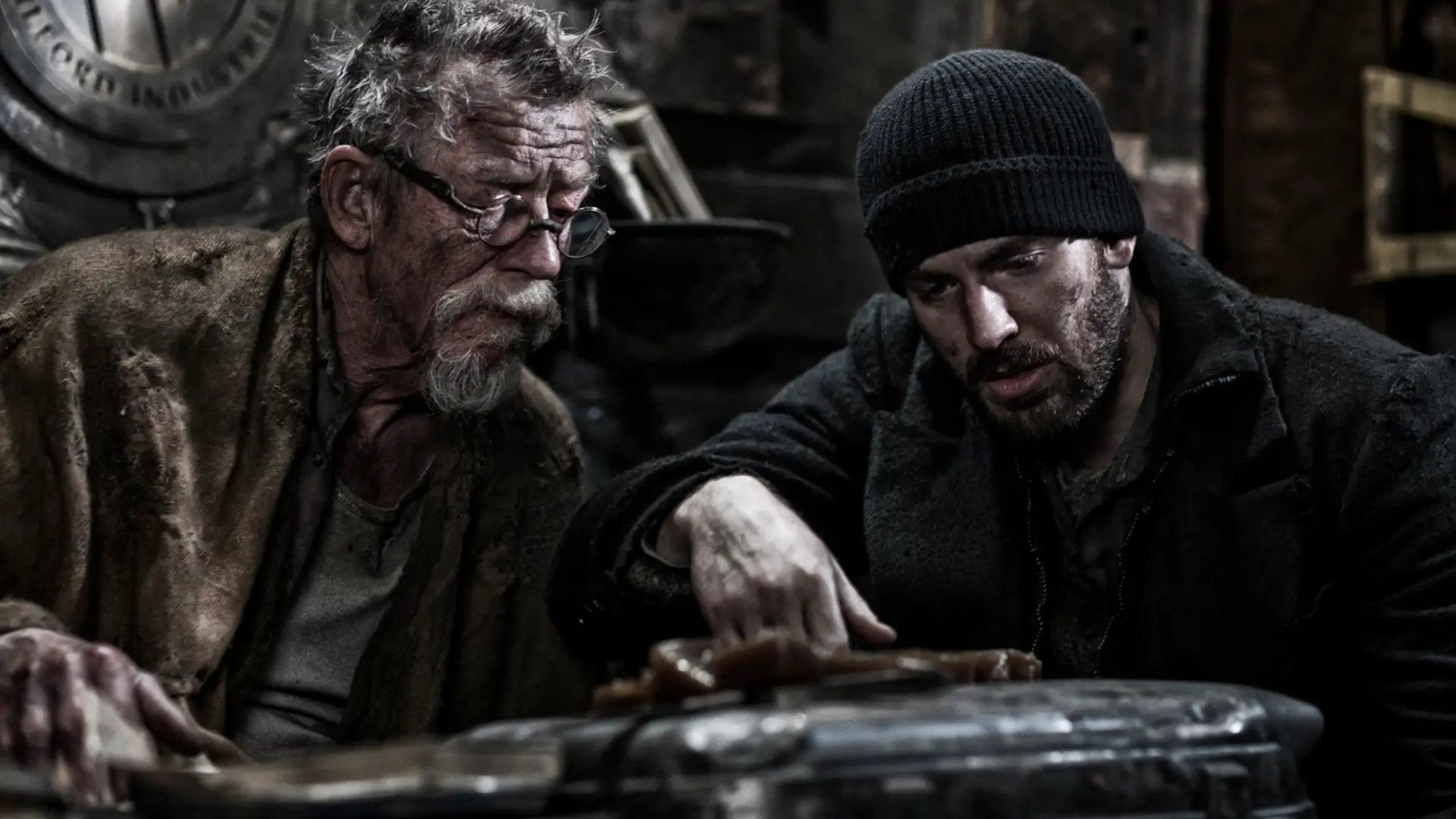
Andrew’s arm was taken from him. Gilliam’s was given. I’d begun to call the arm the Tail’s sacred object and stopped myself: the reel doesn’t show me a rite, only people deciding, or being made to decide, what a part of a body is worth. There’s a third arm still to come.
The Tail has lived on the black blocks ever since. When Curtis finally reaches the carriage where they’re made, he looks into the vat and finds it full of ground cockroaches.
At the fires we keep a law: the stranger drinks first. In the Tail, the stranger is counted first, and fed afterwards with whatever the count allows.
The engine
This section gives away the ending.
The front keeps a school. Its children chant the engine’s catechism with their teacher: what happens if the engine stops? We all freeze and die. The day the Tail passes through, the school is handing out eggs to mark another circuit of the world.
Wilford explains the arrangement over dinner. The train, he says, is a closed system and has to be kept in balance, sometimes by radical solutions. The risings, by his account, are permitted, even arranged, and Gilliam has been his partner in arranging them; this one is to cost precisely seventy-four per cent of the Tail. Curtis doesn’t believe him, and I’m not sure I do either. Abbey’s sharpest point is that Wilford can calculate the risk, and even manufacture it, but can’t guarantee how it comes out. His figure is a claim about the future, made by the man who needs it to be true.
Then a panel lifts in the floor, and Curtis finds the children. Under the engine are spaces only a very small person can fit, and children under five work in them by hand to keep running a machine that can no longer run itself. Timmy is there. His fingers were small enough. That’s what the tape was for. Curtis puts his own arm into the machinery to pull the boy out: the third arm, risked.
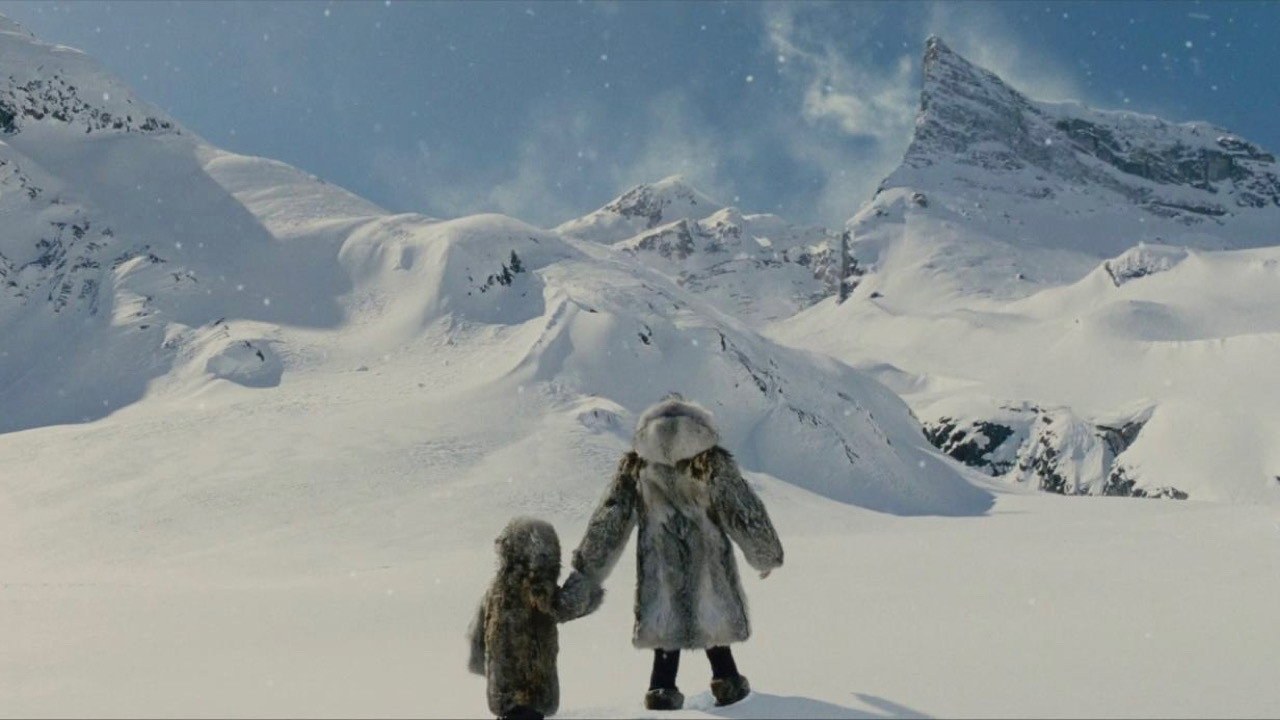
Gerry Canavan, writing in Paradoxa (2014), argued that the reel presents the train’s way of life as the only future on offer, and then shows the machine as something somebody chose to build. Abbey ends where the reel does, in the gaps the numbers can’t close. There’s a girl who wants a match. Outside, after the crash, there’s a polar bear in the snow: something out there was alive all along and was never on anybody’s count.
Participant observation
Come to the October shore as a carriage rather than a person. Each of you takes a job, and all of you share one scrap of fabric, sewn on as a patch at the cuff, the pocket, or the bag. Anybody who knows how to look will see that you came from the same car. The shared patch is our idea, not the reel’s.
If you come alone, come as the Painter: a lamp, a sketchbook, and a pencil. Ask people at the fire whether you may draw them, and give them the drawing. The front measured. You can keep a record with a face in it.
We’ll keep the kettle on.
The Reel Peoples
Sixteen peoples from the old reels and two from our own shore, written up at the fires by Perpétue Kettlewell, with a costume guide for each.
- No. 1The War Boys of the Citadel
- No. 2The Smokers of the Deez
- No. 3The Citizens of the Capitol
- No. 4The Bartertowners
- No. 5The Vuvalini of Many Mothers
- No. 6The Waiting Ones
- No. 7The Holnists
- No. 8The Londoners of the Traction City
- No. 9The Galadhrim
- No. 10The People of Zion
- No. 11The Droogs
- No. 12The Ape Society
- No. 13The Judges of Mega-City One
- No. 14The Morlocks
- No. 15The Aviators of Airhaven
- No. 16The Tail Section