


Les Morlocks
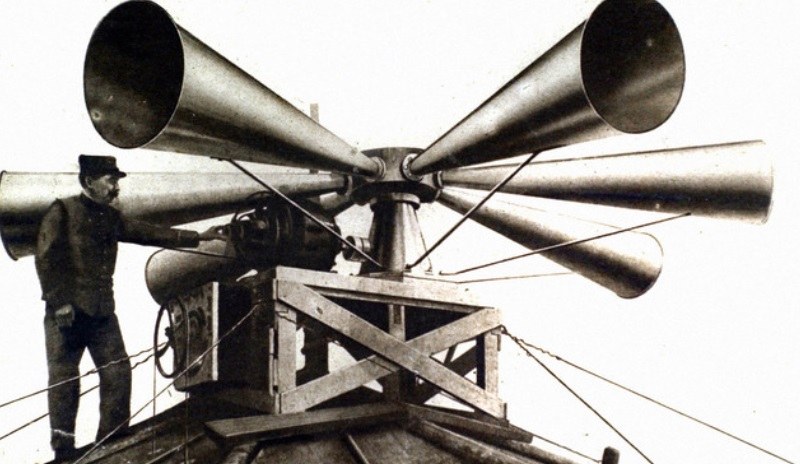
Dans La Machine à explorer le temps (1960), une même sirène retentit à deux époques. En 1966, elle envoie la foule aux abris; huit cent mille ans plus tard, elle conduit les Eloïs vers les Morlocks. Un même son, un autre sens.
Idée de costume. Un duo : un Eloï en tissu clair et simple, une fleur de tissu à la main, et un Morlock aux longs cheveux blancs et au teint bleu-gris.
L’essai intégral et le guide détaillé sont en anglais. Lire l’essai · Voir les références visuelles

The Reel Peoples · No. 14 of 16
The Morlocks
Notes on a Siren Whose Meaning Changes
Perpétue Kettlewell, written at the fires, 2285
Photo: Joe Mabel, CC BY-SA 4.0

In 1966 a siren sounds over London, and people leave their cars in the street and run for the shelters. Some eight hundred thousand years later the same sound comes out of a stone sphinx, and young people put down their fruit and walk towards it.
We know them from The Time Machine (1960), the reel George Pal made from H. G. Wells’s novel of 1895. A Victorian inventor called George builds a machine, settles into its velvet chair, and pushes the lever forward. He stops in 1917, in 1940, and in 1966, and then, after a very long ride, in a green country beneath a great sphinx. Two peoples live there. The ones in the sunlight are the Eloi. The ones underneath are the Morlocks. I’ve titled these notes for the second, though I’ll say at the outset that I have far more evidence of what the Morlocks do than of anything they say to one another.
The same sound twice
The reel teaches the sound before it introduces the people. In 1966, George steps out of his machine into a street just as the sirens begin. Drivers abandon their cars and run for the shelters below ground. An old man in a civil-defence warden’s uniform, the son of George’s oldest friend, hurries past and urges him to take cover. Then the bomb falls from a satellite, and the city disappears under lava.
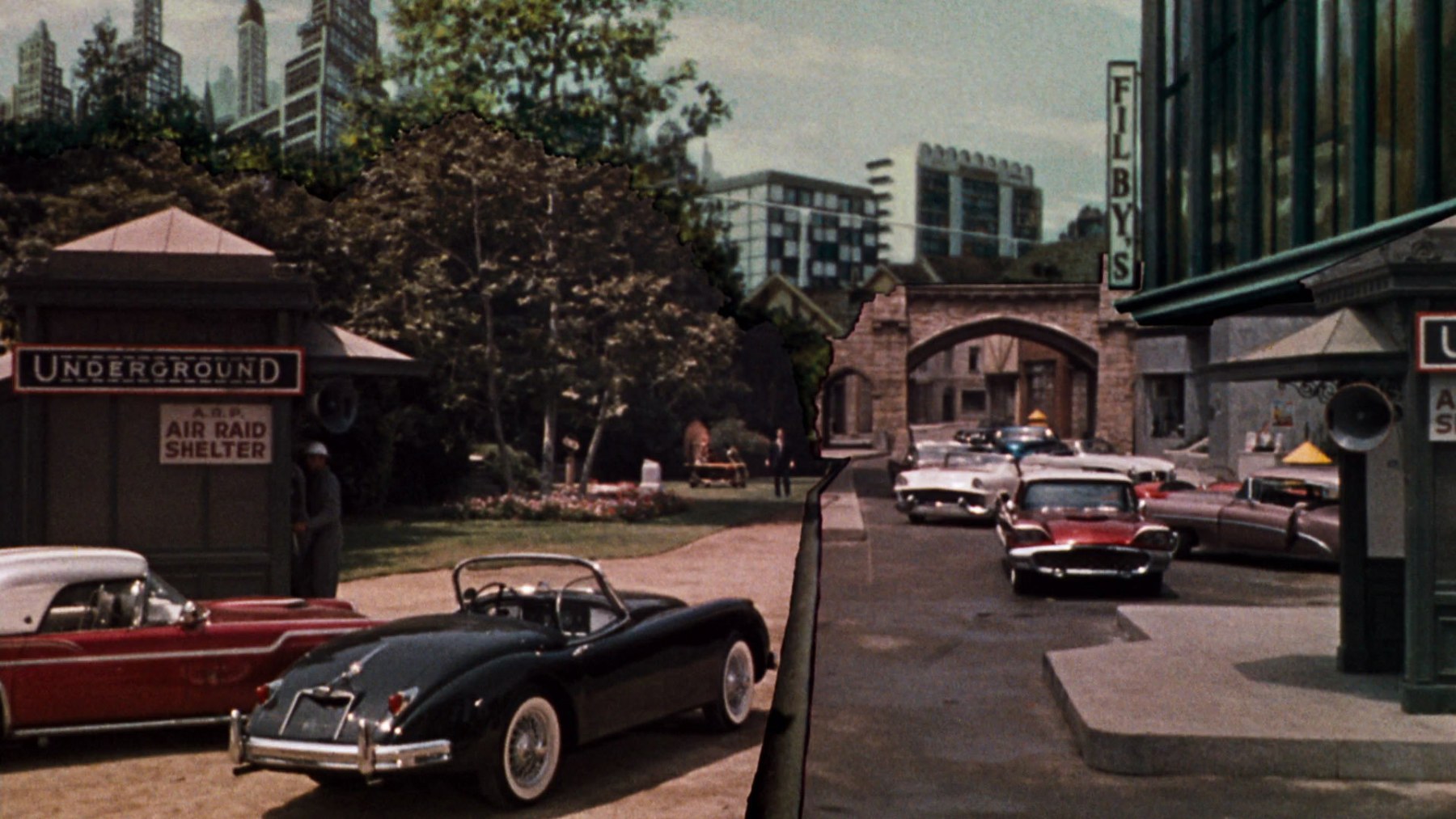
Watch the street, not the sky. Somebody has taught these people exactly what to do with the minutes a siren gives them, and they do it without discussion. The direction they’ve been taught is down.
Sorcha Ní Fhlainn, writing in Adaptation (2016), found Pal’s reel far more anxious about the course of the twentieth century than the novel it came from, and she sent me back to those early stops when I’d been tempted to hurry past them. I have to be careful with what I take from them. The reel lets the same sound ring in two ages. It doesn’t show me a drill handed down, generation by generation, across eight hundred thousand years, and I can’t claim one. What I can claim is that a sound meaning “save yourself” in one century has come to mean something else.

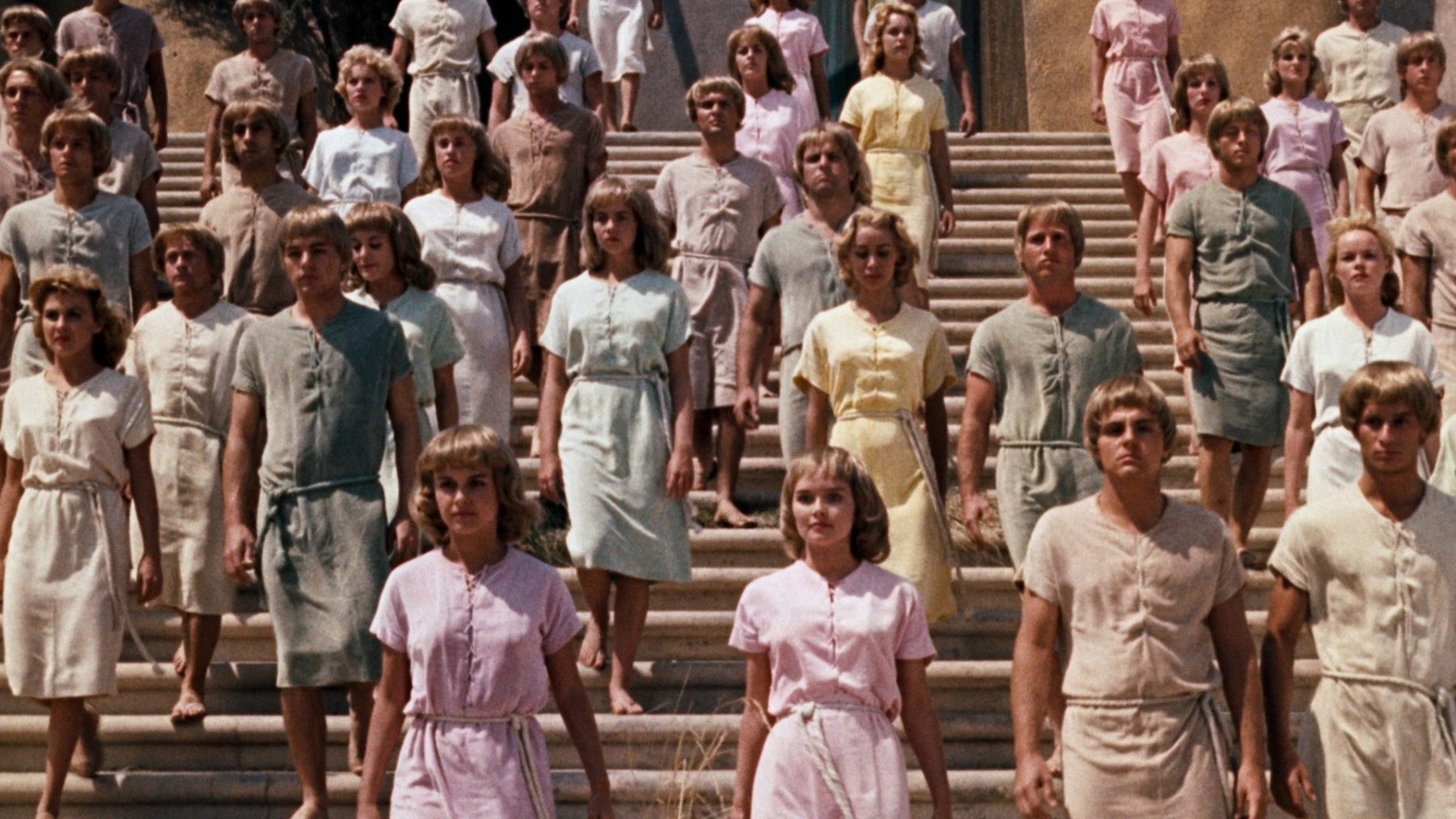
The Provided
George arrives by a stream where young people in pale, simple clothes are lying in the sun. One of them, a girl named Weena, is swept away by the current while her friends watch. George pulls her out.
They don’t work. They eat fruit at long tables, keep no government and no laws, and can’t read. It’s Weena who tells George how things stand: the Morlocks give the Eloi their food and clothing, and the Morlocks must be obeyed. In a dusty hall, George pulls a book from a shelf and it falls to powder in his hands, and he shouts at the Eloi for letting the work of thousands of years rot. They don’t understand why he’s angry.
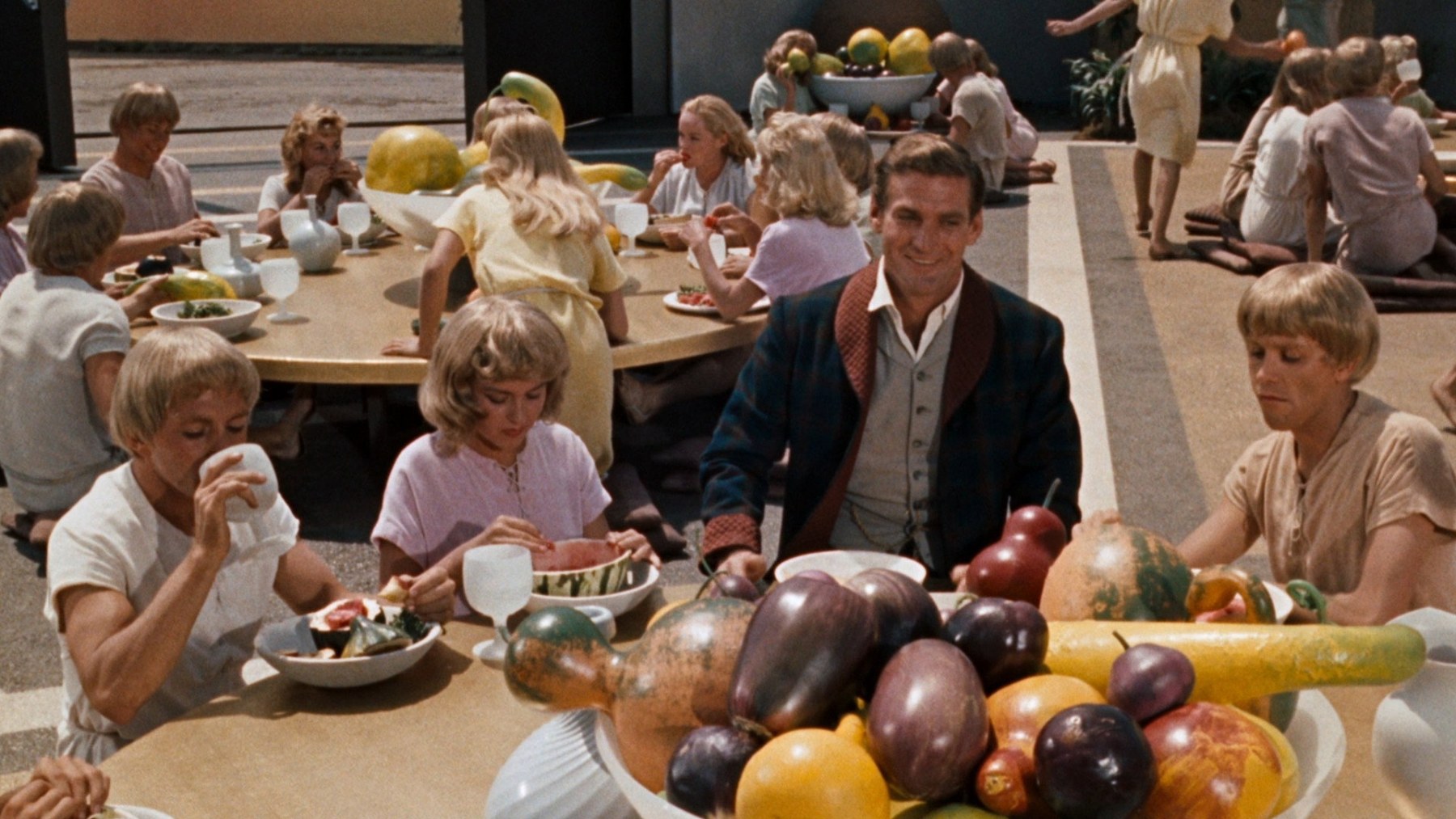
Marcel Mauss argued in The Gift (1925) that a gift binds whoever takes it, because it calls for a return. That’s what makes Weena’s sentence so interesting to me. A ration from someone you must obey isn’t the kind of gift Mauss studied, and nobody in the reel pretends it is. Nothing goes back down the stairs but the Eloi themselves. I’ve started calling them the Provided: it’s the one thing about them that’s never in doubt.
The speaking rings
The Eloi have a single history, and Weena knows where it’s kept. She shows George the rings. Set one spinning on a table and a voice speaks out of it. The rings tell of a war between East and West that lasted three hundred and twenty-six years, and of germs that made the air unfit to breathe. Then they tell of a parting: some of the survivors went down into caverns, and the rest stayed in the sunlight to take their chances.
I’d first written that the Eloi had lost their memory and kept only their habits. The rings won’t let me. The record still exists, and Weena knows how to set it going. What she doesn’t have is any use for it when the siren sounds. Paul Connerton, in How Societies Remember (1989), gave me the words for what I was seeing. A people can keep its past written down, and it can keep its past in the body, in postures and drills repeated until nobody remembers why. Knowing what happened and knowing how to refuse a summons turn out to be different kinds of knowledge, and the Eloi have only one of them.
The Calling
Then the siren sounds again, this time from inside the sphinx, and the Eloi stand up. They walk in lines to the opened metal doors, as if half asleep, the way the drivers of 1966 left their cars. The doors close behind the ones who’ve gone in, and the rest wander off. Those who go below, the Eloi tell George, never come back.
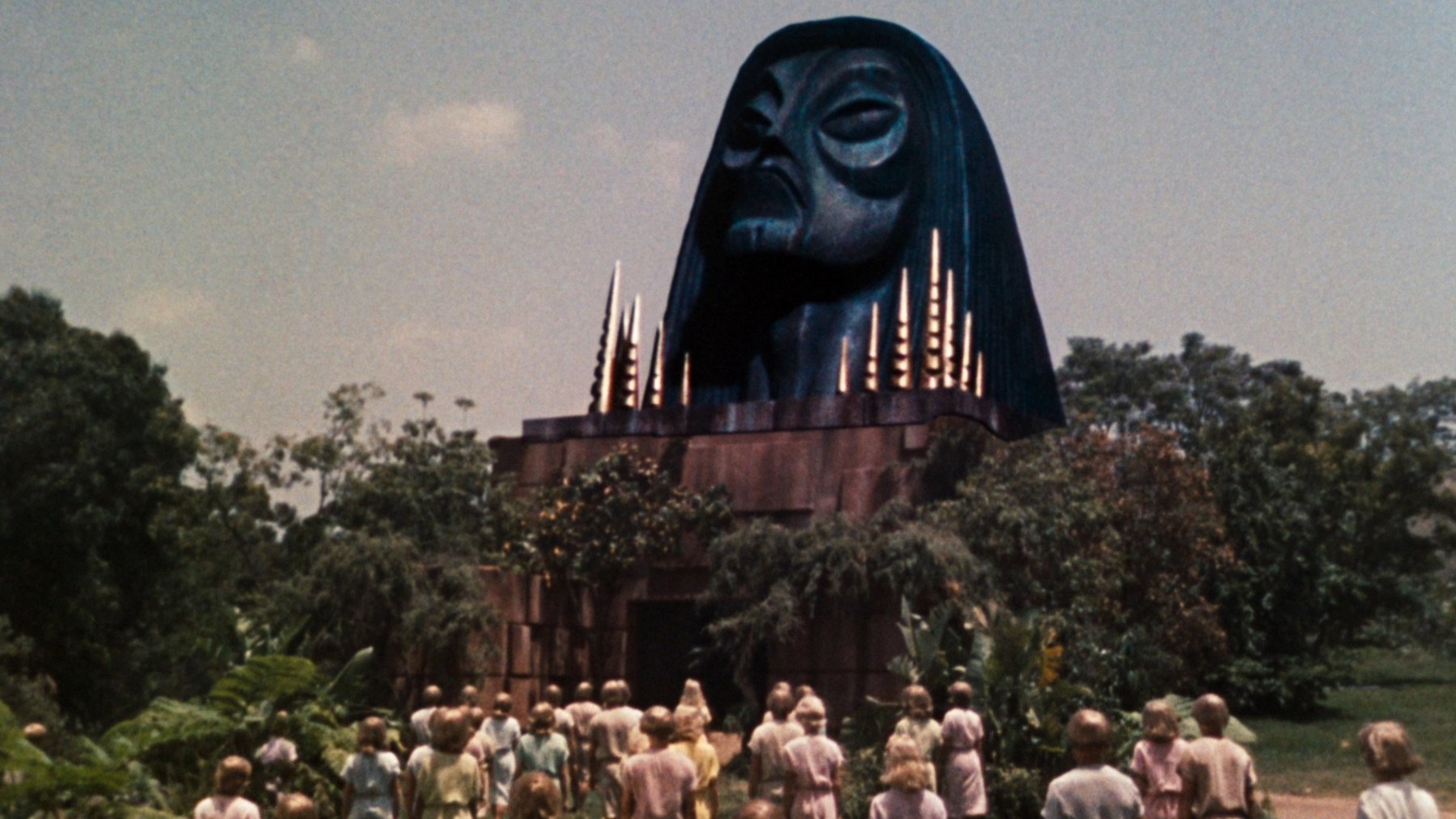
The first time through, I filed the two sirens under different headings: shelter for one, slaughter for the other. Then I wrote up the second and found myself using the same words in the same order as the first. A sound. No questions. Down. Neither the books nor the rings can tell me what Weena does with her feet when the sound starts. The rings can only explain it to George after she’s gone.
At the fires we keep a law: the stranger drinks first. Among the Eloi, the stranger is fed first, and nobody can tell him who cooked.
Below
This section and the next give away the ending.
The Morlocks’ country is reached through stone wells scattered over the land, and it hums. Below, George finds throbbing machinery, a feasting room, and human bones. The Morlocks, when light finds them, are blue-grey creatures with long white hair, clawed hands, and eyes that shine in the dark, and they herd the Eloi with whips. Their faces were made by William Tuttle, head of makeup at MGM, who fitted the masks with electric lights so the eyes would glow.
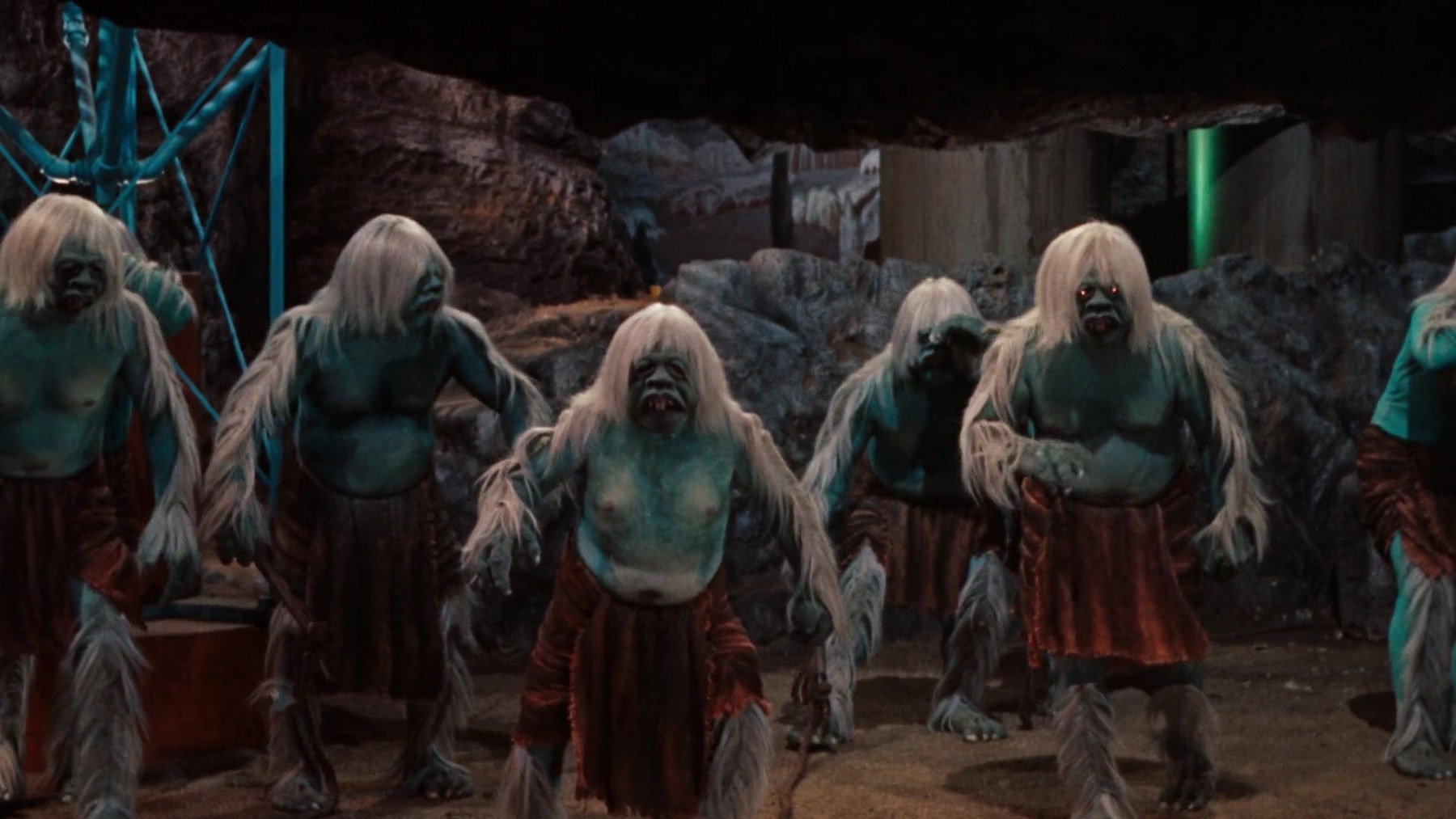
W. Arens, in The Man-Eating Myth (1979), warned the old world’s anthropologists that most of their reports of cannibalism came from neighbours rather than witnesses. I’d meant to lean on him here, and I can’t, quite. The bones, the herding, and George’s own account together make more evidence than any neighbour’s accusation. Even so, they tell me almost nothing about how the Morlocks speak to one another, what they call the Eloi, or what they believe about the arrangement. I keep those two kinds of gap on separate lines.
George fights with fire. Matches and torches blind the Morlocks, he fights them with his fists, and the Eloi he leads up help feed burning branches down the wells until the caverns collapse. It isn’t the end of them. When George goes back to the sphinx for his machine, the doors close behind him and the Morlocks come for him again. A people raised in the dark has been badly burned. It hasn’t been finished.
The three books
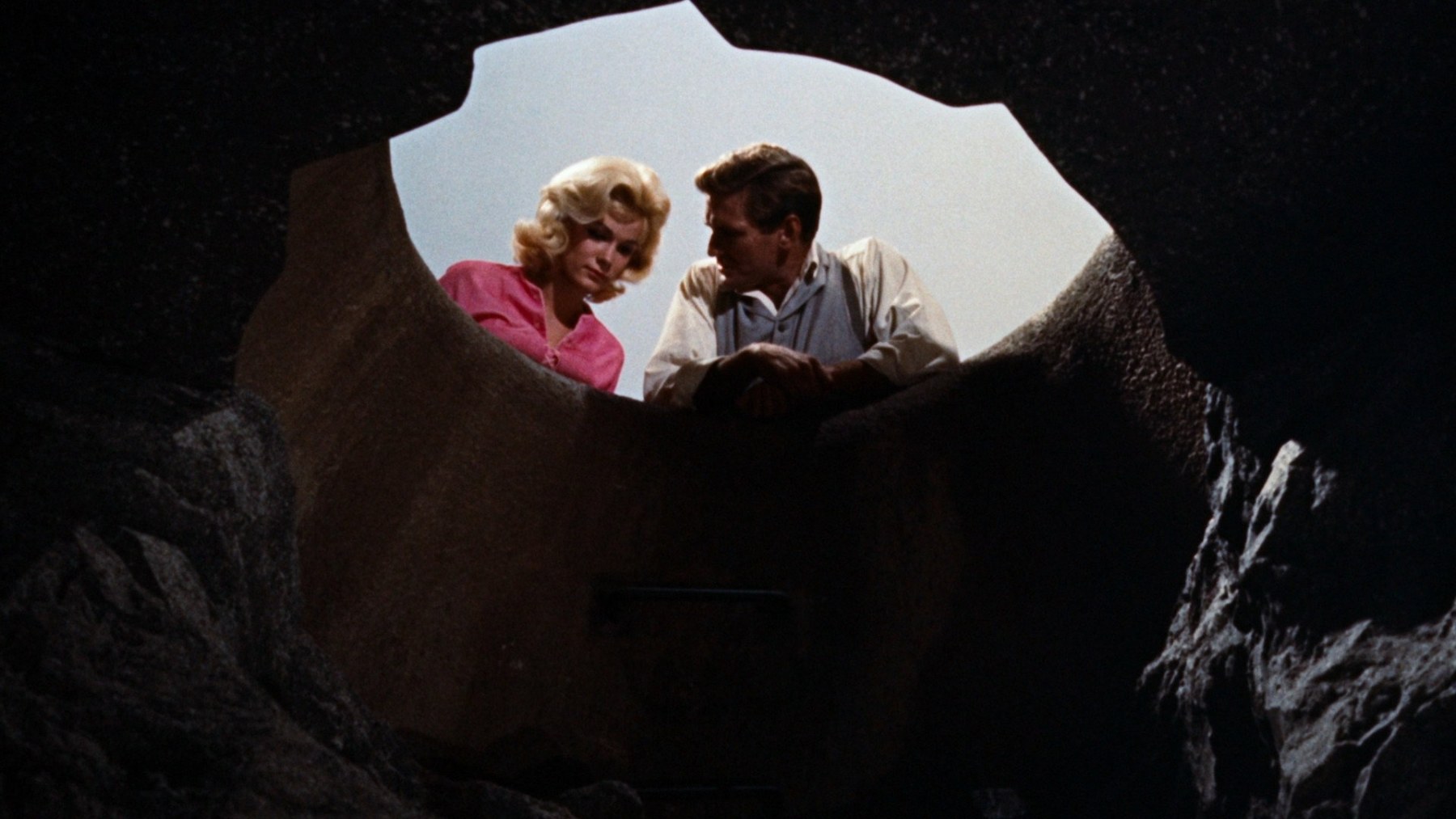
George escapes to his own century, tells his friends, and then goes back. They find the machine gone and three books missing from his shelves, and nobody can say which three. I’ve been asked some version of that question at every fire I’ve sat beside, and my answer changes. Tonight I’d take a book of drills, so I’d know which of mine I’d stopped understanding.
Participant observation
The Morlocks and the Eloi are one society seen from two floors, so come to the October shore as a pair. One of you wears pale, simple cloth that somebody else has clearly made, and carries a cloth flower. The other wears the blue-grey and white of the underground and carries something that looks as though it keeps a machine running: a spinning ring, or a maintenance tag. Don’t play the bones. Play the arrangement: one of you hands over the food, and the other never asks where it came from.
If you’d like a drill of your own, invent a cue for your pair alone: a tap on the shoulder, a hummed note, a word nobody else would use. Agree what it means before you arrive, keep it well away from anything that sounds like a real announcement, and see whether it still means the same thing by the end of the night. The ring, the tag, and the cue are our inventions, not the reel’s.
And bring a book. When someone at the fire asks which three you’d take, name one, and tell them what you hope somebody will do with it.
We’ll keep the kettle on.
The Reel Peoples
Sixteen peoples from the old reels and two from our own shore, written up at the fires by Perpétue Kettlewell, with a costume guide for each.
- No. 1The War Boys of the Citadel
- No. 2The Smokers of the Deez
- No. 3The Citizens of the Capitol
- No. 4The Bartertowners
- No. 5The Vuvalini of Many Mothers
- No. 6The Waiting Ones
- No. 7The Holnists
- No. 8The Londoners of the Traction City
- No. 9The Galadhrim
- No. 10The People of Zion
- No. 11The Droogs
- No. 12The Ape Society
- No. 13The Judges of Mega-City One
- No. 14The Morlocks
- No. 15The Aviators of Airhaven
- No. 16The Tail Section