


Les Juges de Mega-City One
Dans Dredd (2012), les Juges ne peuvent répondre qu’à environ six appels sur cent. La première décision de la journée n’est donc pas une sentence, mais un choix : quel appel entendre? Dans la tour de Peach Trees, une mère et un homme du centre médical rappellent que les habitants ont, eux aussi, leur mot à dire.
Idée de costume. Un insigne d’un seul mot, en lettres capitales, sur une veste sombre. À deux : l’un casqué, l’autre à visage découvert.
L’essai intégral et le guide détaillé sont en anglais. Lire l’essai · Voir les références visuelles
The Reel Peoples · No. 13 of 16
The Judges of Mega-City One
Notes on a Court That Chooses Where to Go
Perpétue Kettlewell, written at the fires, 2285
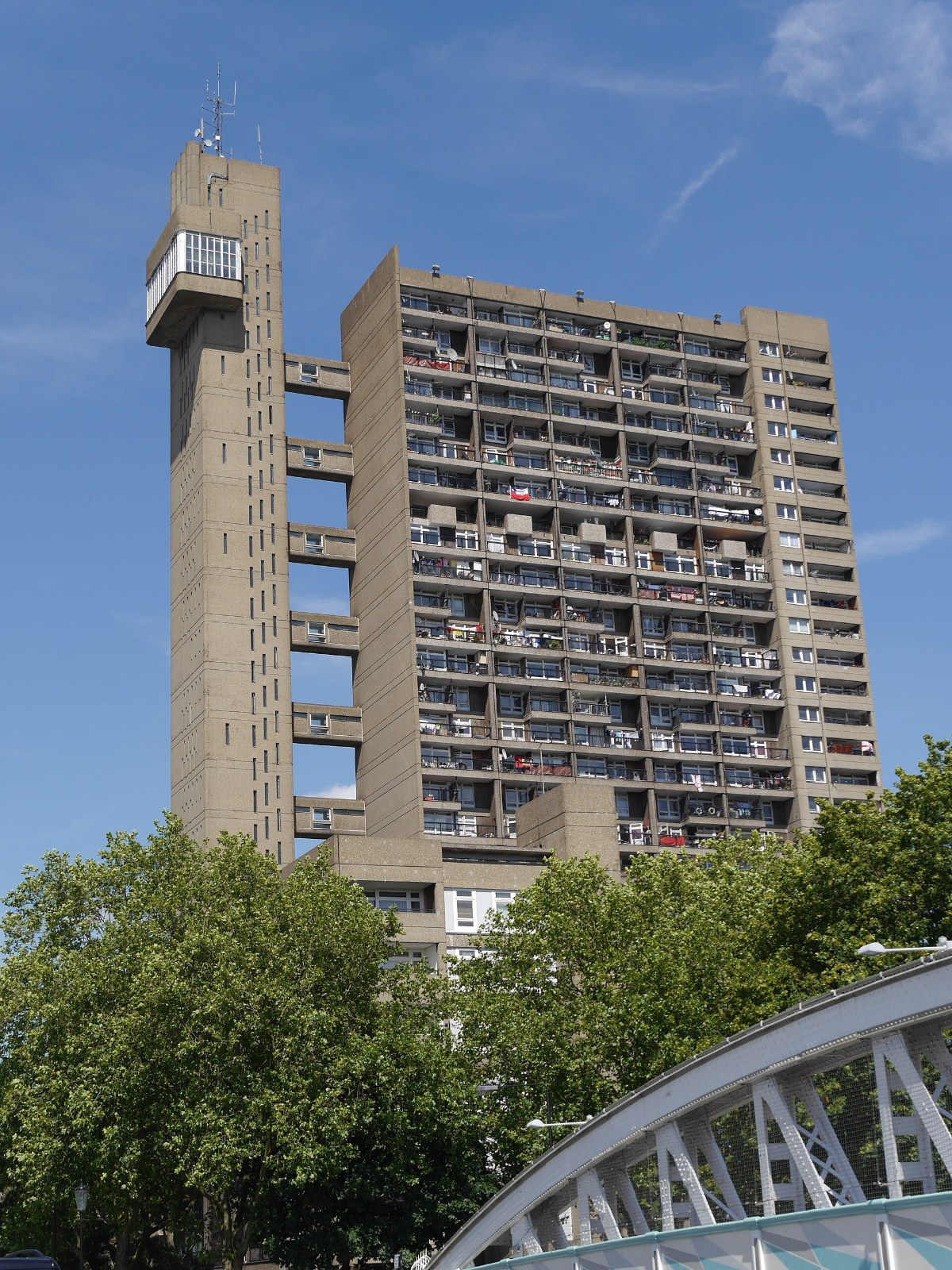
Photo: Edwardx, CC BY-SA 3.0

The call comes in over the radio: three bodies at the foot of a tower called Peach Trees. Before the two Judges in the car can decide anything about the dead, they have to decide whether to go at all.
We know them from Dredd (2012), the reel Alex Garland wrote and Pete Travis directed, made from a character who first walked out of the old world’s picture-paper 2000 AD in 1977. Their city runs along the old east coast of America: eight hundred million people in towers built over the ruins of older towers. The Judges who police it are bench, jury, and, when it comes to that, executioner, fitted into one suit of black armour and sent out on a motorcycle. I came to them expecting a people with no use for choice. The first thing the reel shows me is a choice.
Which six?
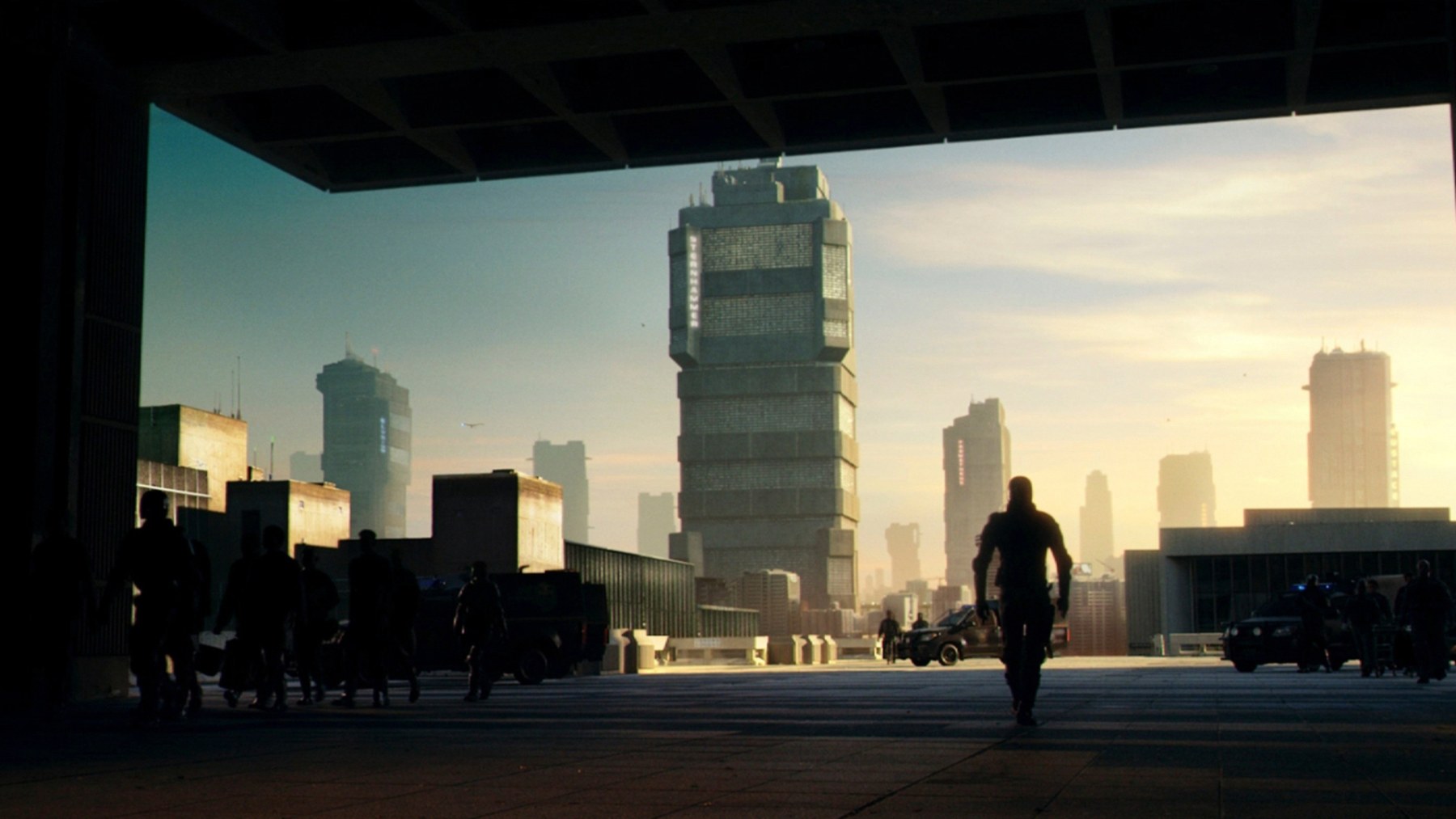
When the call about Peach Trees comes through, Dredd gives his rookie the arithmetic as he knows it: the Judges can answer only around six in every hundred of the crimes reported to them. She asks which six. He tells her it’s her show.
I’d read the Judges, from their reputation and their boasts, as a people without discretion: the law is the law, and a Judge only reads it aloud. That exchange made me rewrite the first line of my notes. Dredd’s figure is an estimate, spoken in a car, and I won’t pretend it tells me how every call in the city is sorted. What it does tell me is where a Judge’s day begins. Before anyone is sentenced, somebody decides which cries the law will hear at all.
Didier Fassin, the old world’s ethnographer of policing, rode for months with an anti-crime squad in the suburbs of Paris and wrote it up in Enforcing Order (2013). He found less fighting than waiting, and a great deal of choosing where to look. I’d been reading the Judges for what they do once they arrive. Fassin sent me back to the moment before they set out. The rookie chooses the triple murder in Peach Trees, and everything in the reel follows from her answer.
The shell
Look at a Judge and you’ll see very little of him. The helmet comes down over brow and eyes and leaves only the jaw. From where a citizen stands, the mouth is the only part of a Judge that moves. I call this the mouth-rite: a face reduced to the one organ that pronounces sentence.
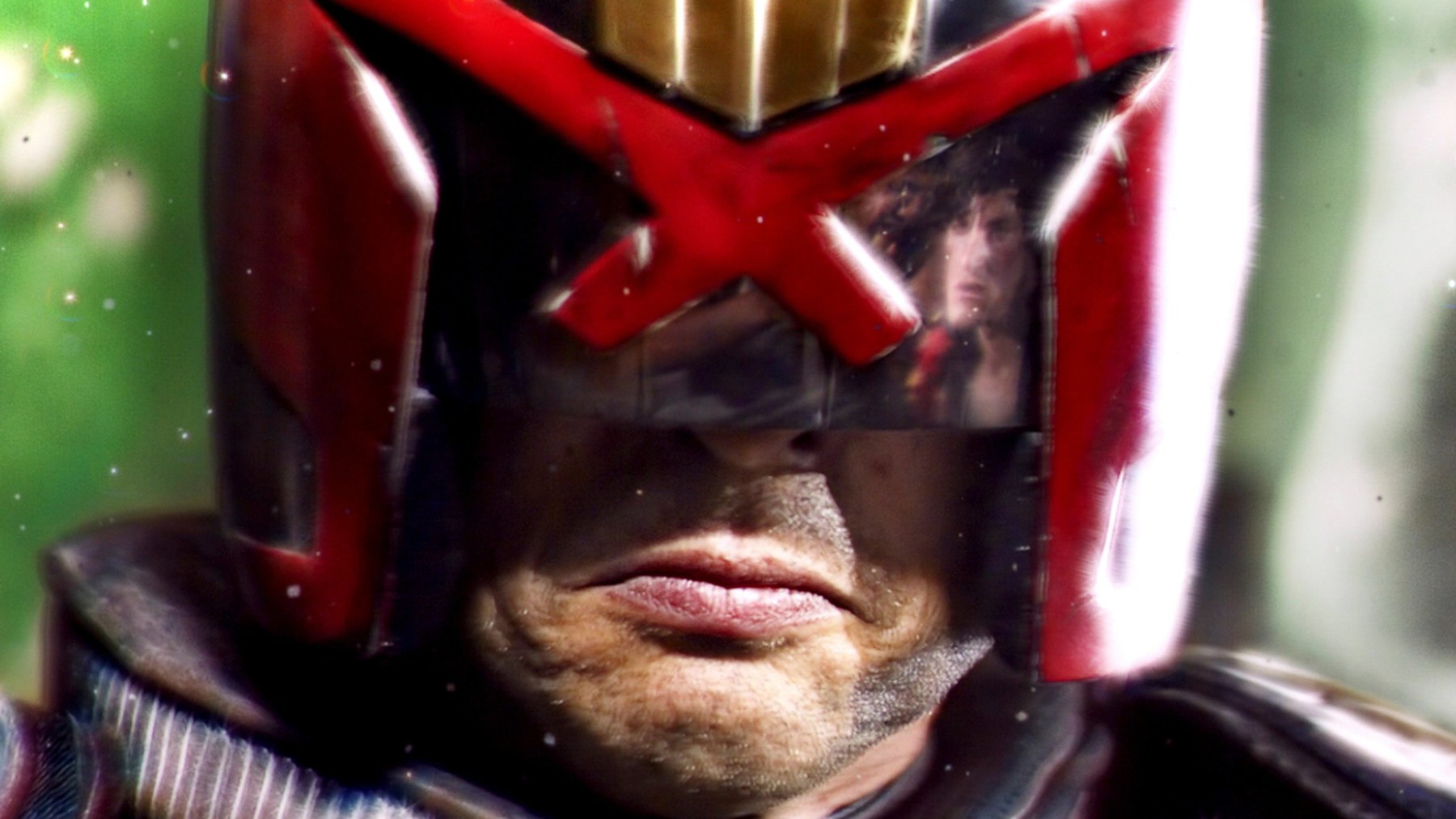
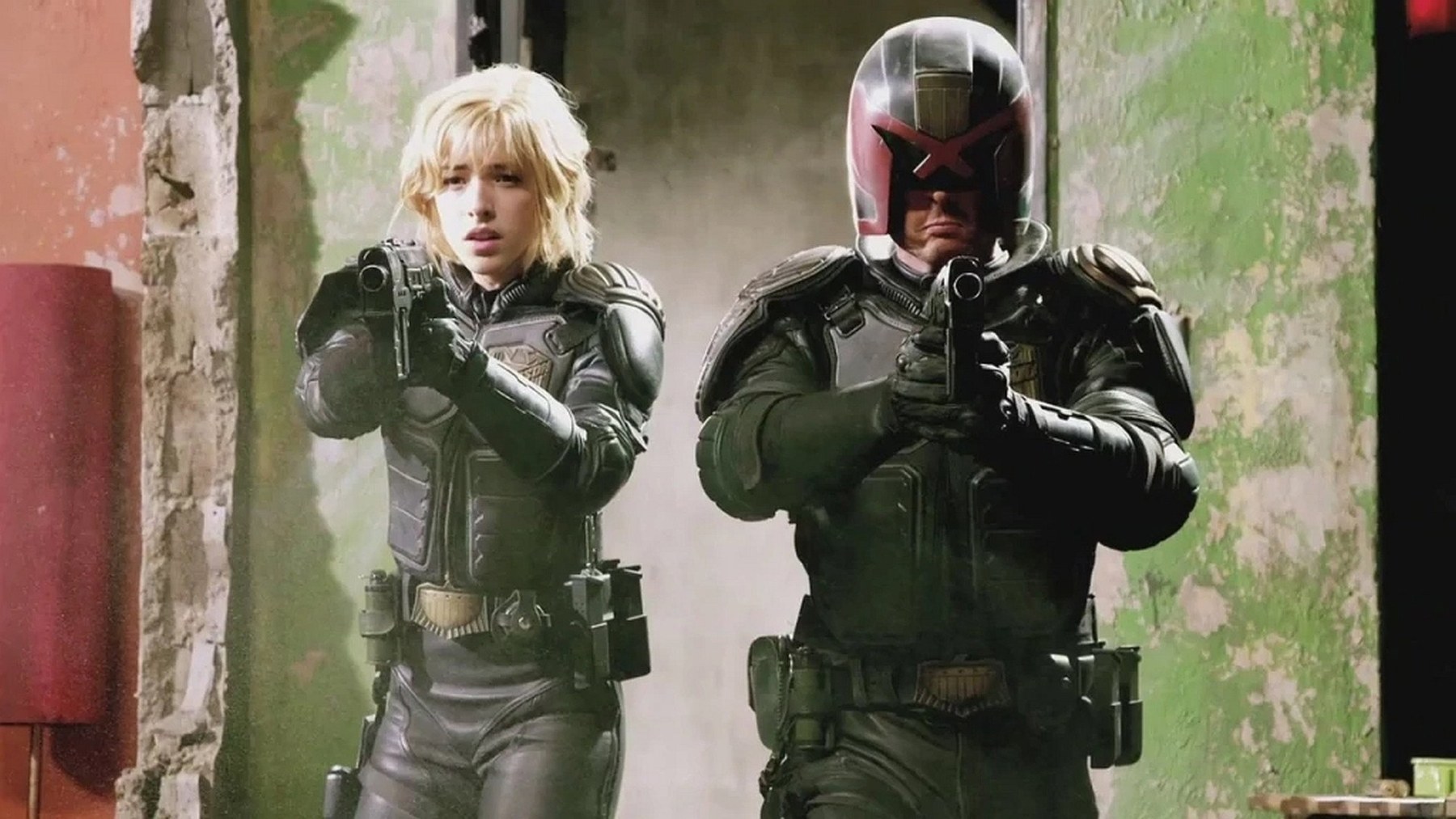
Garland, asked why the helmet never comes off, said that the reel only follows the man where he ought to be wearing it. The man underneath, in other words, has no occasions of his own. The rest of the uniform is two skins: a black leather riding layer, and over it a shell of hard armour with pads at the shoulder, gloves, and heavy boots. The costume department under Michael O’Connor settled Dredd’s uniform first and built the other Judges’ from it, blocky and plain. One word is allowed on the chest: a surname. We have a name for a person written down as one word. We call it the flat word, and we’re wary of it. The Judges wear theirs with pride.
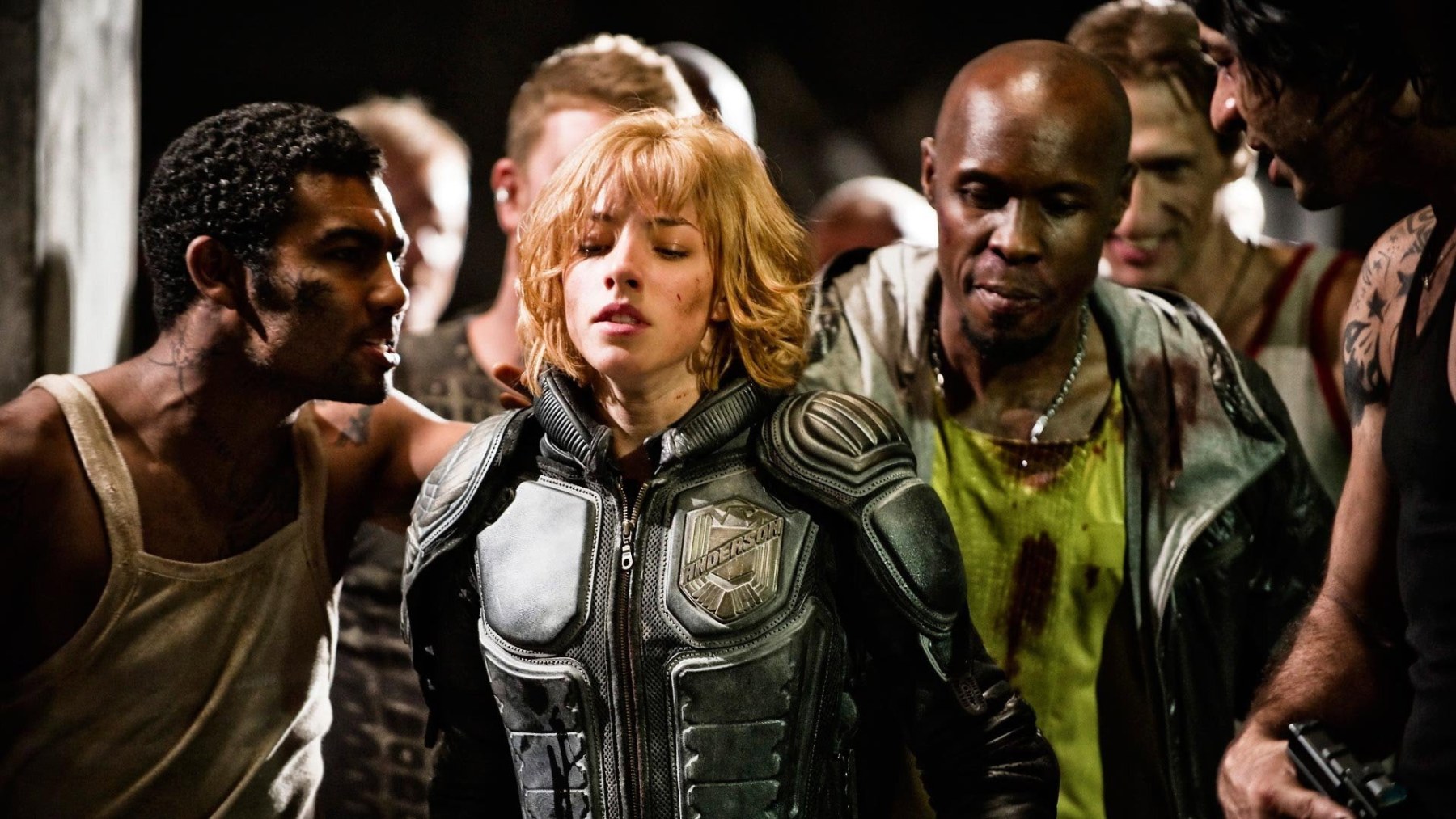
The rookie, Cassandra Anderson, comes to her assessment without a helmet. It interferes, she says, with what she can sense. Dredd answers that a bullet would interfere more. Both are right. The helmet keeps out bullets, and it keeps out whatever a Judge might learn from a face. Anderson goes in with her face bare, and in a reel full of armour she’s the one Judge the residents can look in the eye.
The building answers
Peach Trees is two hundred storeys tall and holds some seventy-five thousand registered citizens. Its own file gives its unemployment at ninety-six per cent. I’d taken its residents, at first, as scenery: doors that stay shut, faces at the edge of the frame. Two of them refused to stay scenery.
The first is a mother. When the Judges are hunted onto her floor, Anderson reads her, sees what she’s protecting, and tells her she isn’t raising any alarm. The woman answers by showing them a service lift that still runs, which gets the law off her floor and away from her family. The second is the man at the door of the medical centre, who tells the Judges it’s a medical facility, and neutral ground. Dredd tells him he isn’t neutral.
Neither of them belongs to either court. One bargains with the law to make it leave; the other claims a room the law shouldn’t enter, and loses the argument. I’d been about to write that the people of Peach Trees have only two voices to choose between. The mother and the medic are the reason I didn’t.
Two courts, one loudspeaker
The tower keeps a second legal system, and its lawgiver is a woman called Ma-Ma. Her clan makes and sells a drug named Slo-Mo, which slows the taker’s sense of time to about a hundredth of its ordinary pace. The reel opens its case on her law, not the Judges’. Three dealers who crossed her are skinned, dosed with her drug, and thrown from the top of the tower, as a warning to anyone else who might.
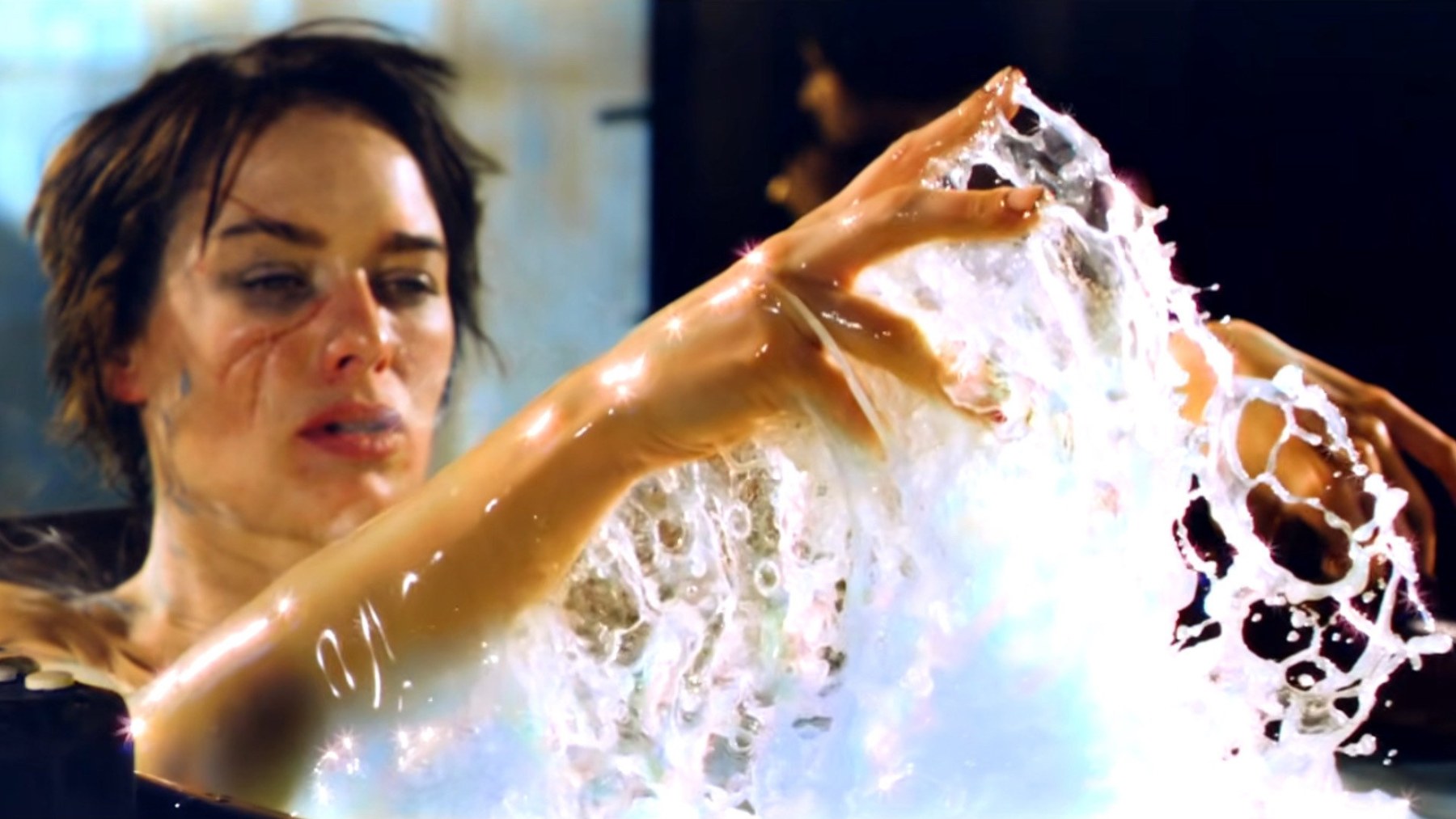
With the Judges trapped inside, she takes over the tower’s public-address system and orders the residents to find them and kill them. Dredd answers on the same system. Ma-Ma, he tells the tower, is not the law; he is. He names her crimes, pronounces her sentence, and warns that anyone who helps her will be treated as her accomplice.
Both voices address the building as though everyone in it has already picked a side, and neither stops to ask. The residents spend that stretch behind locked doors, listening to the two take turns. The mother on her floor has already shown me what a resident does with the silence between them: she finds a third way out.
At the fires we keep a law: the stranger drinks first. In Mega-City One, the stranger is sentenced first, and whatever he drinks after that, he drinks in a cube.
The examination
This section gives away the ending.
Underneath the shooting, the reel is a school report. Anderson is twenty-one, and she finished the Academy three points below a pass. Her file says she was born in a block a hundred metres from the radiation wall, and that her mind can do things no Judge has seen, which is why the Council will overlook what it calls her mutant status. She’s given one supervised day in the field to make up the difference. By her own reckoning she fails it early, when she loses her weapon.
Near the end, one of Ma-Ma’s men, at gunpoint, offers her the code to Ma-Ma’s rooms. She looks into him and tells him to go. She calls him a victim rather than a perp, and says that until her assessment formally ends, she still has the authority to decide.
Rafe McGregor, a philosopher of crime and narrative, reviewed the reel in 2021 and found its form, from the opening voice to the closing views of the city, lending its authority to zero tolerance. He read Anderson’s arc as a rookie learning to leave her doubts behind. I grant him the voice and the views. His reading struggles with the door. The one act of mercy in the record is performed by a Judge who believes she’s already failed, and so has nothing left to lose by deciding for herself.
Outside, a senior Judge asks Dredd whether she passed. He says she did, and doesn’t say why. I’d meant to end these notes by saying the Judges keep their discretion in two places. I count at least three now: which call to answer, who counts as a victim, and who gets to become a Judge. They spend a good part of every day insisting they haven’t any.
Participant observation
Come to the October shore as a pair of Judges, one in the shell and one with a bare face. Make your badges first: one word each, an invented surname, in block capitals.
Then bring the choosing with you. Before you leave home, write three dispatch slips, invented and harmless: a missing kettle, a song sung out of turn, a dog that has adopted the wrong family. At the fire, each of you picks the one you’d answer first and explains why to the other. You’ll disagree. The Judges built a whole city on that disagreement and called it certainty. The slips are our invention, not the reel’s.
We’ll keep the kettle on.
The Reel Peoples
Sixteen peoples from the old reels and two from our own shore, written up at the fires by Perpétue Kettlewell, with a costume guide for each.
- No. 1The War Boys of the Citadel
- No. 2The Smokers of the Deez
- No. 3The Citizens of the Capitol
- No. 4The Bartertowners
- No. 5The Vuvalini of Many Mothers
- No. 6The Waiting Ones
- No. 7The Holnists
- No. 8The Londoners of the Traction City
- No. 9The Galadhrim
- No. 10The People of Zion
- No. 11The Droogs
- No. 12The Ape Society
- No. 13The Judges of Mega-City One
- No. 14The Morlocks
- No. 15The Aviators of Airhaven
- No. 16The Tail Section