

The ash · despair
The bone · hope
A costume tells people who survived. A landscape tells them what was survived.
In 2285, the world has ended and the horizon is still there. Some of it is ash: glass sand, a flattened forest, a town with the clocks stopped. Some of it is bone, bleached and clean: a field that came back on its own, a shore someone walked to on purpose. Afterland stands on both, in that order.
Two kinds of horizon
Every ending leaves a landscape behind, and every landscape has two sides.
The ash
Despair: the land as the end left it. Burnt, drowned, emptied, frozen. Nothing grows here yet, and the last people to leave didn’t close the door.
The bone
Hope: the land as it starts again. Pale, quiet, and planted. Someone’s keeping a garden, a library, or a herd, and the path is worn because people use it.
What the old screens left us
Before the end, screens, books, and painters imagined both kinds of horizon. Some of those places were real, and they’re still there.
The ash · despair
The bone · hope
01 / 12

Photo: KennyOMG, CC BY-SA 4.0, cropped

Mordor
“One does not simply walk into Mordor.”
The Lord of the Rings films · Mount Ngauruhoe, Tongariro National Park, New Zealand
The real mountain had to be digitally enlarged to look this evil. In person, hikers climb it for the view.
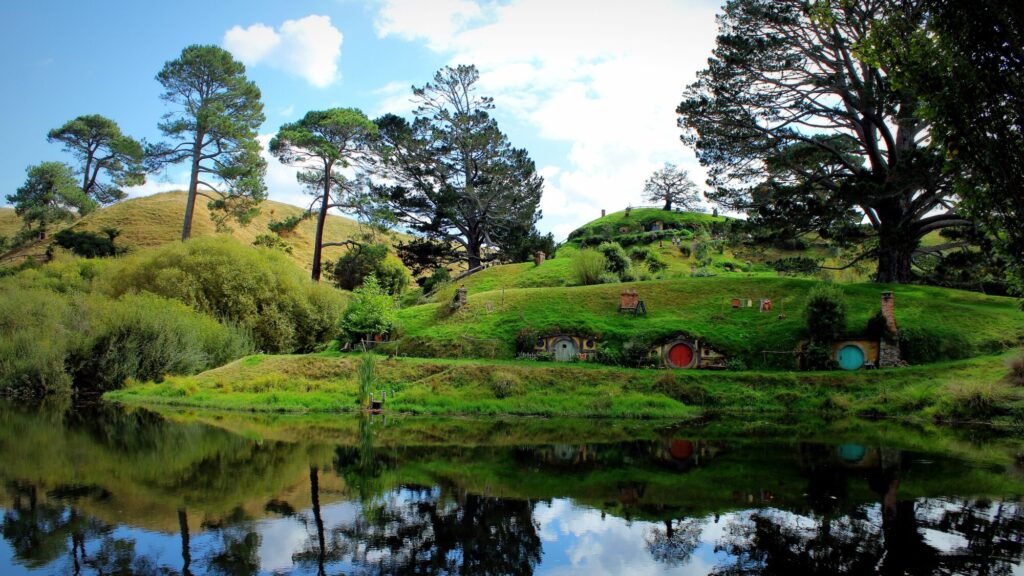
Photo: Jackie.lck, CC BY 2.0, cropped

The Shire
“In a hole in the ground there lived a hobbit.”
J. R. R. Tolkien, The Hobbit (1937) · the Hobbiton set, Matamata, New Zealand
The opposite of a wasteland isn’t paradise. It’s a garden somebody keeps weeding.
02 / 12
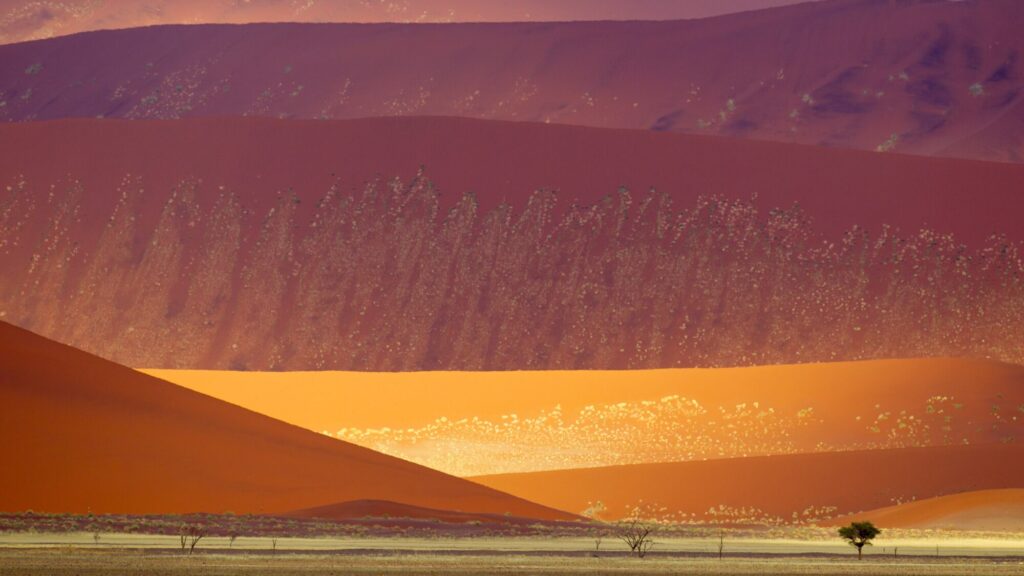
Photo: Yathin S Krishnappa, CC BY-SA 3.0, cropped

The Wasteland
“My name is Max. My world is fire and blood.”
Mad Max: Fury Road (2015) · the Namib desert, Namibia
Fury Road was meant to shoot near Broken Hill, in Australia. Rain made that desert bloom, so the end of the world moved to Namibia.
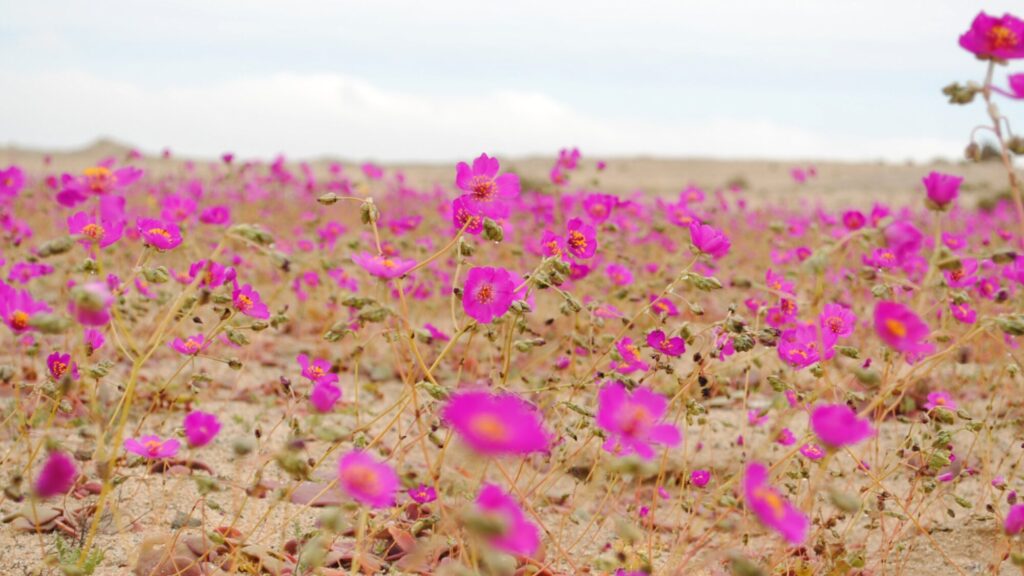
Photo: Joselyn Anfossi Mardones, CC BY 2.0, cropped

The desert that flowers
“The desert shall rejoice, and blossom as the rose.”
Isaiah 35:1, King James Version · the desierto florido, Atacama Desert, Chile
The same rare rain that chased Fury Road off its first desert turns one of the driest places on Earth pink.
03 / 12
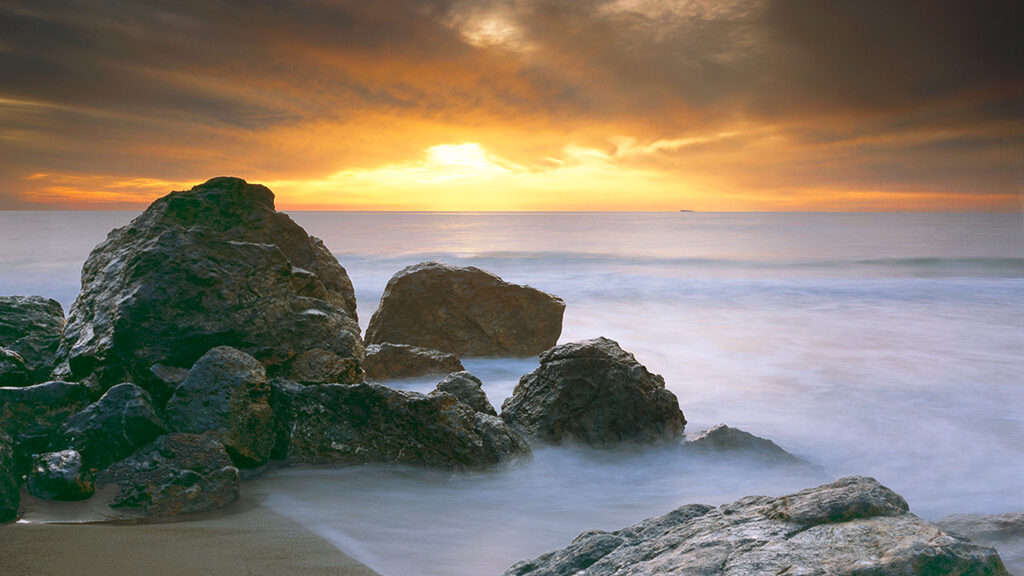
Photo: Doug Dolde, public domain, cropped

The Forbidden Zone
“You maniacs! You blew it up!”
Planet of the Apes (1968) · Point Dume, Malibu, California
The most famous ruin in film was a prop and a matte painting, set on a beach where people still surf.
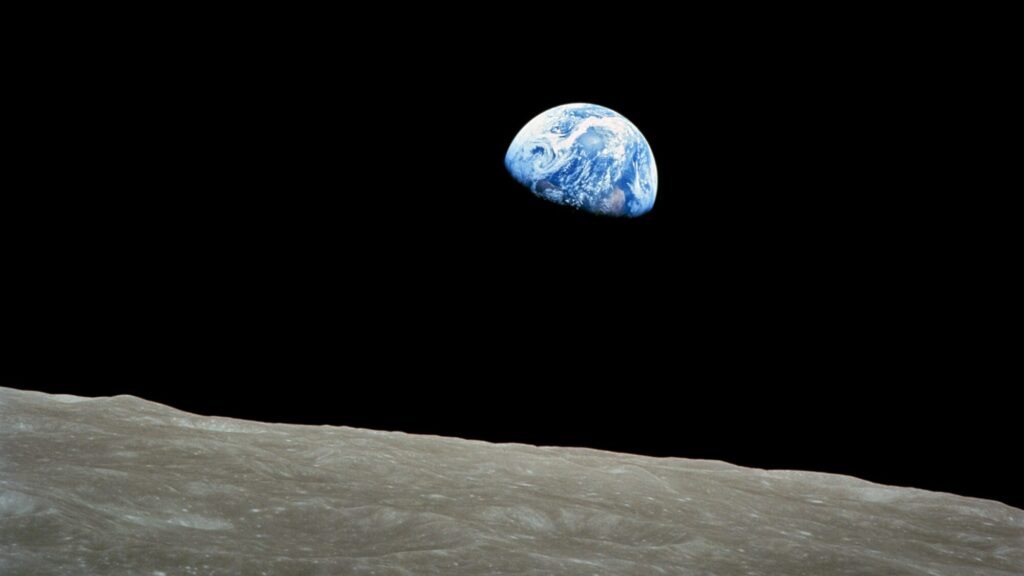
Photo: NASA, Bill Anders, public domain, cropped

Earthrise
“God bless all of you, all of you on the good Earth.”
Apollo 8, December 24th, 1968 · photographed from lunar orbit by Bill Anders
Same year. One film showed a ruined planet; one photograph showed an unruined one, from far enough away to want to keep it.
04 / 12
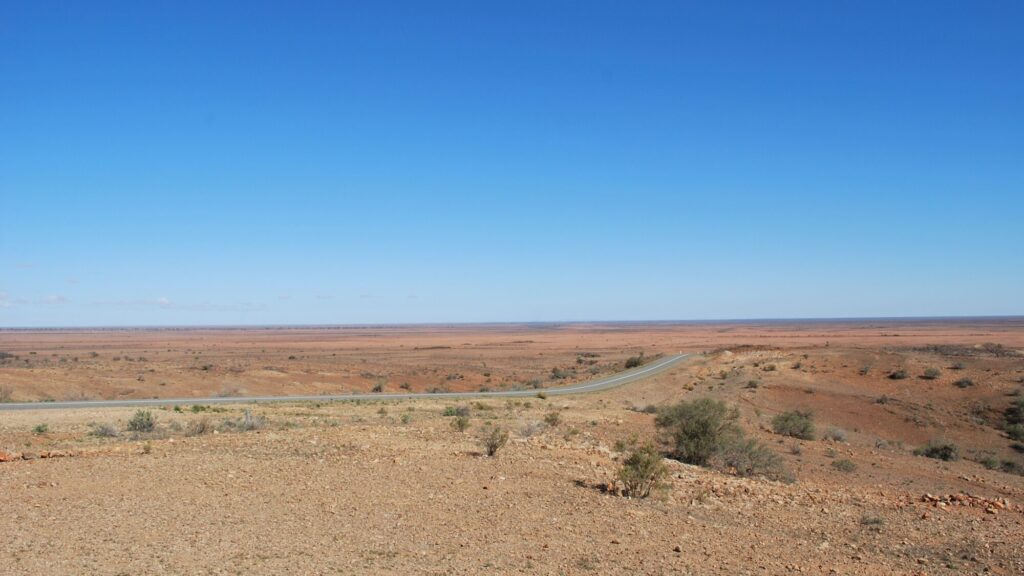
Photo: Mattinbgn, CC BY-SA 3.0, cropped

The road
“My life fades. The vision dims. All that remains are memories.”
Mad Max 2 (1981) · the Mundi Mundi Plains, near Silverton, New South Wales
Silverton is a near-ghost mining town with a Mad Max 2 museum. Even the apocalypse becomes a tourist trade.
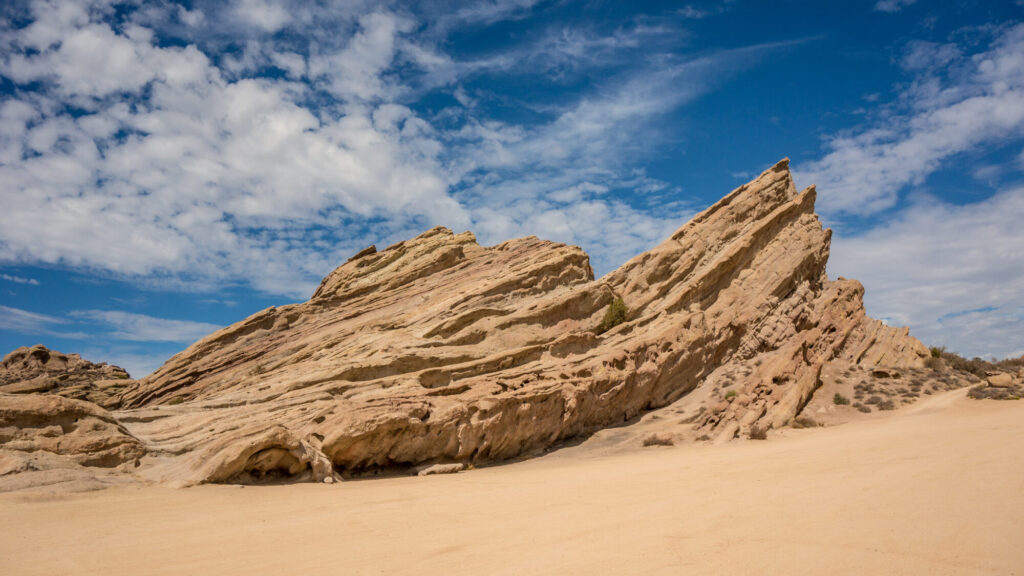
Photo: Mikebhuang, CC BY-SA 4.0, cropped

Kirk’s Rock
“Space: the final frontier.”
Star Trek, “Arena” (1967) · Vasquez Rocks, Agua Dulce, California
Star Trek came back here for decades to play alien planets. The rocks only played themselves in 2020, in Picard.
05 / 12
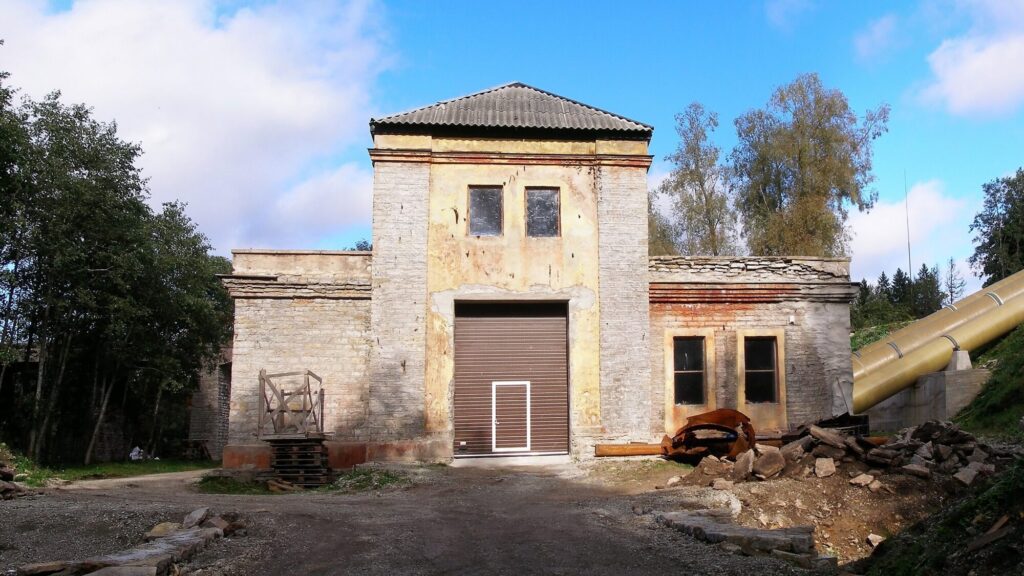
Photo: Hannu, public domain, cropped

The Zone
Stalker (1979), from Roadside Picnic by Arkady and Boris Strugatsky · the Jägala hydroelectric station, near Tallinn, Estonia
The Zone was shot with almost no effects: moss, standing water, broken concrete, and a river downstream from a chemical plant. The worst landscapes are ordinary ones left alone.

Photo: Rosemtoubes, CC BY-SA 4.0, cropped

The lakeshore
“Because survival is insufficient.”
Emily St. John Mandel, Station Eleven (2014) · the Lake Michigan shore
A travelling symphony carries Shakespeare around the Great Lakes, and the line painted on its lead caravan is borrowed from Star Trek: Voyager.
06 / 12
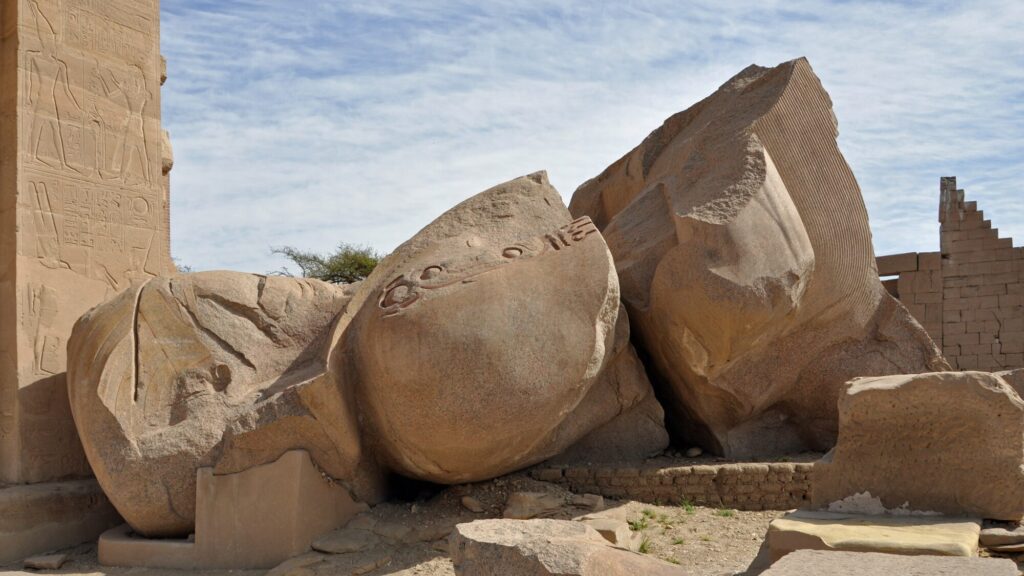
Photo: Marc Ryckaert, CC BY-SA 4.0, cropped

Ozymandias
“Look on my Works, ye Mighty, and despair!”
Percy Bysshe Shelley, “Ozymandias” (1818) · the fallen colossus at the Ramesseum, Luxor, Egypt
These are the broken pieces of Ramesses II, the pharaoh the Greeks called Ozymandias.
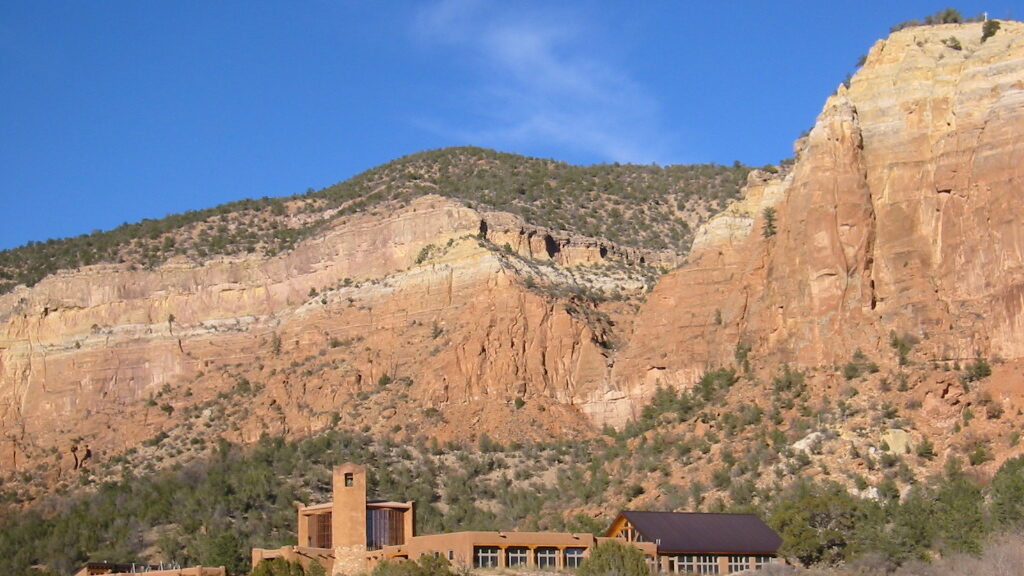
Photo: Jeffrey Zoeller, public domain, cropped

The abbey in the desert
Walter M. Miller Jr., A Canticle for Leibowitz (1959) · photographed: the Monastery of Christ in the Desert, New Mexico
After the Flame Deluge, monks in a southwestern desert copy blueprints they can’t read, on the chance someone will understand them later.
07 / 12
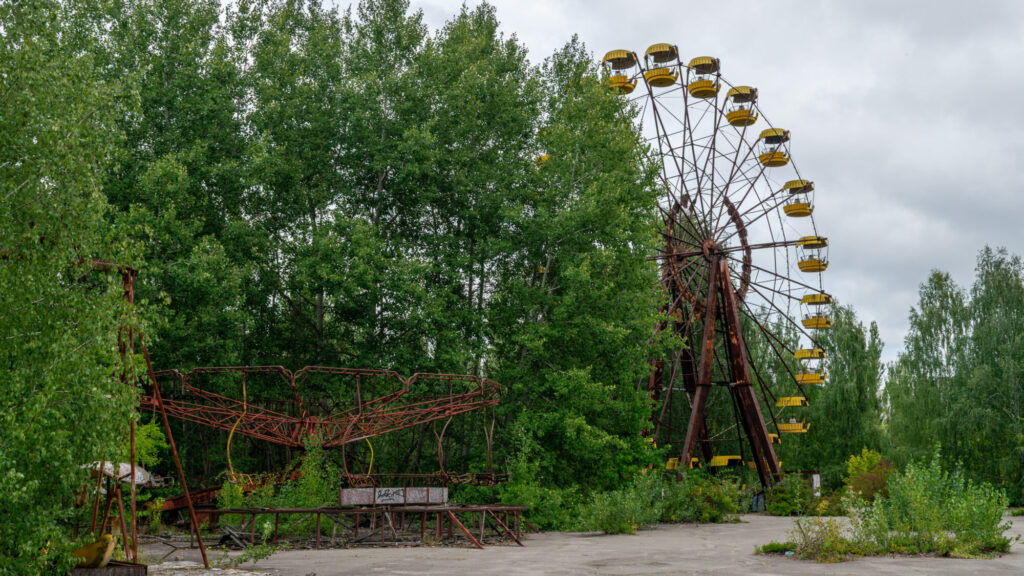
Photo: Omar David Sandoval Sida, CC BY-SA 4.0, cropped

Pripyat
The town evacuated after Chernobyl, Ukraine, 1986
The Ferris wheel is the most photographed ruin in Ukraine’s emptiest town.

Photo: Xopc, CC BY-SA 2.5, cropped

The horses
Przewalski’s horses · the Chernobyl Exclusion Zone, Ukraine
About thirty were released into the Zone in 1998, in an experiment nobody expected much from. A 2018 count found 137 on the Ukrainian side alone.
08 / 12
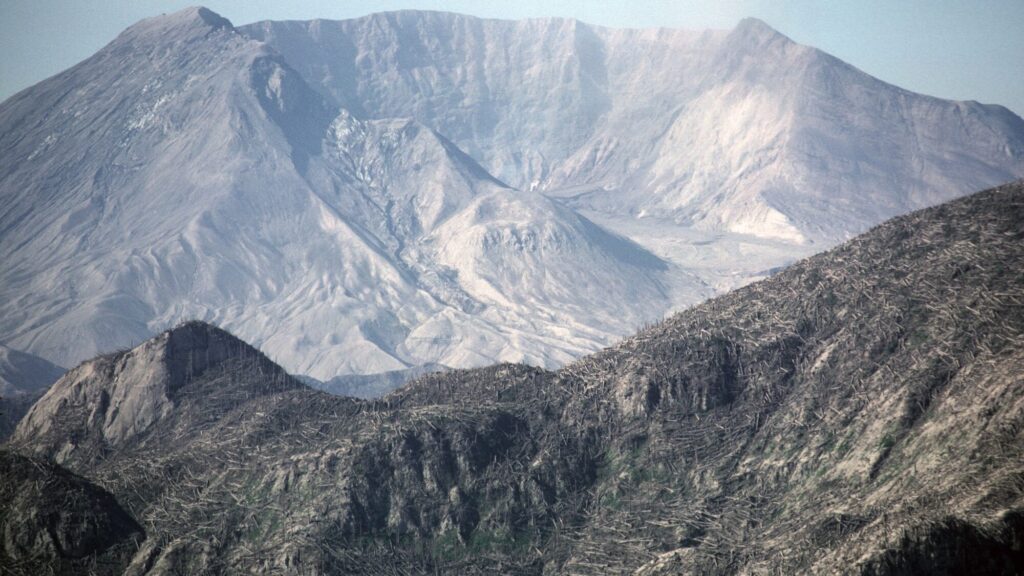
Photo: U.S. Forest Service, public domain, cropped

The blast zone
Mount St. Helens, Washington · May 18th, 1980
The sideways blast flattened about 600 square kilometres of forest in minutes.

Photo: Craigdickson1067, CC BY-SA 4.0, cropped

The wildflowers
Mount St. Helens National Volcanic Monument · the same mountain, decades later
Prairie lupine was among the first plants back on the pumice, and it fed the soil for everything after.
09 / 12
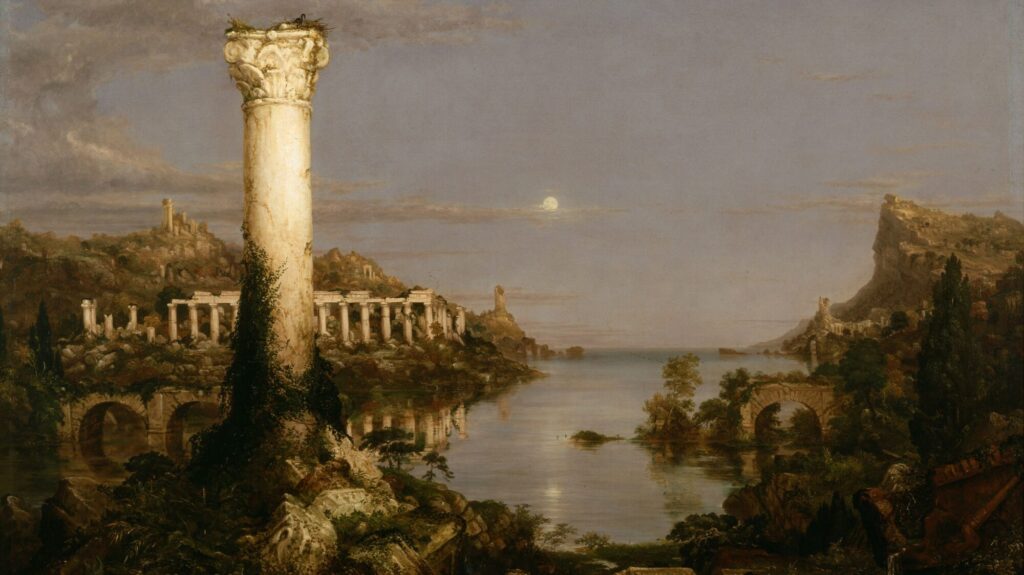
Thomas Cole, The Course of Empire: Desolation, 1836. New-York Historical Society. Public domain.
Desolation
Thomas Cole, The Course of Empire (1833 to 1836)
The last of five paintings: an empire rises, peaks, burns, and the moon comes up over one column.
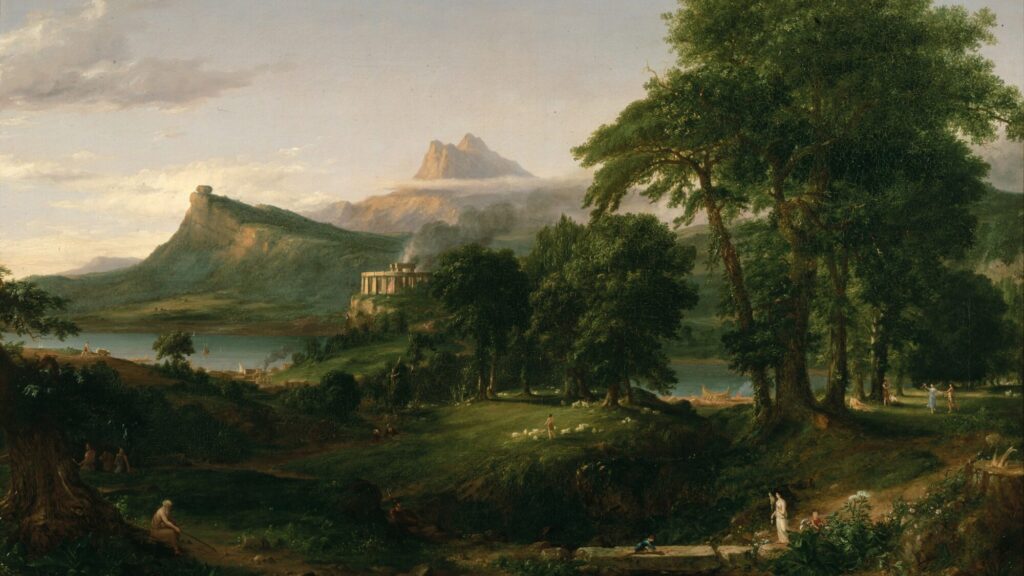
Thomas Cole, The Course of Empire: The Arcadian or Pastoral State, about 1834. New-York Historical Society. Public domain.
The Arcadian State
Thomas Cole, the same series
Cole put the shepherds before the empire. Afterland puts them after.
10 / 12
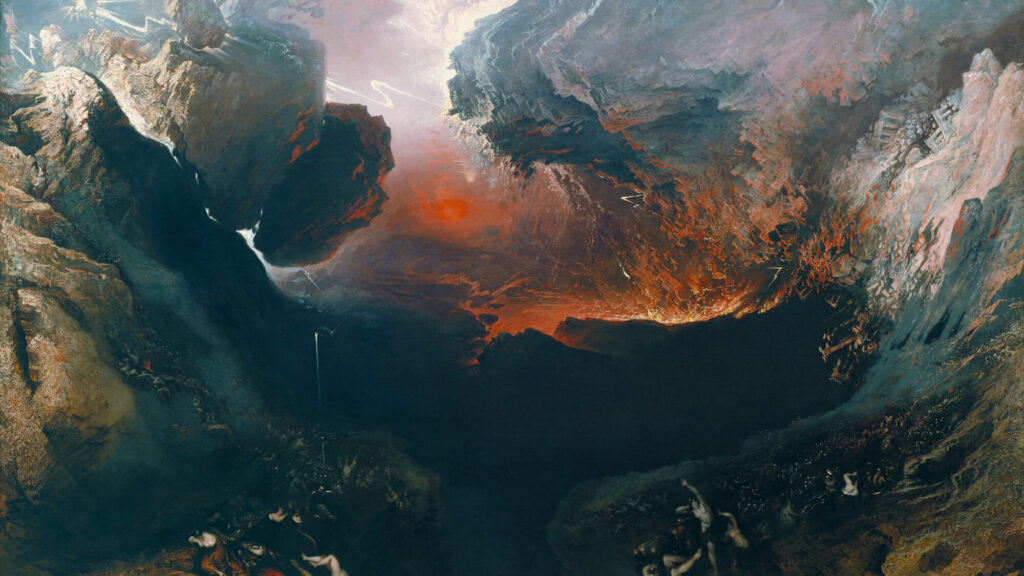
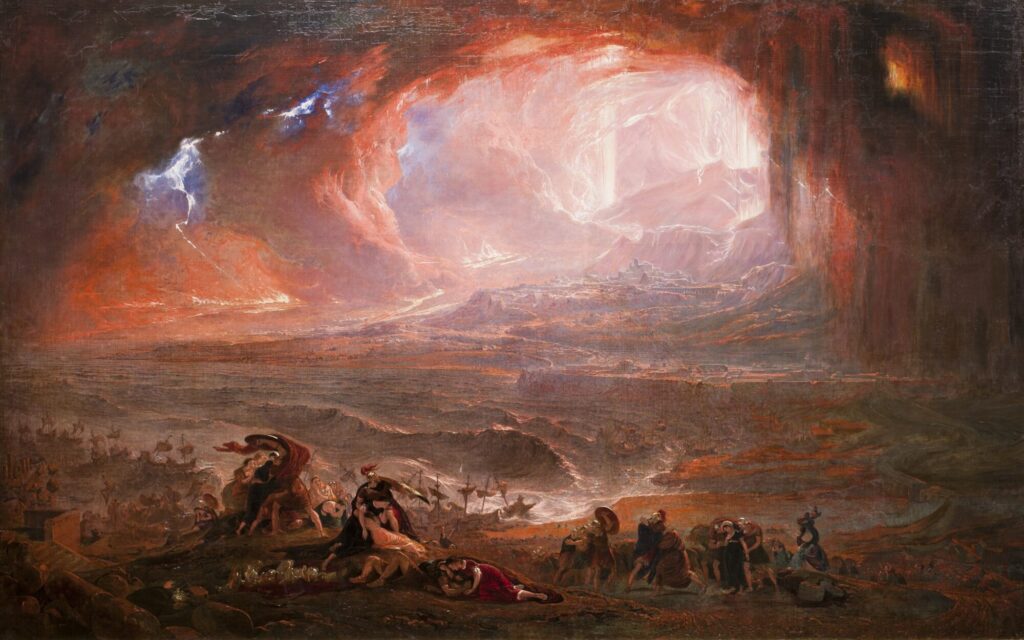
John Martin, The Great Day of His Wrath, 1851 to 1853. Tate. Public domain.
The Great Day of His Wrath
“For the great day of his wrath is come; and who shall be able to stand?”
John Martin (1851 to 1853) · Revelation 6:17, King James Version
The end, painted as weather: mountains folding, a city tipping into the dark.
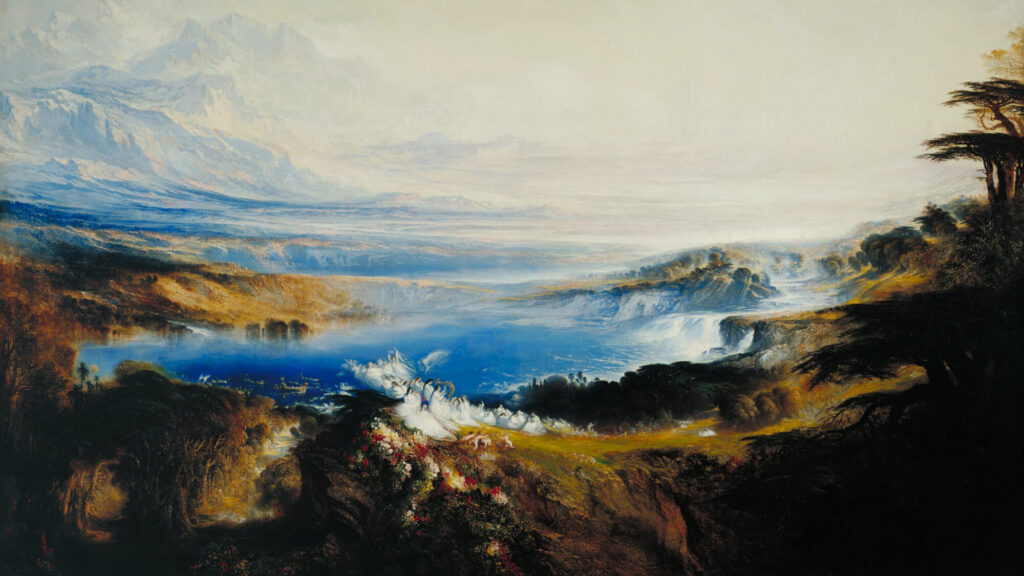
John Martin, The Plains of Heaven, 1851 to 1853. Tate. Public domain.
The Plains of Heaven
“And I saw a new heaven and a new earth.”
John Martin (1851 to 1853) · Revelation 21:1, King James Version
Martin painted the end and the after as a set, and sent them on tour.
11 / 12
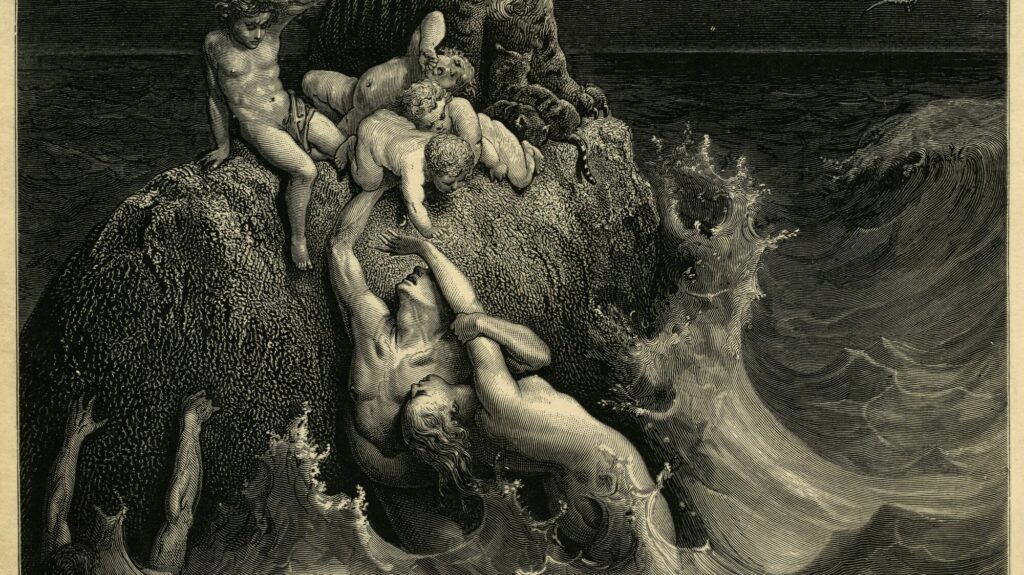
Gustave Doré, The Deluge, 1866, restored by Adam Cuerden. Public domain.
The Deluge
“All the high hills, that were under the whole heaven, were covered.”
Gustave Doré, illustrated Bible (1866) · Genesis 7:19, King James Version
The flood leaves one rock, and too many people want it.
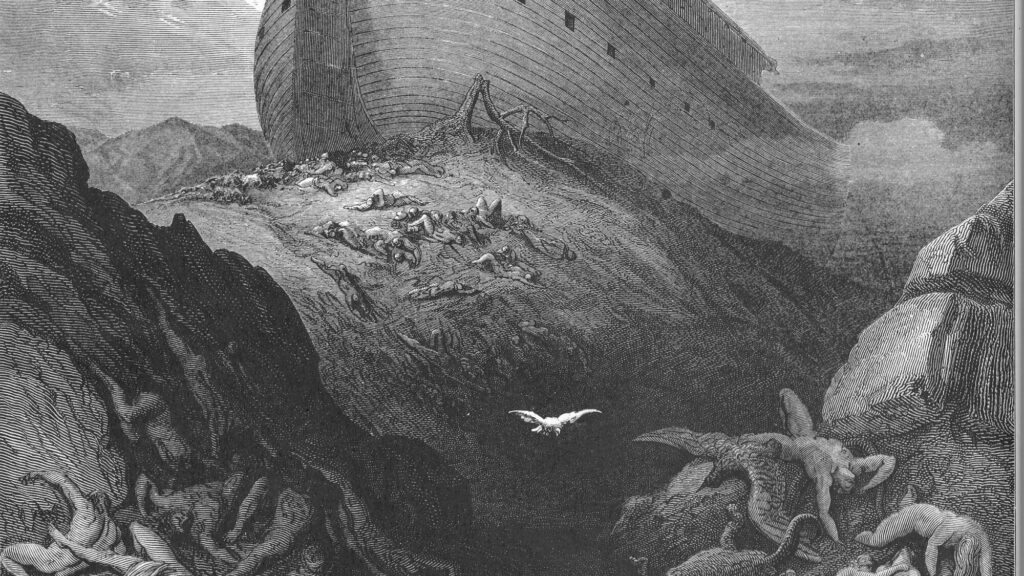
Gustave Doré, The Dove Sent Forth from the Ark, 1866. Public domain.
The dove
“And, lo, in her mouth was an olive leaf pluckt off.”
Gustave Doré, the same Bible · Genesis 8:11, King James Version
The oldest post-apocalyptic landscape on this page, and the first one with a planting in it.
12 / 12
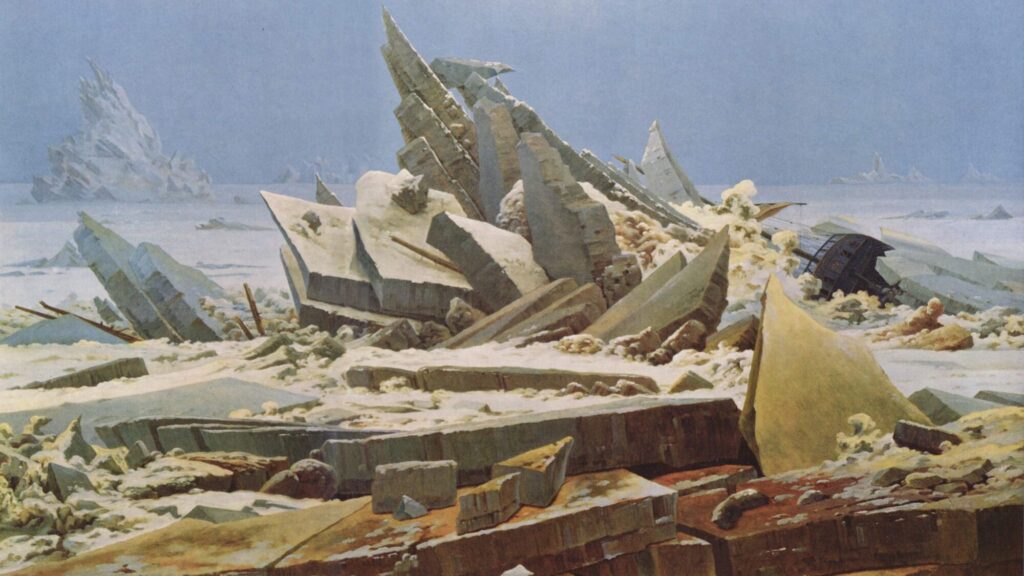
Caspar David Friedrich, The Sea of Ice, 1823 to 1824. Hamburger Kunsthalle. Public domain.
The Sea of Ice
Caspar David Friedrich (1823 to 1824)
A ship’s stern, almost swallowed. It’s often called The Wreck of Hope, a title that probably belongs to a different painting.
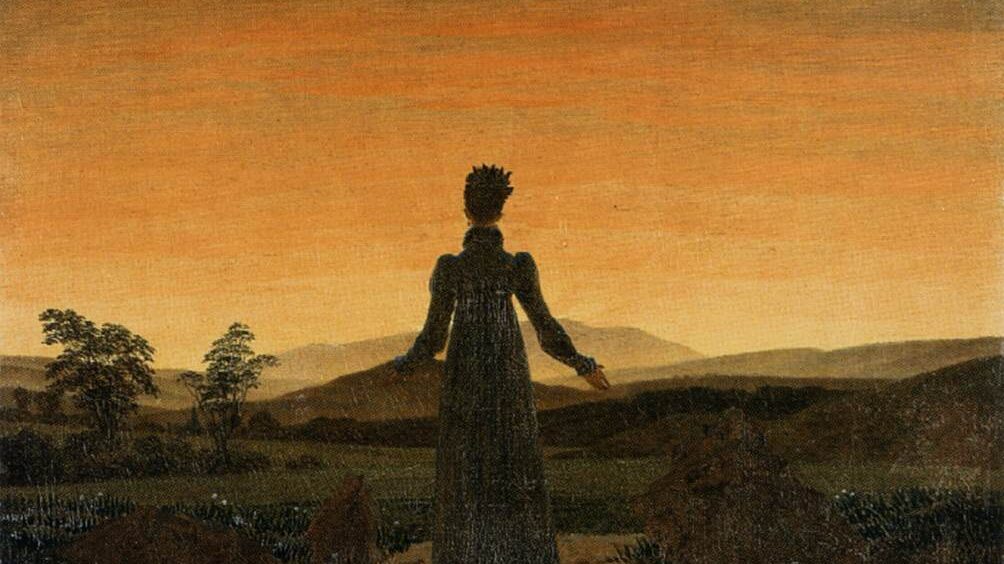
Caspar David Friedrich, Woman before the Rising Sun, about 1818. Museum Folkwang, Essen. Public domain.
Woman before the Rising Sun
Caspar David Friedrich (about 1818)
It’s also catalogued as Woman before the Setting Sun, and nobody can say which. In Afterland, it’s the same view either way.
The films, shows, and books belong to their studios, publishers, and authors. The photographs are credited under each picture. The paintings and engravings are in the public domain.
Our own landscape
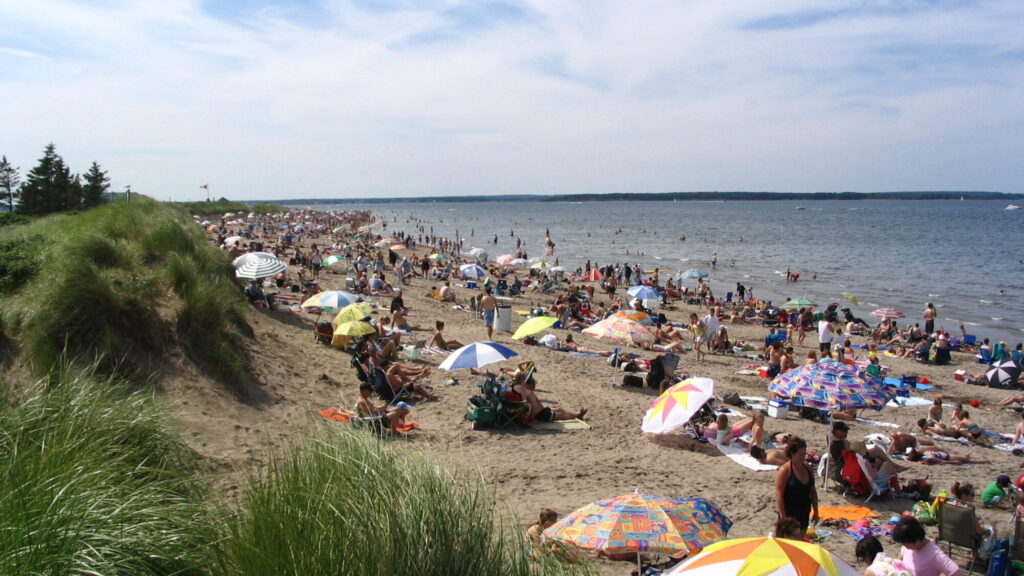
None of those places is coming to Shediac. We have our own.
Parlee Beach in October is wide, cold, and emptied of summer. On Friday, October 1st, 2027, First Fire lights the sand from 5 pm to midnight, included with any ticket. Only the guild lights the fires, and the tea goes to strangers first.
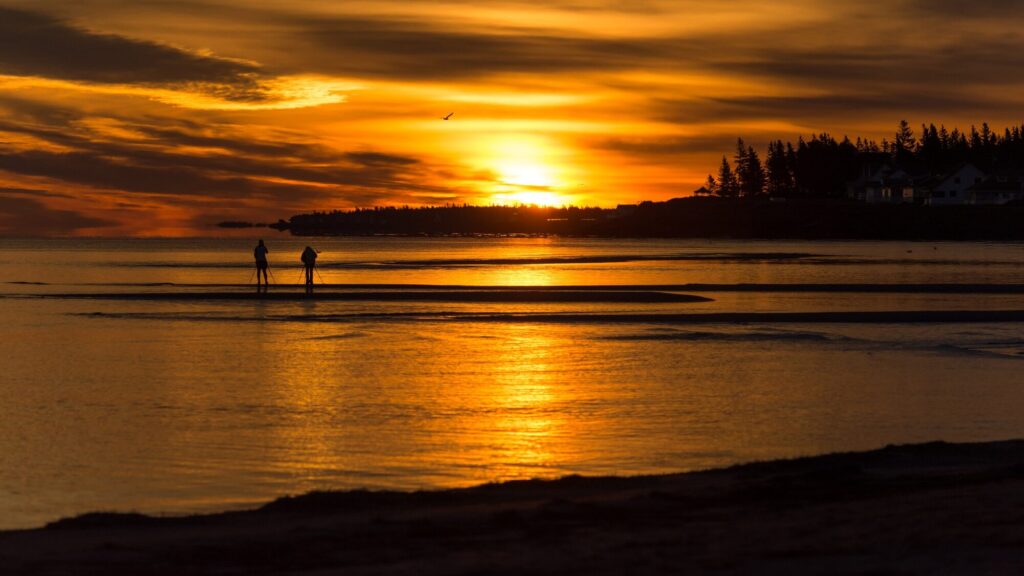

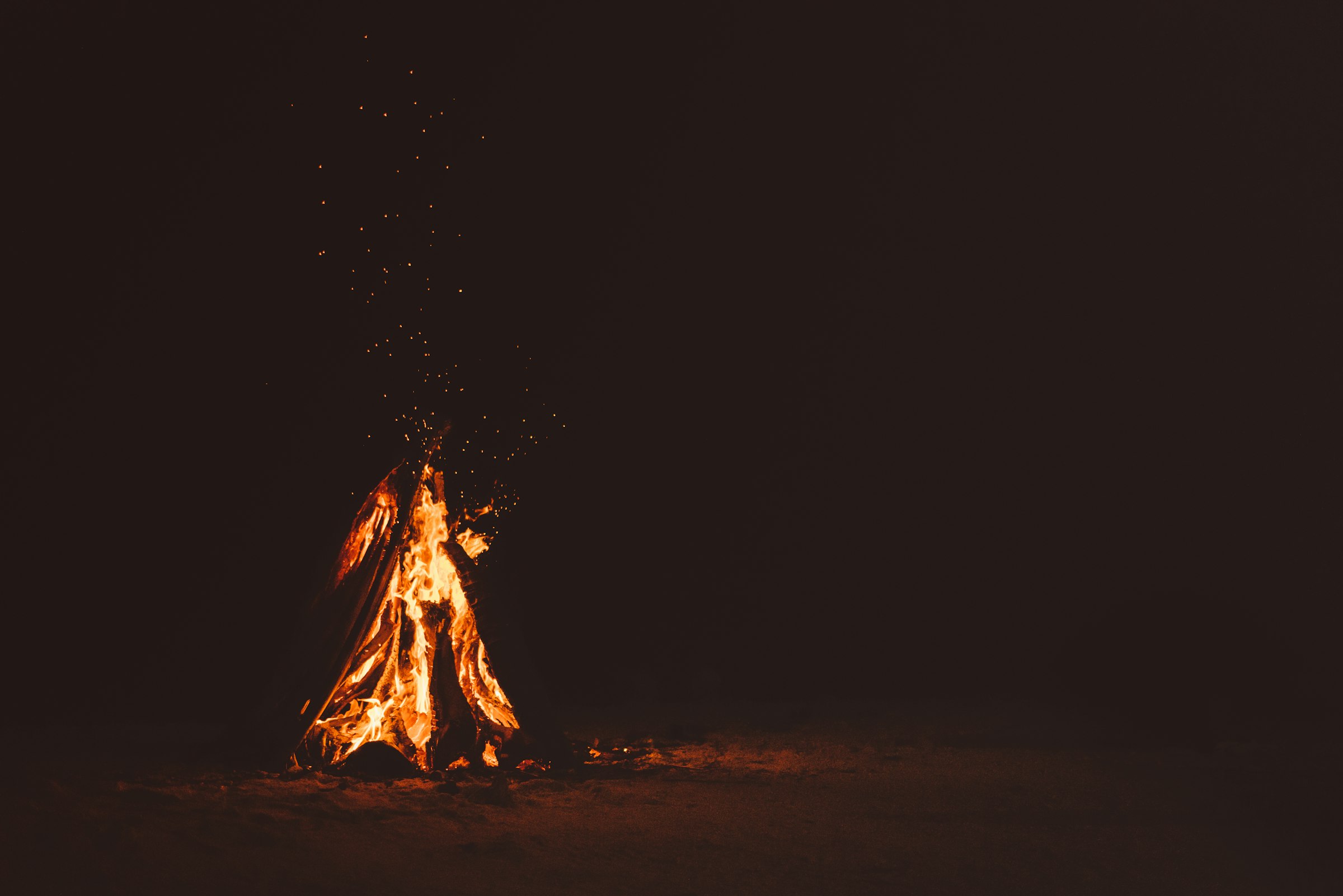

Saturday belongs to the Neptune grounds: the drive-in screen, the market with no price tags, and machines and music until midnight. Between the screen and the dark water lies the whole weekend.
Sunday ends with the planting, on the Neptune grounds: dune grass, put in by hand.
As long as the Lobster stands, so do we.
Pictures. Paintings and engravings by John Martin, J. M. W. Turner, Thomas Cole, Gustave Doré, and Caspar David Friedrich, all public domain. Photographs from Wikimedia Commons, under the licences named under each one, and one from Unsplash. The films, shows, and books belong to their studios, publishers, and authors.